erk admin

spacerCircle of Good Will - Blog

Archive for the ‘Time and Periods’ Category

The Beginning of the New Year

Friday, December 31st, 2010

This night we are passing from December 31st, 2010 to January 1st, 2011, and start, in our counting, a new year. At the threshold stands Janus, the god of gates, doors, doorways, beginnings, endings and time in Roman mythology.
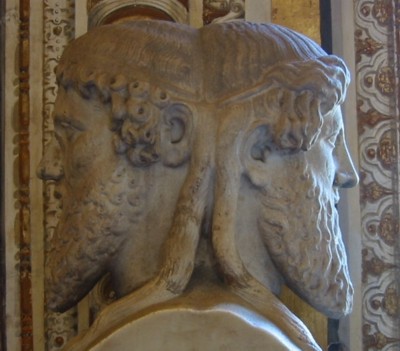
Bust of Janus from the Vatican (Wikipedia)

There are many different new years, and it is good to remember the relativity of our social convention as per the 1st of January, a date which is neither a threshold on the planet nor in cosmos. It took quite a long time before 1 January became the standard start of the civil year.

Here are some thoughts of Master EK (Ekkirala Krishnamacharya) about “The Beginning of the New Year” and how it is celebrated in traditional India as well as some thoughts about purification:

“Where does the year begin or end? Cyclically seasons emanate from it to blossom and come to fruition. In this gyration of the year all living things – trees, as also creatures that are aquatic, earthly and airborne – have their own individual beginnings. It is natural for each to consider its own emergence as the beginning of the year. It is a similar line of thinking that made man come up with the idea of “Samvatsaradi” (adi=beginning, Samvatsara = year). Men brought up in different regions have taken a different approach to this concept of the New Year. People residing on the equator have a different New Year different from those of people residing at the North and South poles. This has given rise to the differences in the customs and habits of people belonging to different continents and countries.
Various traditions connected with the New Year have come into vogue over the years. By the earth’s going round the sun once, the solar year is formed. Depending on the movements of the Sun and the Moon, the full moon and the new moon, the lunar year is formed. In this way, a total of nine types of measurements of years as also the astrological knowledge required to arrive at them were available from lakhs of years to a few countries like India. What are widely in use in a majority of the nations are solar and lunar months. What is now regarded as the beginning of the year, January 1st, is based on the astrology of Huns. What is observed as the beginning of the year in India, ancient Egypt, Greece Mesopotamia and all the Arab countries is based on lunar calculations. This is “Chaitrasuddha pratipat.” Usually this falls around 14th or 15th of April.

There is a scientific principle behind considering April as the first month of the year. Every year in the sun’s course from the south to the north crossing the equator, is referred to as vernal equinox. It is considered a sacred day. It is from this day that fresh tender leaves appear on the trees and a new quickening of life all round occurs. That day also marks the beginning of what in a solar calendar is called the month of “Mesha”. This corresponds to March 21st in the present age. Our ancient people in India accepted as the beginning of the year the day following the first new moon that occurs after this date. They called it springtime may be because fresh impetus for life is activated during this time all over the cosmos. This impulse lies dormant like the oil in the human body or the ghee in milk. It is said in the Rigveda that if the year were to represent the yajna of life, then, this impulse is like the offering of ghee made during yajnas. Treating that as the beginning of the year ancient scientists identified six seasons based on the laws of nature operative during each of those seasons.

March 21st tallies with our solar calendar. Not only that, the human year seems to abide by the ancient astrological calculations of other nations also. As proof of the fact that the solar calendar was followed by many other nations in determining the beginning of the year, we may examine the names of few more months. September corresponds to “Saptama” which means “Seventh”. September will be seventh month only if March were to be the first month. Similarly, October corresponds to “Astama” or eighth month, November to “Navama” or ninth month and December to “Dasama” or tenth month, only when March is taken to be the beginning month of the year. These are months whose names have not been polluted by the encroachment of politics. All the others are changed so drastically as not to leave even a trace of the earlier names or forms.

It is an age old tradition in India washing one’s hair on New Year’s day wearing new clothes and eating chutney made of tender neem flowers. In the olden days, ten days prior to the New Years’ Day used to be declared as holidays to all the departments pertaining to all professions. People were expected to tone up their bodily systems in accordance with the time honoured rules laid down to safeguard one’s health. They were encouraged to get all defects and shortcomings rectified so that perfect health may be re-established. This is not to say that they were forced to swallow medicines. Medicines may alleviate diseases but they can never improve health. Scientists have always been emphatically declaring that protection and promotion of good health depends on the informed care one takes of one’s food and recreational habits. In keeping with the in built nature of each of the seasons, spring time always causes a thorough overhauling of the entire body. This takes place in a gentle way in the case of a healthy man. In diseased people this forces the diseases to flare up. This discovery made our ancient scientists to evolve a technique that can ensure the smooth working out of this springtime “scrutiny”. Ancient sciences like Ayurveda have been saying time and again that everyone should start using such health techniques at least ten days before the New Year’s Day. Those techniques are; one should take an oil bath everyday preferably using gingelly oil, new sprung neem flower should be eaten every day. Pieces of raw mangoes (not pickle) should also be eaten. Tamarind fruits just plucked from the trees should be eaten. Sugar cane juice should be drunk. It is as a symbolic representation of all these rules that the tradition of eating “Ugadi pacchadi” has come into existence. Only as a token of past tradition, little quantities of tamarind water and neem flowers are added now in ugadi chutney. Sometimes raw mango pieces are also used. Some people use jaggery in the place of sugar cane juice. At present, even these little quantities of prescribed health foods are eaten not on all the ten days but only on the New Year’s Day morning, and that too, as a chore to be attended to perfunctorily. The scientific principle behind this technique is now lost in the womb of time, leaving behind only a ‘token’.

This does not mean that the token should be discarded. It only means that the proven scientific truth should be properly followed so as to gain maximum benefit. The ultimate objective of the techniques mentioned above is to enhance the quality of bodily fluids, blood, minerals, flesh etc. These techniques are called elixirs, that is aids that give a tonic boost to the physical body. But this perspective of “rasayanams” is changed now. “Rasayanam” is now understood as a tasty to eat Ayurvedic medicine. Well, coming back to the Telugu New Year and the health techniques enjoined to be practised on that day, we have to admit that they are passing on a tradition that has the backing of science. On that count, let us put these techniques to good use by our implementing of them in our lives.”
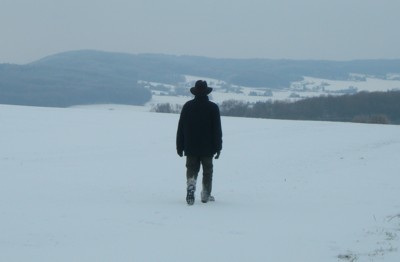

Walking into the New Year. Photo of a friend

Opening of Surprising Vistas

Sunday, September 19th, 2010

Sometimes time seems to open a door for just a short moment,where you can walk through and meet a special constellation. If you are awake you can use it and experience the gift of that situation. This week I had this experience 2-3 times where things took an interesting turn, offering once an opportunity for growth in a very short time frame I could use well, once a surprising encounter and once  a fulfilling meeting. These situations come up unexpectedly and leave a mark in the general flow of events.

Impressions of today’s morning walk with a friend through a nearby park illustrate this unexpected opening of surprising vistas in life.


You might not notice that there is a door to another sphere of experience opening.


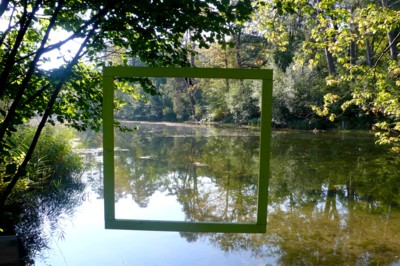
Suddenly a window opens: A green frame as a work of art at a pond.


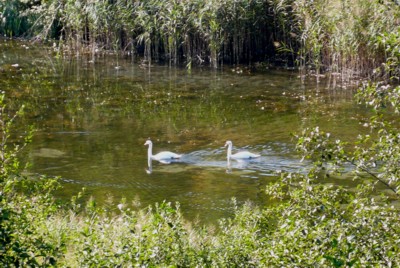
The situation shows up just like the two passing swans disappearing again some seconds later.


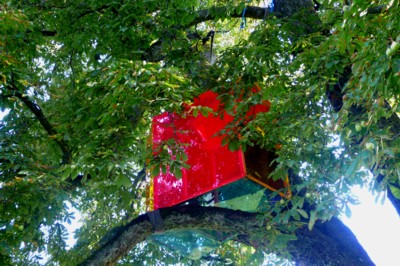
You discover surprising views into unexpected situations, like this tree house made of coloured plexiglass.


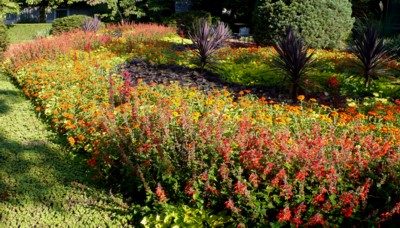
Flowerbed forming a colourful road of changing impressions

Dance Me to the End of Love

Sunday, April 18th, 2010

A friend sent me the link to a beautiful music video of Leonard Cohen’s “Dance Me to the End of Love“, about love in youth and in old age. A lyrical song, which also has another, deeper dimension: Wikipedia says about the song:

“Although structured as a love song, the song was in fact inspired by the Holocaust. In an interview, Cohen said of the song:
‘Dance Me to the End Of Love’ … it’s curious how songs begin because the origin of the song, every song, has a kind of grain or seed that somebody hands you or the world hands you and that’s why the process is so mysterious about writing a song. But that came from just hearing or reading or knowing that in the death camps, beside the crematoria, in certain of the death camps, a string quartet was pressed into performance while this horror was going on, those were the people whose fate was this horror also. And they would be playing classical music while their fellow prisoners were being killed and burnt. So, that music, “Dance me to your beauty with a burning violin,” meaning the beauty there of being the consummation of life, the end of this existence and of the passionate element in that consummation. But, it is the same language that we use for surrender to the beloved, so that the song — it’s not important that anybody knows the genesis of it, because if the language comes from that passionate resource, it will be able to embrace all passionate activity.”

I loved his songs already 37 years ago (Suzanne, Bird on the Wire, Songs of Love and Hate…). And he is also a deeply spiritual personality. Wikipedia: “His work often deals with the exploration of religion, isolation, sexuality and interpersonal relationships. Famously reclusive, having once spent several years in a Zen Buddhist monastery, and possessing a persona frequently associated with mystique, he is extremely well-regarded by critics for his literary accomplishments, for the richness of his lyrics, and for producing an output of work of high artistic quality over a five-decade career.”

Have a look at his YouTube channel.


From the video

Autumn – The Vital Force Withdrawing

Saturday, October 18th, 2008

The autumn days are growing shorter with a great pace, and some storms have swept the trees and covered the streets with a wet, slippery foliage. Like the vital force of the trees is withdrawing inside, the mood of the time is also turning more inside. A time for more subjective work, to counter-balance the outgoing tide.

There are still a lot of faint green and golden yellow leaves on the branches, but you virtually feel that the pulse of life is receding. At work, it doesn’t seem to be be so, for the waves of activity are running high, though the peak in the project I’m managing seems to be over now.

In the morning when driving to my office the lights of the cars and the street lamps create mosaics of  specks of light, especially when it is raining. At the moment, however, the autumn sun is shedding golden rays through a blue sky. The photos show scenes from my way to the office of last Thursday.


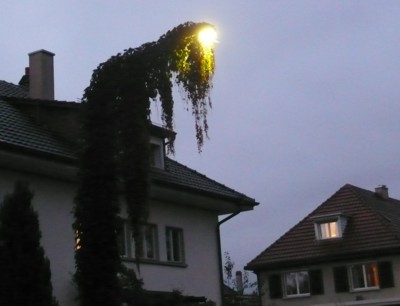
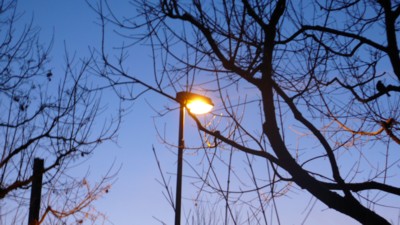
A street light overgrown with ivy – a synthesis of nature and technology…


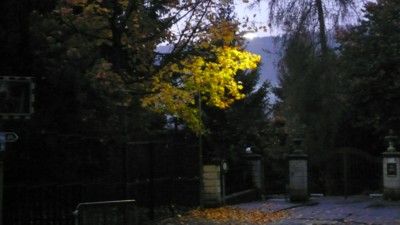
A play of light and darkness – street light at the entrance of the seat of the South Corean ambassador in Berne.

Full Moon Experiences

Thursday, January 24th, 2008

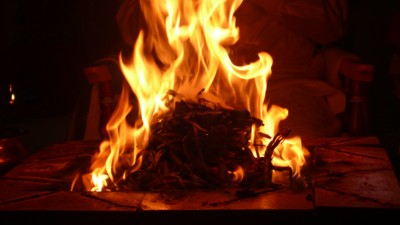
Tuesday morning started with a fire ritual for Pushyama full moon (Pushyami is the constellation of the moon at that time according to Indian calender).

fireritual3.JPG

Sri Kumar explained that this full moon is to be regarded as Capricorn full moon:

“Though the solar god is already in Aquarius, this full moon is regarded still as Capricorn. When the full moon happens when the sun just changes sign, it is the full-moon of the completing month. So it is not the full moon of Aquarius. The impact of the full moon is more with the previous month, therefore the full moon has to be taken as the full moon of Pushyami, the full moon of Capricorn, where the energies of the solar and lunar gods are around the heart centre.”

In the evening the group went to the site with the statue of Master EK at the beach road of Visakhapatnam for evening meditation in the full moon energies.

fullmoon1.JPG
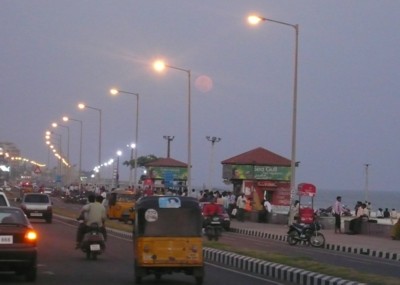
On the way along the beach road – in midst of all the lower lights it is easy to ignore the greater light.

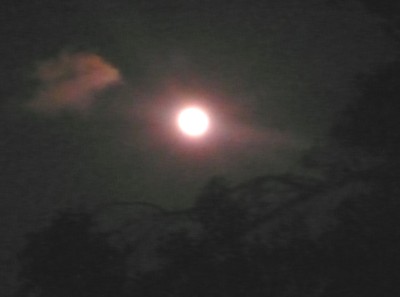
Later in the evening we assembled at 9 o’clock pm on the roof of the World Teacher Temple, Radhamadhavam  for full moon meditation, guided by the Sri Kumar. It was an enchanted ambiance with the light of the moon and the sound of the mantrams reverberating through the night sky.The atmosphere there is particularly charged with strong spiritual vibrations.

fullmoon2.JPG

One and Many New Years

Tuesday, January 1st, 2008

Yesterday brought a number of e-mails from all over the world – new year greetings in several languages, with lots of good wishes – may they come true… For me this turning from December 31st to January 1st is not much more than a step from one day to the other, marking a day fixed by social conventions of some part of the earth, accidentally located 10 days after winter solstice – a much more appropriate day for a start of a new cycle.

Next week we will be in India, and in about two weeks’ time there will be the Pongal celebration – the new year according to the local traditions between January 12 and 15, marking the beginning of Uttarayana, the sun‘s movement northward for a six-month period. For years I had been working with refugees, and I have several times celebrated the Tết festival, the Vietnamese new year according to the luni-solar calendar, in February. My Iranian colleague of that time used to celebrate with us the Nowruz festival, the traditional Iranian new year holiday celebrated in Iran and several countries of Central Asia coming for Zoroastrian times. It is celebrated on the day of the vernal equinox (start of spring in northern hemisphere), which usually occurs on the March 21st. Though it isn’t an Islamic festival, it has been adopted as such in a number of countries.

For me this is the most appropriate beginning of a new year, marking one prominent starting point of the annual zodiacal cycle, where the sun enters the sign of Aries. Its invigorating energies are most appropriate for launching a new year. Thus the 12 signs of the zodiac are also a more appropriate rhythm than counting the months as normally done. But maybe the double-headed Janus, who gave his name to our January, is quite typical for our times, showing not only two faces and being often irritated by the many perspectives.

dawn1.JPG
Dawn of January 1st, 2008 – what do the augurs say for the coming times?

Reading Faster – Understanding Slower?

Friday, December 7th, 2007

We are living in speedy times. If you like to speed it even up, here is a tip, from a newsletter which I received today at my office:

If you want to read long texts faster than before, you can try Spreeder, a free onlinie speed reading service. You just have to copy the text into a field, put the setting of the WPM (Words per minute) on a value between 250 and 300 and click “play”: Spreeder now sends the single words of the text one after the other onto you screen and you can read the text without having to move your eyes through the lines. With a little concentration you can thus read the text faster.

Whether you also understand faster, or even deeper, remains a question to be solved. Depth doesn’t come from speed, but from growth of consciousness, inner silence and a good balance in life.

berlin06_-109.jpg
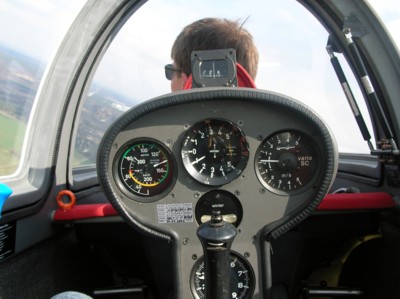
In the cockpit of a glider, April 2007

Bugs, Worms and Scorpions

Thursday, October 25th, 2007

Yesterday we had staff trainings on IT security. An instructor showed us different ways intruders try to break into a system and how they manage to change or steal information. Some new security measures were presented, and the head of our ITC services encouraged us to keep an eye on our systems at home, too: “Do at least a monthly scan of the hard disk…”

Well, I thought, I have some active measures, firewall, anti-virus, … I’m on the safe side.

Nevertheless I started a hard disc scan in the evening. Two times it got stuck half-way through and the system was blocked. The third time the scan went on, for a long time, through all the programs and folders. And indeed, somewhere in the system trays different malwares had crept in since the last scan. I don’t know what they’d been doing, but now these little cyber-animals had to give up their pernicious activities…

It reminded me of the subtle noxious thoughts creeping in when you aren’t on your guard. Vigilance and discrimination are very much needed to keep these virus-infections away from your inside.

Today is Scorpio full moon, and secret activities going on hidden under the surface are qualities of this sign. It rules over venomous creatures that try to hide in holes and do their stinging and attacking from there. The worms and bugs stealthily infiltrating the PC and the ones operating with them, aren’t they real Scorpions? You might like to read about the qualities of Scorpio in the “Letters on Spiritual Astrology” or in the book “Spiritual Astrology” by Dr. E. Krishnamacharya.

artichoke.jpg
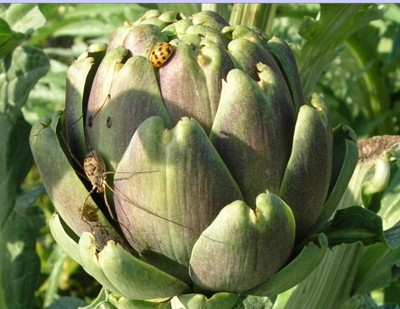
Keeping creeping creatures out of the system – spider and ladybug on an artichoke.

A Present from Bulgaria

Friday, August 24th, 2007

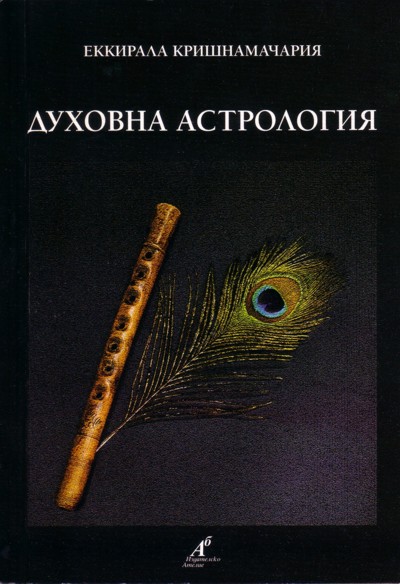
Yesterday I received a parcel from Bulgarian friends: They sent me copies of the Bulgarian version of “Spiritual Astrology” by Master EK (Ekkirala Krishnamacharya). They had translated the book and published it by themselves. It is the first Bulgarian edition of the WTT wisdom books, and though I won’t be able to read it in this language, it was a joy to see the book:

My friends had visited us June last year, and I had given them an English copy. They were so fascinated by it that they started translating and publishing – and this without much financial resources. They also had to overcome other difficulties, but the enthusiasm carried them on.

It was for me a good example that when there is a will and the skill to do something, you can get it done.

The book is very profound and has nothing to do with what you normally get to read or hear about astrology. It deals with the spiritual evolution of man and provides some keys for a deeper understanding of the zodiac and the planets from an inner view. You might like to read an extract on the correspondences between micro and macro-cosmos – or read some of our Letters on Spiritual Astrology.

b_astrology_b_400.jpg

Beltane – Midpoint of Spring

Saturday, May 5th, 2007

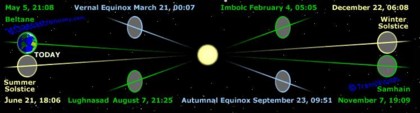
Today is Beltane day, the astronomical midpoint between the vernal equinox and the summer solstice.

beltane.jpg

The astronomical date for this point can vary from year to year. Beltane was celebrated by the Celts around the 1st of May or the nearest full moon. It is the time of fertility, when nature displays its full beauty of spring to bring about new life.

You find more information about the annual rhythms on the website of Archaeoastronomy, where they have a countdown of the annual equinoxes, solstices and cross-quarters.

You might read in the Letters on Spiritual Astrology on Taurus about the Radiance of Beauty: “The beauty of the flower lies in the totality, not in a part of it. Beauty is caught nowhere in the form, but reflects through it.”

spring.JPG