erk admin

spacerCircle of Good Will - Blog

Archive for the ‘Time and Periods’ Category

Snapshop of the World as seen by News Media

Tuesday, March 20th, 2007

“100 Words and Pictures that Define the Time.” This is the title of the 10×10 (ten by ten) site designed and developed by Jonathan Harris. It gives a snapshop of our world as a picture postcard window. 100 different pictures are taken hourly in connection with the most used words in the top ten news of several international news sources, such as Reuters World News, BBC World Edition, New York Times International News. 10×10 just shows what the system finds, without any politics nor any secret agenda. It runs without human intervention.

10×10 says: “When we see a frequently repeated image, we know itโ€™s important. When we see a picture of a movie star next to a picture of dead bodies, we understand the extremes that exist in our world. Scanning a grid of pictures can be more intuitive than reading headlines, for it lets the news come to life, and everything feels a bit less distant, a bit closer to heart, and maybe, if we’re lucky, gives us pause to think.”

The photos here below show the momentary “snapshop of the world”.

Another “picture that defines the time” you will get when you meditatively work with time cycles, observing the changing pattern of planetary constellations, pondering on the cosmos within. You find more about it in the Lunar Messenger on “Working with the Key of Time“.

Saturn – Seen from New Perspectives

Tuesday, March 6th, 2007

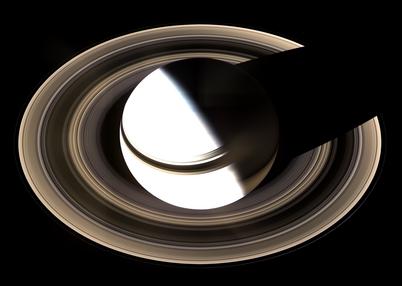
NASA has just published pictures from the Cassini spacecraft, which has captured never-before-seen views of Saturn from perspectives high above and below the planet’s rings. Dr. Carolyn Porco, Cassini imaging team leader at the Space Science Institute in Boulder, Colo.: “Sailing high above Saturn and seeing the rings spread out beneath us like a giant, copper medallion is like exploring an alien world we’ve never seen before. It just doesn’t look like the same place. It’s so utterly breath-taking, it almost gives you vertigo.” Here are photos and movies from Saturn.

saturn_cassini.jpg

Quite other perspectives from “inner views” you find in spiritual astrology, where Saturn is described as the deepest of the 7 planetary principles. In the Indian Scriptures he is called “the Old Man”. Through him we receive the things that we don’t like, because that which we don’t like is nothing but our limitation. He gives a small dose of dislike and sees how we work with it. The time sense of man is governed by Saturn. So we are made to wait by our own limitations.

Read more about it in the book on “Saturn” by Dr. K. Parvathi Kumar, it gives deep insights into the way this principle of Saturn is working.

Crests and Troughs of Life Cycles

Sunday, February 25th, 2007

Two days ago we were at the concert of the school big band of our son, where he is playing trombone – an impressive performance entitled “Noche de Salsa”. One of the two conductors mentioned that for the orchestra there are life cycles like waves, with ups and downs, and this was just the crest time, having been built up over months of rehearsals. A wave trough will follow in summer, when over 10 students will leave the college.

This is a very common movement of living systems going through time cycles, be it a product life cycle, a trend, periods of an individual life or on a bigger scale of enterprises, of nations, of cultures. When you are experiencing the top you easily forget that the drift might change and other currents come in.

On the spiritual path it is most important to observe these subtle changes in the quality of time cycles and watch out for favourable or crosscurrents. It is very useful to combine this with an observation of the changing planetary rhythms. You can read more about the way to deal with time cycles in the Lunar Messenger on “Working with the Key of Time“.

wave.jpg

Waves at the Gulf of Bengal in India, January 07.

Scorpio Full Moon: Oberving the Rhythms of Time

Sunday, November 5th, 2006

Today is Scorpio Full Moon. The full moon time is very auspicious for connecting with more subtle energies through meditational work. Observing the monthly rhythms of the moon and its annual movements through the zodiac gives you a sensation of the changing qualities of time. Here you can see the moon phase, which are now also to be found in the right sidebar of the blog:

(Oh, it caused problems with showing up in the middle column, so I just left a static picture, it works only in the right sidebar.)

If you would like to know a bit more about the inner work with the qualities of time, please see the Lunar Messenger on “Working with the Key of Time” (PDF).

Launching of A Time Capsule

Thursday, October 19th, 2006

From October 10 till November 8 Yahoo! is filling a time capsule with extracts from life in 2006. The motto is “One World – Many Voices”, and it can be filled by Yahoo-users with photos, stories, ideas, films on topics around Love, Hope, Beauty, Faith, Fun Anger… The content of the capsule will stay in the ground of the Yahoo be opened in 2020. But before, on October 25-27, it will be sent with a laser beam into space from the sun pyramid of Teotihuacan in Mexico. Its inventor, the artist Jonathan Harris, hopes that millions of statements from all over the world give a global image of multifold individual contributions.

May the time capsule inspire for treading consciously a path to a better world.

Strife and Discord in the Heavenly Spheres

Tuesday, September 19th, 2006

With the astronomical degradation of Pluto to a dwarf planet (see our post), he has also lost his name and is now classified as 134340 Pluto since September 13th. Many researchers are not willing to accept this degradation. In this context it is very typical that the newly discovered dwarf planet who caused the new classification of astronomical objects and thus of Pluto is now called Eris, in Greek the goddess of strife and discord. She is accompanied by a moon now called Dysnomia, meaning lawlessness.
What an upheaval in the heavenly spheres – may it not reflect to much unto us humans ๐Ÿ˜‰ Or is it a sign of our times, which are called in the East the dark age of lawlessness, Kali Yuga, where rightfulness is at its lowest point?

If you would like to see a picture of the Transneptunian planets, please click here (and click on the photo for further enlargement).

Pluto no longer a Planet?

Tuesday, August 15th, 2006

At the moment Astronomers are holding their 3 year’s international conference in Prague, where experts from 75 countries are discussing about a universal definition of what constitutes a planet and whether Pluto really belongs to this list. In 2005 a rocky object called 2003 UB313 was discovered which is far bigger than Pluto and which would be the 10th planet – or another number according to the definition.
Spiritual Astrology looks at planets as the visible vehicles of spiritual principles and says that there is a higher number of planets which are not all on the dense physical plane, but, like the human soul, might be for times exist on subtler planes of existence, coming down and going back in the cycle of creation. Whether the astronomers define Pluto a planet or not is arbitrary, the spiritual principle expressed through it is known much longer than since 1930, the year when Pluto was discovered. In the East it is called Yama, the Lord of Death or the principle of deepest transformation. This principle will hold true, even if Pluto is discarded from Astronomers’ list of planets.

P.S., 25th August 06: Pluto has just seen his status as a planet rejected, which is very typical of the qualities linked to him in spiritual astrology – hidden not perceivable powerful influences. He is degraded to be a minor planet, together with other candidats to this group. You see how powerful our mental conceptions or definitions are – they decide of the categories into which we classify things.

Celebrating Lammas – Festival of the Celtic Sun God

Tuesday, August 1st, 2006

Today the Swiss celebrate their national holiday (you might read my post on the American national holiday…). But there are also other occasions to be celebrated on this day:
I just got an e-mail from an American friend hinting at the festival of Lammas. It says on this site of the School of the Seasons:

“The Celts celebrate this festival from sunset August 1 until sunset August 2 and call it Lughnasad after the God Lugh. It is the wake of Lugh, the Sun-King, whose light begins to dwindle after the summer solstice. The Saxon holiday of Lammas celebrates the harvesting of the grain. The first sheaf of wheat is ceremonially reaped, threshed, milled and baked into a loaf. The grain dies so that the people might live. Eating this bread, the bread of the Gods, gives us life.”

And it goes on: “Bake a loaf of bread on Lammas. If you’ve never made bread before, this is a good time to start. Honor the source of the flour as you work with it: remember it was once a plant growing on the mother Earth. … What’s most important is intention. All that is necessary to enter sacred time is an awareness of the meaning of your actions. Shape the dough in the figure of a man or a woman and give your grain-person a name. If he’s a man, you could call him Lugh, the Sun-King, or … She of the Corn, She of the Threshing Floor, She of the Seed, She of the Great Loaf (these come from the Cyclades where they are the names of fertility figures), Freya (the Anglo-Saxon and Norse fertility Goddess who is, also called the Lady and the Giver of the Loaf), the Bride (Celtic) and Ziva or Siva (the Grain Goddess of, the Ukraine, Hungary, Yugoslavia and Czechoslovakia).”

So enjoy the day and celebrate it with thoughts of the life-giving source.

The Antikythera Mechanism – Computer Technology of the Ancient Greeks

Monday, June 26th, 2006

In last Fridays’s issue of the NZZ (New Zurich Newspaper) there was an article about the computer technology of the ancient Greeks. It was reporting about a mechanism found in 1901 by sponge divers near the Greek island of Antikythera, thus called the Antikythera mechanism. It has puzzled and intrigued historians of science and technology since its discovery. Already in the 50th of last century a scientist put up the theory that the Antikythera mechanism was a device for calculating the motions of stars and planets, which would make the device the first known analog computer. It dates from around the 1st century B.C. and is the most sophisticated mechanism known from the ancient world. Nothing as complex is known for the next thousand years. It is even possible that the mechanism is based on heliocentric principles, rather than the then-dominant geocentric view espoused by Aristotle and others.
Recent X- and gamma ray researches showed an astonishing precision of the device and subtle inscriptions. Latest discoveries are reported on the website of the Antikythera Mechanism Research Project. In November 06 there will be a conference in Athens to present the results.
The wisdom teachings tell that for long times there has been a connection between Greece and the East, and there were people having an outstanding knowledge of numbers and cosmology (see the blog-entry about the wisdom of Pythagoras). We always think we are at the pinnacle of knowledge, but we have to bow down to the heights of the gigants of the past.

St. John’s Day – Energy Change in Nature

Sunday, June 25th, 2006

The sun is shining bright over the fields here, but in the atmosphere one can sense already that the annual solstice climax has passed by and the sun has started its southern journey again. Yesterday was St. John’s Day, the Christian substitution for the old solsticial celebrations of midsummer. However, there is a deep sense in having St. John’s day at this date of the days starting to decrease: On the opposite side, at winter solstice, the news birth of light, of the saviour is celebrated, and St. John is called his forerunner.
The time reminds me of the St. John’s celebrations in which I took part as a member of a Steiner school about twenty years ago. After a big fire we used to walk with the elder pupils through the night to a lake and have a swim there in the early morning hours. This time of energy change in nature is very special, called the time of the crab’s sidewise movement in spiritual astrology, where at the beginning of Cancer the daytime here in the northern hemisphere is at its hight. A good time to be attentive of what is subtly preparing for the nexts months.