
erk admin

spacerCircle of Good Will - Blog

Archive for the ‘Spiritual Life’ Category

“Back Home” to India

Friday, January 9th, 2009

Last Tuesday four o’clock in the morning my wife and I set off for our journey to Visakhapatnam, India, to participate in the seminar of the World Teacher Trust, with our teacher Dr. K. Parvathi Kumar. The taxi drove us through the sleepy city, just a fox and a few cars crossed our ways to the station, where we took the first morning train to Zurich Airport. It was quite cold, 6 degrees Centigrade minus. But when we landed at our first stop, in Frankfort, the temperature dropped still further, 15 degrees minus. Doesn’t matter, I thought, the next stop will bring more warmth.
i1
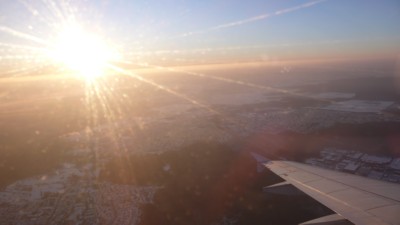
A radiant sunrise over icy Frankfort

And so it was. In Chennai (Madras) it was 22 degrees, when we landed at midnight, and rain was poring down over a sultry city. It smelled very Indian, when we drove with the taxi to the hotel through side-roads full of mud. Quite a contrast.

The contrast was even stronger when we finally landed in Visakhapatnam, at the Gulf of Bengal, the temperature was over 30 degrees. Murthi, the good caretaker of the World Teacher Trust Retreat Centre was giving us a worm welcome and told us we would wait for another group coming from Hyderabad with the next plane. So we waited for an hour in a hot taxi, where an old video about some Krishna devotee, giving us a taste of spiritual India. New impressions started to fill our minds.

At the retreat centre more and more people started coming. A group had been on a pilgrimage tour to Bangalore, Kumbhakonam  – the city where Master CVV had lived, the Blue Mountains, the holy pilgrimage centre of Sri Sailam, where I had been 2 years ago. A big family reunion, with hearty welcome hugs. The retreat centre is very full, with about 60 people from Spain and Germany, from Belgium and Switzerland.

This morning Master Kumar gave us a very warm welcome:

“Welcome to India, welcome to the group life. We have more or less a very relaxed group life, meaning there are not too many teachings. I have reduced the hours of teachings, so that we have more hours for living. So that we don’t get stuck too much in the concepts, live the concepts. Presence is more in living. The concept of presence is more when not leaving the bus. Maybe too many years of teachings have spoiled some of  the members. And then listening to the teachings also becomes a vice, and we forget to live and live more in the world of illusion and not in the life that is all around – no flower, no lover, no child, no good food. Many times there is a danger that we walk away from life, when there is too much teachings. So less teachings more living. All teaching is about living, but the people live more in teachings than living. Then sometimes break it…

Thank you for coming in spite of difficulties. Economic difficulties –  the economics is shrinking globally, but we don’t have to shrink along with it, because we did not grow when the global economics grew. So why should we shrink, when it shrinks? It is an aspect of discipleship that we are not affected by the impact of the world, to be in the world, but not to be of the world. You don’t have to get affected. Many more events will happen in the next three years, because some accounts will have to be settled. Some old accounts will have to be squared up. There will be many more happenings. When there is no release, there can be no change. Change is already on the way. There has to be a great change, but a new balance. These are years of change, and it continues to change in 2020. Some of us may still live in this time. Let us live in that part of life which does not change. We only think of the unchangeable, but let us live in it. …”
i6
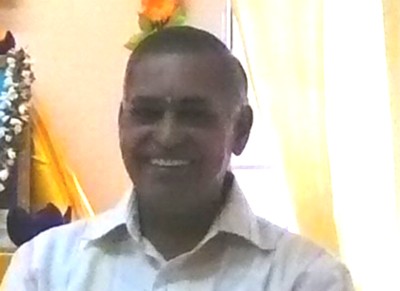
Master Kumar: A warm welcome to the group
i3
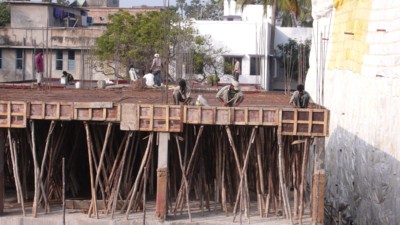
A view from our room over the street: Indian-style construction in going on, with a lot of noise. The white house in the background is the backyard of Sri Kumar’s house, which soon will be hidden from view.
i5
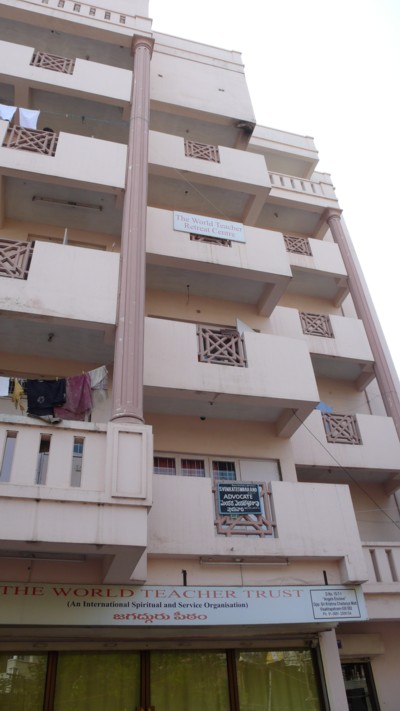
The WTT Retreat Centre. Our room is in the fourth floor, with the plate in front of the balcony.

I first wanted to upload some more pictures, but the Wlan connection is quite slow…
Architects of a New Dawn

Monday, January 5th, 2009

From another friend in California I got the link to a website called Architects of a New Dawn. It is a new social networking site by the musician Carlos Santana that is devoted to positive and transformative music and media.

On the site it says:

“Architects of A New Dawn is a project, born from the dream and vision of Carlos Santana, to create a new global network, driven by extraordinary music and powerful media content. It is designed to engage people of all walks of life to work together to create positive change in the global community where love can replace fear and where peace can replace conflict.”

Carlos Santana writes: “One of the things that has become very clear to me in recent months is that after carrying an idea in my mind and soul for decades that the time had come to bring my vision of Architects Of A New Dawn into reality. The world today is as deeply challenged as it is inspired. Never has there been a more profound time to harness the possibilities for positive change, especially in this era of mass communication. This is my invitation to you to join us in this transformational work.”

On the site you find a number of beautiful videos, and music videos, like “Sacred” (with scenes of Buddhist monks in the old Ankor Wat temple, Cambodia)

The site “is an invitation to join and connect with other Architects literally from every part of the globe to find ways to effect change and transform our world together.”

architects

Deep Roots of Living Spirituality

Friday, January 2nd, 2009

The last days I had been near Brussels in Belgium visiting members of the local WTT group. They had met over 25 years ago and formed as a group when Master EK came to Belgium giving lectures in the early 80ies. With his inspiration they had build some houses in a little forest about 30 km outside Brussels, to be able to live in nature and lead a life oriented along the spiritual lines outlined by the Master.

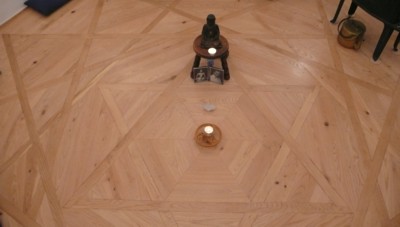
Each family has a house of its own, but they frequently meet for meditation and exchange. It was impressive to feel the deep roots formed through the common practice of living spirituality in daily life. Everyone has his own house / sphere, but significantly without fences in between, and this also spreading to the neighbours. In one of the houses there is a meditation room with a 12-pointed star on the floor, surrounding a 6-pointed star, in the middle of which there is a candle and little statue of the Buddha and pictures of the masters, as symbol of contemplation.

room1

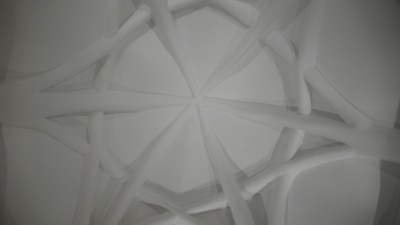
The ceiling is a white cupola with structures of energy lines meeting:

room2

There is a beautiful white crystal singing bowl resounding in the space. And when you intonate the OM, it echoes from the wall and the whole space starts resounding.

room3

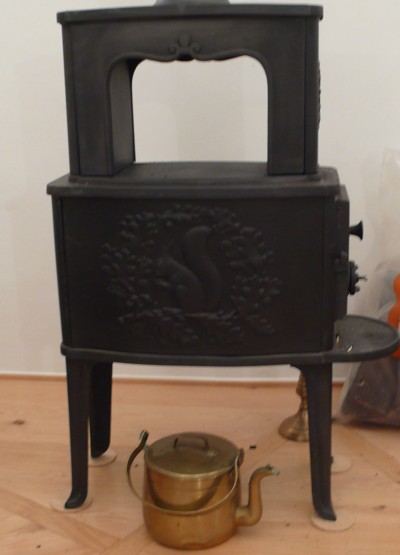
On the beautiful old stove in the room there is the sculpture of a squirrel, reminding me of the story in the old Indian epic Ramayana, where a squirrel is blessed by Rama, because it is running to and fro on the beach throwing grains of sand into the ocean to help him building a bridge to Lanka to destroy the demon who has stolen his wife: A symbol of selfless service regardless of the eventual outcome.

house
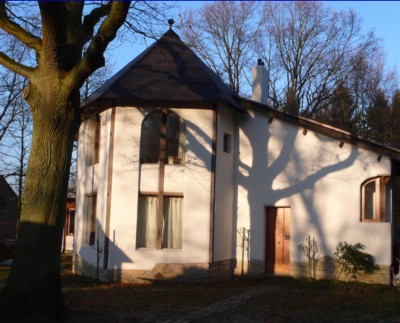
The house with the meditation room at the first floor

Art, Religion and the Inner Appearing in the Outer

Monday, December 29th, 2008

Last week I read an interview with the Swiss professor of art history, Johannes Stückelberger, about the relation between art and religion. He is teaching at two universities in Switzerland and will start teaching at the National Taiwan University in Taipeh (see link). In the interview he remarked that in the last years famous artists have started decorating churches with glass windows or art expositions are being held in churches in a way which was impossible some decades ago: Artists would have ruined their reputation: Religion was considered to be something private, and the churches were turned more to the inside. Now they go out again into visibility and understand their buildings as public places.

This thought is very fascinating: In other cultures religion or spirituality are much more part of public life. When traveling through India you see signs of the religious attitude of the people everywhere along the roads or in cars, at home or elsewhere in public. I have seen offices with pictures of gods and gurus in a way you would never show here in the west. Though at my office several collegues have little pictures of either a spiritual teacher or a representation of the Divine –  a little statue, a flower – it is quite uncommon at other places. The Christmas displays are more of a decoration value then of a declaration of one’s beliefs. The head-scarf, however, has here quite clearly a religious connotation, coming from a cultural background which didn’t go through the process of secularization.

I myself feel it is more natural today to speak about spiritual activities than it  it was some years or a decade ago. There seems to be a change towards a greater openness, and artists seem to experience this opening towards subtler spheres of perception, in their search for new ways of interpreting the reality. A sign for the growth of the Aquarian age?

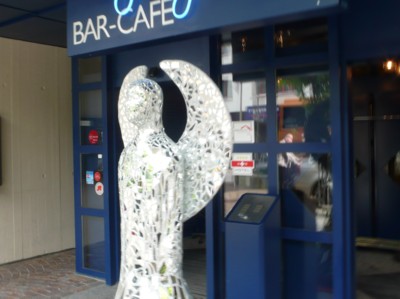
angel
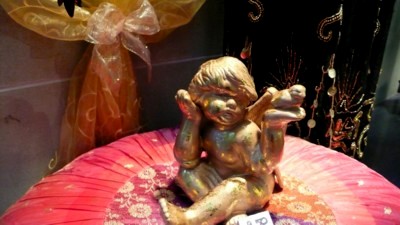
An angel in front of a café / bar in Engelberg.

Gods on Shopping Tour

Wednesday, December 24th, 2008

This morning while doing some shoppings in the city of Berne I discovered some nice shop window scenes. I love these “kitsch as kitsch can”-sceneries. The Indian Gods on tour in Swiss shop window decorations – what a colourful meeting.

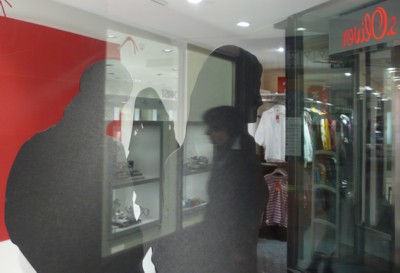
s01
Reflections of reflections – passers-by and display dummies

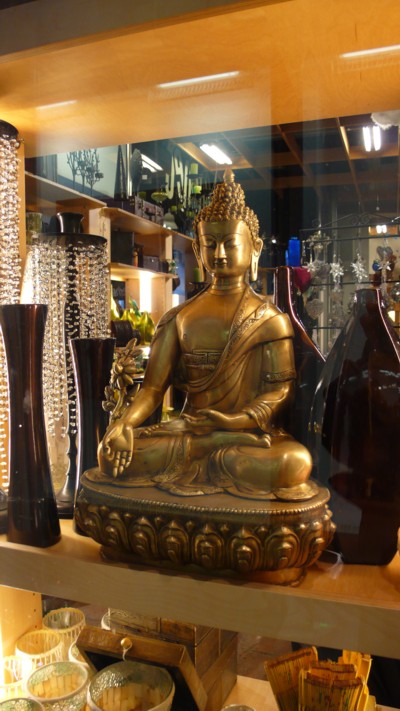
s02
Non-attachment in the shop display: The Buddha meditating

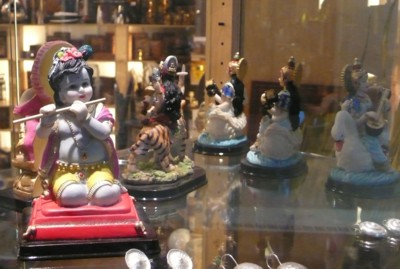
s03
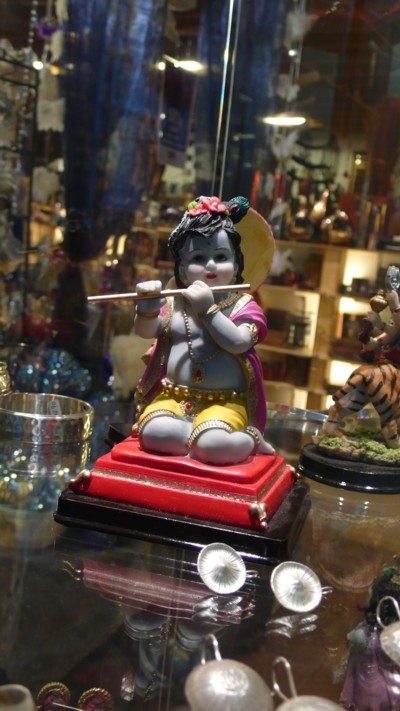
The child Krishna playing, accompanied with some Sarasvathis, and Durga listening in the back, on a tiger

s04
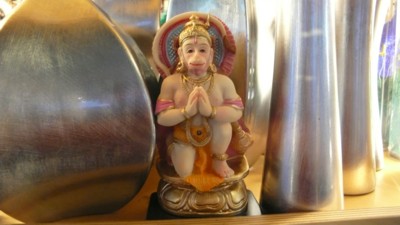
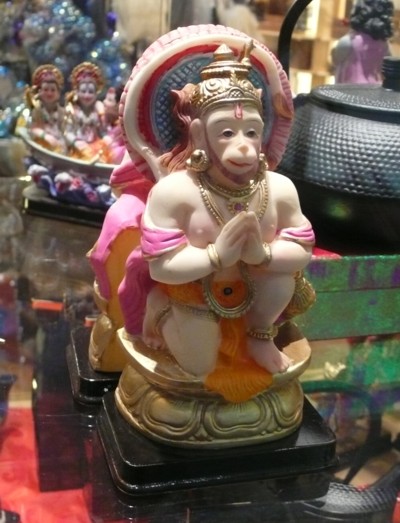
Hanuman between some vases – ready to serve

s05
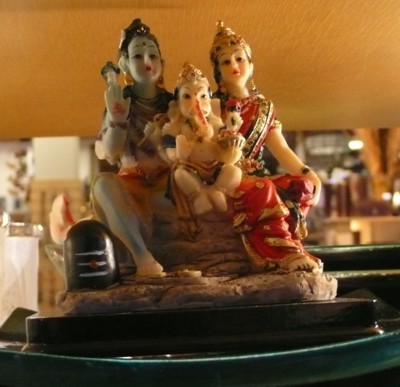
Shiva and Parvathi with Ganesha between the storage racks

s09
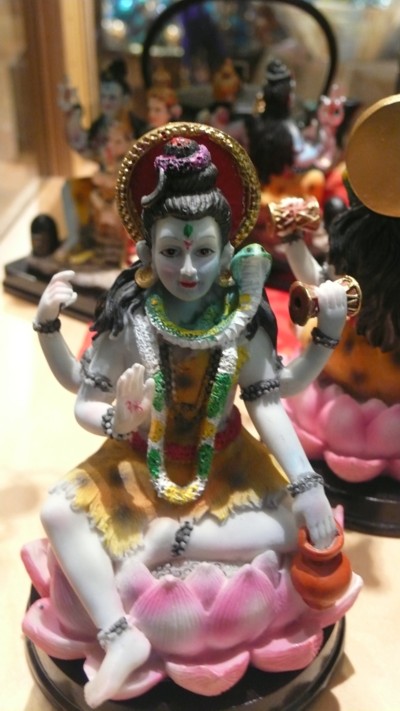
Shiva sitting on a lotus, with his drum and kamandulu (bowl), surrounded by serpents (symbols of time), blessing the photographer.

s08
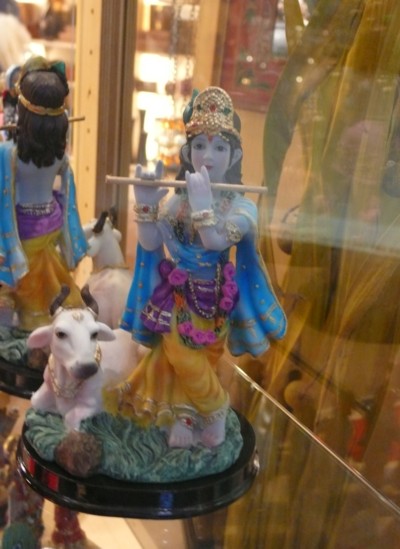
Krishna playing flute, with Nandi at his feet.

s06
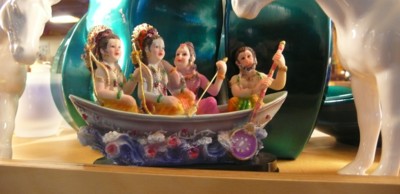
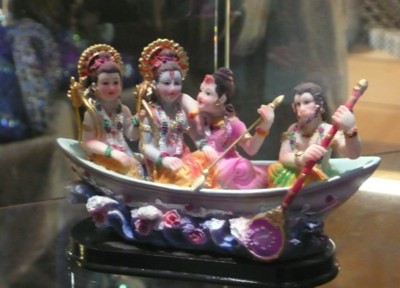
Rama, Sita, Lakshmana and Hanuman in a boat, surrounded by white horses

s07
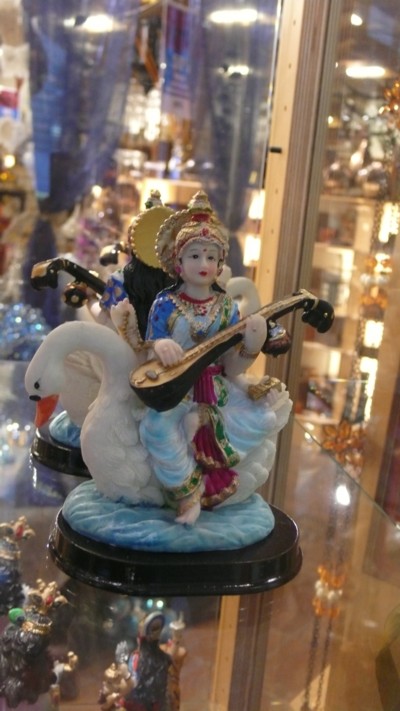
Sarasvathi, the Goddess of the Word and of Wisdom, sitting on the white swan (symbol of respiration), playing veena (instrument with 7 strings, symbolising the 7 planes, the music of creation).

s10
Another statue of Hanuman, in deep devotion

s11
Enchanting Krishna, playing the music of the soul

s12
Riding through the ocean of shopping illusions

s13
Melancholic angel: When shall I be redeemed from this boring shop existence?

s14
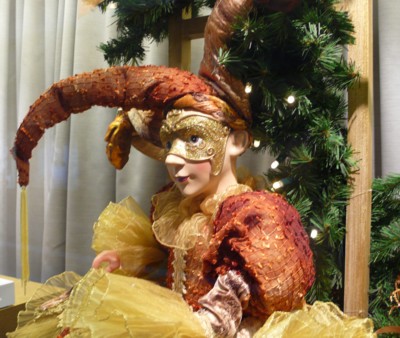
Harlekin pondering on the mysteries of commercialism

Jubilee Book – Witness of the Silent Sprouting of a Spiritual Impulse

Saturday, December 20th, 2008

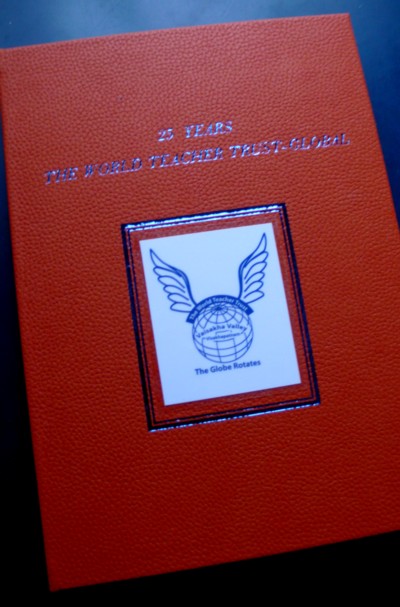
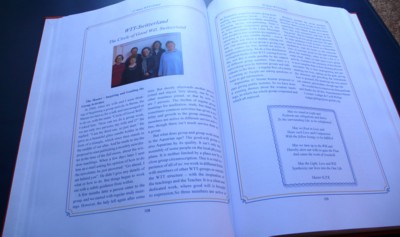
Two days ago a big parcel from the WTT-centre in Einsiedeln arrived, with books we will take to India in January. One of the copies, however, was for us – a beautiful hand-bound book on “25 Years The World Teacher Trust – Global”. Our friends in Einsiedeln had produced it in a limited edition. Last August we had been at the celebration, where a first copy was given to our teacher, Dr. K. P. Kumar.

jubi1

The book now has been enlarged with photos of the celebration and texts of the talks. I went a bit through the volume and was deeply impressed by all the work which had been done by Sri Kumar: 27 pages were filled with titles of talks and seminars given all around the world during these 25 years. I had the good luck of participating in a small number of these, and they had left a lasting impact on my life. And I’m looking forward to the next seminar in January.

I’m always amazed about the deep wisdom pouring out of him, with a tremendous range of spiritual topics. The book contains a lot of photos from the sacred places  he had been visiting all around the globe – and some places evoked memories in me. There are also some photos with our children, from a ceremony of introduction into writing and another ceremony of introduction into the wisdom teachings. Many groups have contributed reports on how they met the Master and the teachings, and some of the service activities were portrayed. Among these there is also the article about our group, which, with his guidance and inspiration, slowly but steadily had evolved over the last years.

jubi2

Through all these cumulated contents and pictures you get a faint impression of the enormously powerful, but very silent spiritual impulse which is manifesting through this work.

wtt_globe
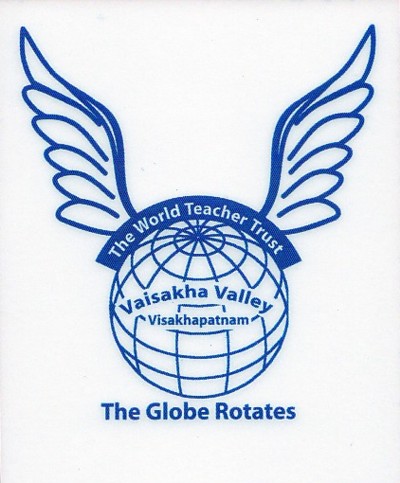
The sign of the WTT on the cover of the book symbolises the wings of the work of Spiritual Hierarchy uplifting humanity and the life on the Globe, thus creating a progressive movement.

Co-Travellers

Sunday, December 14th, 2008

Last Friday evening there was the third and last meeting of our series of public evening themes on „The Call of the Soul“. We were a group of nine persons, most of them members of our group a a few newbies. Before the meeting I felt quite groggy, for the last week at my office was very turbulent – the final sprint before the launch of the new intranet next Monday. But hardly we had started singing an invocation to the unity of all existence, all fatigue was blown away and the thoughts came flowing in.

I had prepared a powerpoint presentation on “The Fellowship” – a play with the title of a volume from the trilogy Lord of the Rings, but of course with a quite different content. It is about the persons and things coming across our way on the spiritual path. At a first glance it might not be obvious what this has to do with “my spiritual path”, seen in subjective individualistic terms, but the theme is of great importance, especially in the long run:

On the journey we don’t walk alone, we move in a group, in many groups. There are countless groupings travelling on the planet and they are going through their path of development. We are surrounded by many kinds of groupings, with which we connected and which accompany us. Very rarely we select the people with whom we are together on our journey, but it is no accident who the fellows are. They come together according to the law of resonance: We learn together and from each other. We learn to cooperate, to support or receive support.

When the taste of subjective living grows, the spirit of being together becomes stronger and the power of the lower nature decreases. Each one adds his stone to the building of a group, and an energetic temple is being constructed, where with a a loving understanding the hearts can meet.

Have a look at the presentations of this series.

fs25
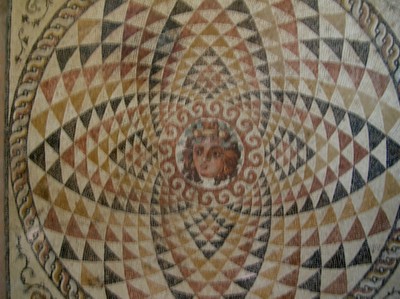
A mosaic in Corinth, Greece – a beautiful representation of the energy field of relationships.

Zanabazar – Living Buddha and Michelangelo of Asia

Saturday, November 29th, 2008

Today I came across the blog of “Don Croner’s World Wide Wanders“, with impressions from Mongolia and Buddhist monks and monasteries, Thangkas and people (scroll through the blog…). He has published a book on Zanabazar, (1635-1723) the son of one of the rulers of seventeenth-century Mongolia, and a distant descendant of Chingis Khan, whose spiritual propensities were apparent almost from birth and in 1639, while still a small boy.

Wikipedia says about him: “In 1640, Zanabazar, was recognized by the Panchen Lama and the Dalai Lama as being a “Living Buddha”…. Miraculous occurrences allegedly took place during his youth... Zanabazar has been called the “Michelangelo of Asia” for bringing to the region a renaissance in matters related to spirituality, including theology, language, art, medicine and astronomy. He composed sacred music, mastered the sacred arts of bronze casting and painting, created a new design for monastic robes, and invented the Soyombo script in 1686….

“He is probably best known for his incomparable sculptures, which rank among the greatest works of Buddhist art ever created.” These are really very beautiful sculptures of Buddhas and stupas. There is a short online biography of Zanabazar. and more information about him.

In his blog Don Croner wrote today from Mongolia about the beautiful Venus-Jupiter constellation which can be seen in the sky. Also here I saw it yesterday evening as a beautiful, clear picture over a nearby mountain. Don Croner is also running an interesting website on “The Legend of Shambhala“, with photos of stupas in the Taklamakan desert.


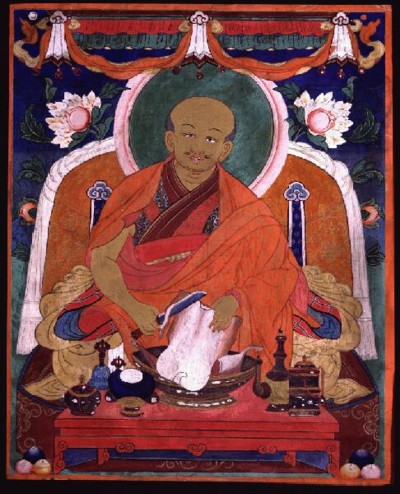
Zanabazar, from Wikipedia commons

Spiritual Self-Determination

Thursday, November 27th, 2008

Last weekend when traveling to Germany I found some time to read in the book on Religious Communities in the Canton of Berne. I found some interesting descriptions of today’s esoteric culture or new religious communities, confirming or clearing several observations of mine. In general most people don’t want to commit themselves to an organisation or structure, and the new groups are often also not so organised like the traditional religions – though there are other examples, too.

In the book it says that degree of organisation is not an adequate criterion for people, and often they don’t want any organisation at all, or structures are of a fleeting character. This is a really Aquarian mode of expression – decentralisation and issue-focus is more adequate. Many groups don’t define themselves even as religious, but prefer terms such as spiritual (like I do), philosopicial or esoteric, or even “scientific”.

Last monday I read in the New Zurich Newspaper an interview with Dorothea Lüddeckens, professor of the University of Zurich on Comparative Religion, about a meeting on changes in the new religious movements. She said that now 30 to 40 per cent of the Swiss population think that reincarnation is possible – a question denied by orthodox Christians. She pointed out that even many church goers today appreciate the offers of the churches, but are also interested in other spiritual ideas and practices, thus changing the popular Christian religiosity. Esoteric literature has invaded the main stream bookshops or alternative therapy systems the therapy market.

Many people don’t want an all-inclusive system, but take specific offers, like a patient using alternative medicine, a manager going for a time-out into a monastery, parents searching an alternative school for their children… It is a kind of self-determination, where people take what they value and leave away what they don’t. You can compare it with a shop, where you select what you are interested in – you don’t buy the whole shop.


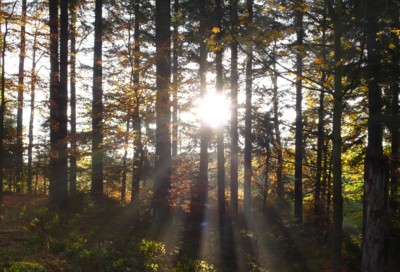
Seeing the sun through the forest is like seeing the truth through a multitude of concepts.

Journey to the Inside

Sunday, November 23rd, 2008

Friday evening we had the second meeting of our series of evening themes on „The Call of the Soul“, in a seminar room of a nearby hotel. The theme of this evening was “The Journey” (will be translated soon) Several of our friends weren’t able to come, and so we thought it would be a small round. Three newbies dropped in – an elderly lady, and two younger persons – and some friends of us, all together a group of eight persons.

We started with singing an invocation to the unity of all life, as a reminder to keep the awareness connected with it. There was a good energy of presence to be felt, and when I started talking a smooth flow of thoughts came in. I had prepared a powerpoint presentation with beautiful pictures, mainly from a series from a journey of friends to Ethiopia. The presentation was about basics of the spiritual path, about possible challenges and how to overcome them, and about entrance into the realms of the subtle worlds. After a little paus my wife conducted a meditation, starting with singing 21 times OM, and then some guided visualisations.

Afterwards we had an exchange about the experiences. Again it was astonishing how people had deep and similar experiences, though it was neither induced by us nor did we know each other before: There is a path to the inside, to the experience of inner experience – consciousness diving into itself. In his Mystic Mantrams Master CVV calls this “Dip deep” – dipping into one’s own awareness.

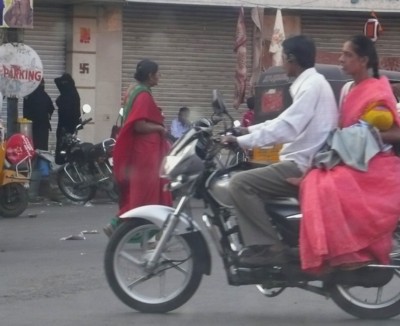
The next morning a photo of the presentation came into my mind: I had spoken about how it needs discrimination and mostly also help to orient on the path, not to get lost. And that it isn’t easy to discover the signs, which we easily fail to see. On the photo you see a scene from a street in Hyderabad, with people and motorbikes crossing – just a street scene. But when you have a closer look at the picture, you see on the walls occult signs, a most sacred symbol, the Swastika. It is a symbol of the “Wheel of Life”, the power of progressive evolution. But it is also a message about how these signs can get distorted and their sense perverted, like it has been done with the Nazi system, and so it became a symbol of power and dominion. Now it is seen in the West as a forbidden symbol, highly emotionally charged by pros and cons. You cannot just look neutrally on it in public without stirring partly violent reactions.


On the photo from the street in Hyderabad you hardly perceive it. It is the same with the messages from the subtle world, which you easily miss to note in everyday life, but which can help you open the doors to the inside when the awareness is open.