erk admin

spacerCircle of Good Will - Blog

Archive for the ‘Good Will’ Category

Anne-Sophie Mutter: Silence turns Music into Magic

Sunday, March 25th, 2007

I yesterday read an interview (PDF) with Anne-Sophie Mutter, one of the world’s most celebrated violinists, in the Swiss newspaper “Der Bund“. Some of her statements caught my eye, for they reflect a deep spiritual attitude:

“I’m incredibly disciplined, but only when I feel like it. However, I feel nearly incessantly like doing music.”
Real discipline in music like in spiritual matters isn’t something imposed from outside, but an urge from inside.

(Speaking about her two Stradivaris:) “The sound is the combination of many things. The violins are strongly marked by the musicians who have played them. A violinist leaves part of his soul in the instrument. … The way of playing changes the violin, the violin with its past contributes to the formation of sound of the respective string player.”
In spirituality you come to know that psychic energies leave traces on the surroundings like deposits and charge the objects with certain qualities. So you can magnetise something for making it more suitable.

“Music is a divine gift. Composers are a gift of God to all of us, listeners and performers.”

“Very early I have understood that I can make a difference. I support many social projects. After all, this social vein has to do with the fact that I wanted to become musician in order to be able to improve and to change things on a small scale. … When I organise a charity concert together with friends and can support my girls’ project in Romania with 400 000 Euro, I walk home on wings and think, my life makes sense, because – besides having an incredible joy playing music – I’m able to help people who out of their own accord aren’t able to lift themsselves out of the quagmire.”
This is the real impulse of doing good-will work, for the benefit of others. You can do it, b e it on a big or on a small scale, provided that you have the right motive.

“The silence during the concert is what finally turns an evening into magic. The silence of together merging into the music. The greatest compliment of a listener to a musician is that he forgets everything around him – caughing, reading – he is simple totally captivated.”
At first sight this might seem strange that silence is creating the magic and not the music. But when you listen to music with rapt attention, your personality merges into the experience of music, lifting you out of your body consciousness. It is a deeply spiritual experience, which is cultivated through meditation. Also the musician can experience this silence during his play. “True musicians attune to the musical symphony of Nature through silence and reproduce the music. Such music remains – not obliterated by nature and time.” says K. Parvathi Kumar in his booklet “On Silence“.

musician.jpg

Statue of a musician at the wall of the “Chinese Temple” in the garden of the Sanssouci Castle near Berlin.

A Dress funds Schools in India

Tuesday, March 13th, 2007

Numerous news sources reported that the French writer Dominique Lapierre and his wife Dominique Conchon-Lapierre had sold in an auction last December the famous black gown of Audrey Hepburn, that the actress wore in the 1961 film ‘Breakfast at Tiffany’s’. The auction brought $825,000.

The dress was a gift of its designer, Hubert de Givenchy, in order to help Lapierre’s schools in India, that had been devastated by floods. The Lapierres are financing with the money from the Hepburn’s dress about 15 schools south of Kolkatta, the first one just being inaugurated. A great good-will activity.

Dominique Lapierre has also written a book with Javier Moro about the Bhopal gas tragedy and its aftermath. At the occasion of the auction, Lapierre said that his book has stopped other ‘Bhopals from recurring around the globe’.

You can see from this page a video from the auction.

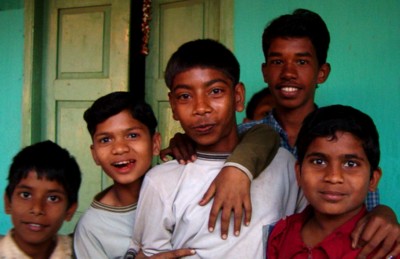
children.JPG

Children in India

The Pope’s Appeal to the Media: Upholding Truth, Protecting Dignity, Promoting Respect

Monday, March 12th, 2007

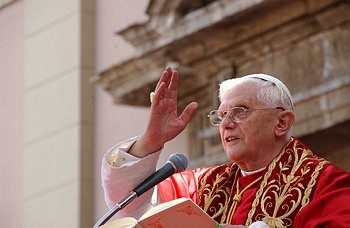
Last Friday the Catholic Church celebrated the World Social Communication Day. Pope Benedict XVI gave a media communication on Educating People to Truth, which can be underlined in the light of an understanding of general good will:

He pointed out: “While the print media struggles to maintain circulation, other forms of media such as radio, television and the internet are developing at an extraordinary rate. Against the backdrop of globalization, this ascendancy of the electronic media coincides with its increasing concentration in the hands of a few multinational conglomerates whose influence crosses all social and cultural boundaries.”

He further went on saying that internet too “has opened up a world of knowledge and learning that previously for many could only be accessed with difficulty, if at all.” “On the other hand, it is also readily apparent that much of what is transmitted in various forms to the homes of millions of families around the world is destructive.”

“The responsibility to introduce and educate children and young people into the ways of beauty, truth and goodness is,” he said, “a grave one. It can be supported by media conglomerates only to the extent that they promote fundamental human dignity, the true value of marriage and family life, and the positive achievements and goals of humanity. I appeal again to the leaders of the media industry to advise producers to safeguard the common good, to uphold the truth, to protect individual human dignity and promote respect for the needs of the family.”

prev58.jpg

Nobel Peace Prize for a Formula against Poverty

Sunday, December 10th, 2006

Today the Bangladeshi banker and economist Muhammad Yunus and the Grameen Bank founded by him are jointly awarded the Nobel Peace Prize, “for their efforts to create economic and social development from below.” With his idea of giving microcredits to entrepreneurs who are too poor to receive traditional bank loans, he has given a concept that has spread to nearly all areas of the world affected by poverty, over 23 countries by now. According to the German “Spiegel” magazine, over 100 million peole have aready got a microcredit. To ensure repayment, the bank uses a system of “solidarity groups”, which apply together for loans and act as co-guarantors of repayment and mutual support in the effort of economic self-advancement.

(c). www.muhammadyunus.org

Yunus is a fervent opponent to traditional development aid: “Poor people are not asking for charity; charity is not a solution for poverty.” And: “Only thing we need to do soon, redesign our institution and policies. People can change their own life provided they got the right kind of institutional support.” His goal is to free humanity from poverty by self-empowering the people: “Poverty in the world is an artificial creation; it does not belong to human civilization. We can change it.”

Intelligent help is a major quality of good will and of practical spirituality in the service of humanity. Muhammad Yunus is an outstanding example for this.

Changing the World Step by Step and through Silence

Wednesday, December 6th, 2006

I yesterday came across the extrordinary biography of John Francis, a black American who lives car-free and silent for 17 years, who is walking and sailing around the world to heighten environmental awareness (see the site Planetwalk.org). He stopped speaking until 1990 because he was arguing all the time why he refused to use cars. Through the long years of silence he has developed and enormous power of listening. He even made a PhD during his time of silence and later was recruited by the U.S. Coast Guard to write oil-spill regulations and by the United Nations Environment Program to serve as a goodwill ambassador. He also has published a book called Planetwalker: How to Change Your World One Step at a Time.
You find here an interesting interview with him.

5th December: International Volunteer Day

Saturday, December 2nd, 2006

The 5th of December is appointed by the UN as the International Volunteer Day. It is meant to offer an opportunity for volunteer organisations and individual volunteers to make visible their contributions – at local, national and international levels. Volunteer work is an indispensible part of society and of great importance for a good functioning of communities. However, its importance is often not well recognised.

In Switzerland a number of organisations has joined since several years to a volunteer’s forum. They are issuing a volunteer card with which people can document their activities and might get a better position with job applictions.

Volunteer work is an expression of good will and very important for spiritual development. You might like to read the Good Will in Action on the Value of Service (PDF).

See also our posts on The Future of Volunteer Work and Recruitment and Good Will Co-Operation.

A Touching Story about Appreciation

Wednesday, November 29th, 2006

Today I got an e-mail from a friend forwarding a nice story in German about the power of appreciation and recognition. It seemed that it was translated from English, so I “googled” it out and found several versions of the story, which is said to be true (by “truth or fiction”). So here it is:

ALL GOOD THINGS
By Sister Helen P. Mrosla
He was in the first third grade class I taught at Saint Mary’s School in Morris, Minn. All 34 of my students were dear to me, but Mark Eklund was one in a million. Very neat in appearance, but had that happy-to-be-alive attitude that made even his occasional mischievousness delightful.

Mark talked incessantly. I had to remind him again and again that talking without permission was not acceptable. What impressed me so much, though, was his sincere response every time I had to correct him for misbehaving – “Thank you for correcting me, Sister!” I didn’t know what to make of it at first, but before long I became accustomed to hearing it many times a day.

One morning my patience was growing thin when Mark talked once too often, and then I made a novice teacher’s mistake. I looked at Mark and said, If you say one more word, I am going to tape your mouth shut!” It wasn’t ten seconds later when Chuck blurted out, “Mark is talking again.” I hadn’t asked any of the students to help me watch Mark, but since I had stated the punishment in front of the class, I had to act on it. I remember the scene as if it had occurred this morning. I walked to my desk, very deliberately opened my drawer and took out a roll of masking tape. Without saying a word, I proceeded to Mark’s desk, tore off two pieces of tape and made a big X with them over his mouth. I then returned to the front of the room.

As I glanced at Mark to see how he was doing, he winked at me. That did it! I started laughing. The class cheered as I walked back to Mark’s desk, removed the tape, and shrugged my shoulders. His first words were, “Thank you for correcting me, Sister.” At the end of the year, I was asked to teach junior-high math. The years flew by, and before I knew it Mark was in my classroom again. He was more handsome than ever and just as polite. Since he had to listen carefully to my instruction in the “new math,” he did not talk as much in ninth grade as he had in third.

One Friday, things just didn’t feel right. We had worked hard on a new concept all week, and I sensed that the students were frowning, frustrated with themselves and edgy with one another. I had to stop this crankiness before it got out of hand. So I asked them to list the names of the other students in the room on two sheets of paper, leaving a space between each name. Then I told them to think of the nicest thing they could say about each of their classmates and write it down. It took the remainder of the class period to finish their assignment, and as the students left the room, each one handed me the papers. Charlie smiled. Mark said, “Thank you for teaching me, Sister. Have a good weekend.”

That Saturday, I wrote down the name of each student on a separate sheet of paper, and I listed what everyone else had said about that individual. On Monday I gave each student his or her list Before long, entire class was smiling. “Really?” I heard whispered. “I never knew that I� meant anything to anyone!” “I didn’t know others liked me so much.” No one ever mentioned those papers in class again.

I never knew if they discussed them after class or with their parents, but it didn’t matter. The exercise had accomplished its purpose. The students were happy with themselves and one another again.

That group of students moved on. Several years later, after I returned from vacation, my parents met me at the airport. As we were driving home, Mother asked me the usual questions about the trip, the weather, my experiences in general. There was a lull in the conversation. Mother gave Dad a sideways glance and simply says, “Dad?” My father cleared his throat as he usually did before something important. “The Eklunds called last night,” he began “Really?” I said. “I haven’t heard from them in years. I wonder how Mark is.”

Dad responded quietly. “Mark was killed in Vietnam,” he said. “The funeral is tomorrow, and his parents would like it if you could attend.”

To this day I can still point to the exact spot on I-494 where Dad told me about Mark. I had never seen a serviceman in a military coffin before. Mark looked so handsome, so mature. All I could think at that moment was, “Mark, I would give all the masking tape in the world if only you would talk to me.”

The church was packed with Mark’s friends Chuck’s sister sang “The Battle Hymn of the Republic.” Why did it have to rain on the day of the funeral? It was difficult enough at the graveside. The pastor said the usual prayers, and the bugler played taps. One by one those who loved Mark took a last walk by the coffin and sprinkled it with holy water. I was the last one to bless the coffin. As I stood there, one of the soldiers who acted as pallbearer came up to me. Were you Mark’s math teacher?” he asked. I nodded as I continued to stare at the coffin. “Mark talked about you a lot,” he said.

After the funeral, most of Mark’s former classmates headed to Chuck’s farmhouse for lunch. Mark’s mother and father were there, obviously waiting for me. “We want to show you something, his father said, taking a wallet out of his pocket. “They found this on Mark when he was killed. We thought you might recognize it.”

Opening the billfold, he carefully removed two worn pieces of notebook paper that had obviously been taped, folded and refolded many times. I knew without looking that the papers were the ones on which I had listed all the good things each of Mark’s classmates had said about him. “Thank you so much for doing that,” Mark’s mother said. “As you can see, Mark treasured it.”

Mark’s classmates started to gather around us. Charlie smiled rather sheepishly and said, “I still have my list. I keep it in the top drawer of my desk at home.” Chuck’s wife said, “Chuck asked me to put his in our wedding album.” ”I have mine too,” Marilyn said. “It’s in my diary.”

Then Vicki, another classmate, reached into her pocketbook, took out her wallet and showed her worn and frazzled list to the group. I carry this with me at all times,” Vicki said without batting an eyelash. “I think we all saved our lists.” That’s when I finally sat down and cried. I cried for Mark and for all his friends who would never see him again.

The density of people in society is so thick that we forget that life will end one day. And we don’t know when that one day will be. So please, tell the people you love and care for, that they are special and important. Tell them, before it is too late.


Recruitment and Good Will Co-Operation

Saturday, November 18th, 2006

Yesterday evening I was discussing with my wife the difficulty, how people can find access to and a place in voluntary work of good will, especially in a spiritually motivated work: A short time ago I had heard from two persons who, due to different reasons, had withdrawn from publication projects with which I am co-operating. And two months ago the person who had helped me translating the monthly Lunar Messenger into English had withdrawn due to work overload with other professional and private commitments, so that I am doing these translations myself again – though not “living” in the English language. And for the person who also two months ago had withdrawn from the Spanish proof-reading, again due to work-overload, quickly another person had stepped in. Recently in my team at the office a web-developer had resigned from the job, so that I’m now searching a replacement.

In professional life you just publish an advertisement, if you are looking for new collaborators. In good-will work it doesn’t work like that. People come to help when they see a function where they could find self-unfoldment (see the blogpost on The Future of Volunteer Work.). Like with an apprenticeship it needs quite a time and monitoring before people can be charged with more responsible work, for example for translation or in publishing. It needs skills, flexibility and readiness to co-operate in a rhythmic, persistent manner. For a spiritually motivated individual it is quite a step to start working. And it is more demanding working in a group. People often drop out after an enthusiatic start, because they meet difficulties or they suddenly have other priorities.
You need to develop such a co-operation and commitment to a voluntary work, that a qualitatively high standing result is produced, and this takes time. I observed it with the Paracelsus Journal or the Vaisakh Newsletter, both projects of the WTT with which we are co-operating. It is the experience that people are attracted to such a co-operation through the magnetism of spiritual wisdom. In-spiration is the best and lasting power for such a commitment and self-commitment.

By the way: The WTT movement started today 35 years ago, on 18th November 1971. It grew in slow bur sure steps out of the underlying spiritual seeds. It has given inspiration and a platform for many a spiritually inspired activity of good will.

Exchange Meeting: Developing Good-Will Group Activities

Tuesday, September 19th, 2006

We are working in a network of groups of the World Teacher Trust, which is focused on service activities on the background of inner transformation work. Last weekend we were at an exchange meeting of group responsibles in Einsiedeln, Switzerland. 30 persons from Austria, Belgium, Germany, Spain and Switzerland had come together. They are active in different projects. It was a very intense and focused exchange.

Saturday morning was devoted to clarify questions around the Paracelsus – Health and Healing magazine. It is a publication run solely by volunteers working in their freetime – with activities ranging from gathering articles, translations for a 3-language publication, layouting, printing, dispatch, administration to marketing… Many collaborators have developped professional qualities in the work, which often is very demanding.

In the afternoon several gorup service projects in the social field were presented. It was fascinating to see how by intelligent commitment small groups are running substantial social projects such as on migrant integration in Spain, a school in Kinshasa, Congo, a food distribution project in Argentina or a children summer camp in Switzerland.
Sunday morning we engaged in ideas for developing new initiatives. The whole time the focus was very much on practicality and inter-connection. I felt very much inspired when we returned home.

Door-Openers for Good Will

Wednesday, August 23rd, 2006

Yesterday I was at the Swiss annual ambassadors conference in Berne, looking after a stand during a pause. It was interesting to observe the diplomats – 95 per cent men, in dark suits, grey-haired jovial representatives of Switzerland from all over the world. I had a short talk with an ambassador from central Africa and exchanged some impressions with a gentleman from another stand, of Swiss Timber.
He told me that Switzerland is exporting quite an amount of wood to countries like Pakistan, Afghanistan or Saudi Arabia. He had been around the world in several crisis areas and said that, though sometimes ambivalent, the reconstruction in crisis areas is always a big business where many different players are on site. For the export business they keep in contact with the embassies, as door-openers for business interests.
I thought why not door-openers for good will activities. Good will however might not need exportation, since you can meet it everywhere. The work is also mostly more silent, not attracting attention. But if you are engaged in some good work, you represent also its interests.