
erk admin

spacerCircle of Good Will - Blog

Archive for the ‘Good Will’ Category

A Call from a Mayan High Priest

Tuesday, May 15th, 2007

Yesterday a friend from Sweden sent me a text with a call from Don Alejandro Oxlaj, Grand Elder of the Maya, for Global Meditation on May 22. I found it also on the web, posted last Saturday. Don Alejandro is head of the National Mayan Council of Elders of Guatemala, Day Keeper of the Mayan Calendar, a 13th generation Quiche Mayan High Priest and a Grand Elder of the Continental Council of Elders and Spiritual Guides of the Americas.

There are some touching thoughts in his call. It’s worth while reading the whole text. Here are a few extracts.

“We all are children of the Earth, we are flowers of the garden of our Creator coming in different colors, in different shapes, in different sizes, with different aromas; speaking different languages, and each one worshiping and meditating in their own way to the same Creator who has different names according to their own culture….”

“Let us talk now about our present times. We enjoy new advances in technology, inventions that make everyday life easier for us, we all use them, but the negative side is that we are finishing up our forests, and contributing to the contamination of the planet, the rivers are drying out, the waters are being contaminated. Our crops are affected by plagues as well as plagues killing our animals. We are threatened by contagious illnesses, incurable illnesses unknown in the past… Very harmful are the use of chemicals, the insecticides, transgenic seeds, etc. …”

“Now lets speak about the future. We, the traditional Mayan elders, and all indigenous peoples in the world, meditate on the future. We don’t think only for today, the present, we think for tomorrow, for our children, grand children and future generations. We see a dark shadow approaching, a shadow that will cause a lot of harm. It is the great contamination. All this is due to man’s creation… We don’t want any more wars, no more death, no more nuclear testing, no more chemicals, because the warming up of the planet is unbearable to Mother Earth. If we don’t change, sooner or later, she will strike back with millions of lives lost…”

“Our Creator created us here over the face of the earth to worship him, to love and respect each other. We all are equal, we are flowers of the earth, in different sizes, of different colors, with different songs, with different smell, but all looking at our Creator, honoring him with different dances, different music, different ceremonies. We all plead to him, we are his children, he is the creator of all that exist, all that we see and all which is beyond our senses. He has given us our life with an intelligence to do well…”

May 22nd 2007 is 5 Ajpu, the Day of Grand Father Sun, he shines upon all of us equally, he doesn’t know discrimination, he doesn’t get lost on his path, he doesn’t get ahead or behind of himself. He gives us warmth, he gives us life. One Sun, one Air, one Water, One Mother Earth. May 22nd 2007 day of Grand Father Sun, Grand Mother Moon.

The Maya Prophecy says: “Arise, all arise, not one nor two groups be left behind, together we will see once again the place from where we have come from.”
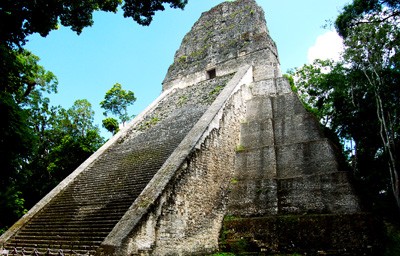
tikaltemplev.jpg
Mayan Tikal Temple, Guatemala, © Leonardo C. Fleck, Wikipedia
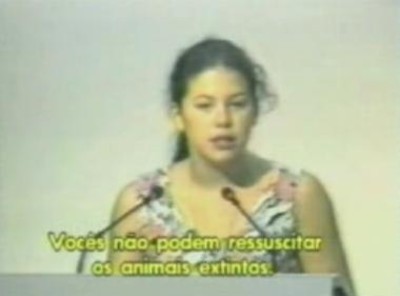
A Child Appealing to the UN to Save the Future

Tuesday, May 8th, 2007

I just got a from a Californian friend a link to a fascinating videotape with Portuguese subtitles of a child eloquently appealing to adults, delegates of the United Nations Environmental Conference to act upon what we teach children in kindergarten: to share, to clean up our mess, to care about others. My friend wrote:

“Three 12/13 year old children have dared to form an environmental children’s organization to be the change they hope to see in the world. Looking into children’s eyes and seeing 7 generations hence we can re-examine our values today, and change our habits. As Marshall Rosenberg observed, things we do habitually are not necessarily natural. We sometimes assume that and confuse the two.”

child.jpg

“Losing my future is not like losing an election or a few points on the stock market.”

Good Will Networking and Perseverance

Friday, May 4th, 2007

In the last weeks I had been working on compiling the elements for the Annual Report of the World Teacher Trust (WTT). Groups and individuals from different countries of the West, which feel related with this movement, have sent reports, about group livings (seminars) and about their good-will activities in different fields of social service activities as well as their spiritual work. The report is mostly in English, some contributions also in the local languages of the groups.

I have been doing the co-ordination and editing now since five years. Though it is quite some work, I like it. It is very inspiring to see the manifold good-will initiatives. In the course of the years several substantial activities have arisen out of the spiritual impulse of the WTT and our teacher, Dr. K. P. Kumar.

What fascinates me with this movement is that the focus on practice arises out of a deep spiritual impulse, and in general there is a hearty relation in the network of people. For me the annual report is an occasion to keep in contact with a number of persons. So it is a good networking instrument. It will be circulated to the groups and interested individuals in the course of May, but not in public. People committed to good work in silence don’t want their names to go out.

The report also makes me think of how difficult it is for many to establish a good balance between the different fields of life: Professional work for maintaining the living, family life, social contacts to keep good exchanges, then, for those who walk the spiritual path, maintaining a regular rhythm of inner work, plus some kind of a service activity. The report is for me a good testimony how people grow when they work with these essentials.

I come across others who lose themselves in fancies, in books and in imagining about sublime topics. Interested in many things they fail to focus on the essential and to go into depth. Respecting the basics is most important to gain a stable foundation. And building the foundation often takes years of perseverance.

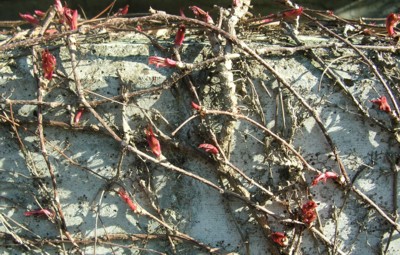
wall.jpg
The network of sprouting life

UNEP Campaign to Plant a Billion Trees

Tuesday, May 1st, 2007

I yesterday came across the wibsite of the United Nations Environment Programme (UNEP). Last November they have launched a worldwide “Plant for the Planet: Billion Tree Campaign“. People, communities, business and industry, civil society organizations and governments are encouraged to enter tree planting pledges online and help planting at least one billion trees worldwide during 2007.

plant_logo_english.gif

At the moment there are already 10,549,705 trees planted and pledges given for 810,485,520 trees. “We have but a short time to avert damaging and economically debilitating climate change. The goods and services provided by forests are worth billions if not trillions of dollars to the global economy. Forests are natural and economically important ‘sinks’, sequestrating carbon from the atmosphere and locking it away in trunks and branches. Globally, forest cover is at least one-third less than what it once was. It is time to reverse the trends, it is time to act” says Achim Steiner, UNEP executive director.

Al Gore writes in Earth in the Balance: “The symbolism – and the substantive significance – of planting a tree has universal power in every culture and every society on Earth, and it is a way for individual men, women and children to participate in creating solutions for the environmental crisis.”

Many nations and individuals have joined the initiative, also artists, and on the UNEP-website you find instructions how to plant trees or animation videos (wmv) and more material. They have also beautiful sayings on “Trees and Humanity“. Here are some:

“If you are thinking a year ahead, sow a seed.
If you are thinking ten years ahead, plant a tree.”
Chinese poet, 500 BC

“He who plants a tree loves others beside himself.”
English proverb

“They are beautiful in their peace; they are wise in their silence. They will stand after we are dust.
They teach us, and we tend them.”
Galeain ip Altiem MacDunelmor

“A society grows great when old men plant trees whose shade they know they shall never sit in.”
Greek proverb

“Even if I knew that tomorrow the world would go to pieces, I would still plant my apple tree.”
Martin Luther

“To me, nature is sacred; trees are my temples and forests are my cathedrals.”
Mikhail Gorbachev

“Trees are poems that Earth writes upon the sky. We fell them down and turn them into paper, that we may record our emptiness.”
Kahlil Gibran

“The forest is a peculiar organism of unlimited kindness and benevolence that makes no demands for its sustenance and extends generously the products of its life and activity; it affords protection to all beings.”
Buddhist Sutra

“If what I say resonates with you, it is merely because we are both branches on the same tree.”
W. B. Yeats

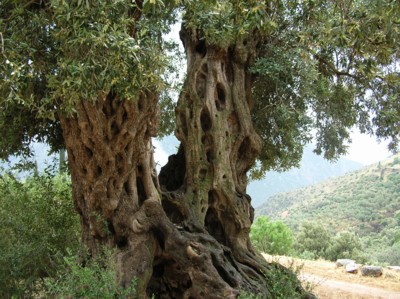
greece05_delphi_0731.jpg
Old Olive Tree in Delphi, Greece

Couch Surfing

Thursday, April 26th, 2007

There are innumerable ways of bringing good will into daily life. One interesting initiative is “Couch Surfing“, an online community that has started 1999 in Montreal and now has over 200.000 members in over 215 countries. They are trying to network people who like traveling with others who offer on a free basis a city tour, a common meal or even a possibility to stay over night (“Couch Surfing”). They say about their work:

“CouchSurfing seeks to internationally network people and places, create educational exchanges, raise collective consciousness, spread tolerance and facilitate cultural understanding.

As a community we strive to do our individual and collective parts to create world a better place, and we believe that the surfing of couches is a mean to accomplish this goal.

CouchSurfing is not about the furniture, not just about finding free accommodations around the world; it’s about making connections worldwide. We make the world a better place by opening our homes, our hearts, and our lives. We open our minds and welcome the knowledge that cultural exchange makes available. We create deep and meaningful connections that cross oceans, continents and cultures. CouchSurfing wants to change not only the way we travel, but how we relate to the world!”

Another way of couch surfing:
couch.JPG

Google Online Mapping Initiative against Darfur Genocide

Thursday, April 12th, 2007

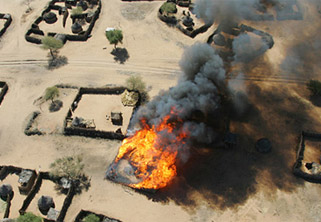
You might have read many times in the media, that a terrible genocide is going on in Darfur, Sudan. To date about 2,500,000 civilians, targeted because of their ethnic or racial identity, have been driven from their homes, more than 300,000 people killed, and more than 1,600 villages destroyed by Sudanese government soldiers and government-backed militias. Nevertheless the public reaction of governments is still quite low.

Google and the US Holocaust Memorial Museum have just started an unprecedented online mapping initiative to visualise the systematic destruction of tens of thousands of homes, schools, mosques etc. by using satellite images: All users of the free Google Earth™ can now download a mapping layer prepared by the museum, which gives detailed information on the situation.

Here you find suggestions of the museum what you can do with this mapping and also other ways to help rising the awareness for the atrocities going in in Darfur. So you can add placemarks on locations in Darfur and Chad identifying destroyed villages, refugee camps, or other evidence that helps people understand the crisis. An innovative approach to collect, share and visually present to the world critical information on emerging crises and to sensitise the public!

burningdarfur.jpg Google/USHMM

See also the online-game “Darfur is Dying” as well as the blogpost on “Computer Games against Disasters“.

A Cultural Renaissance

Wednesday, April 11th, 2007

I yesterday got some invitations to a conference end of May, of the Maitreya Sangha, to be held at the University of Redlands, Southern California. It’s a bit far away and I’m at an other event at that time… The title of the conference is: “A Cultural Renaissance. The Dynamic Power of Right Human Relations in Solving the Problems of Humanity“.

I appreciate activities furthering good will – if they lead to a practical commitment and not get stuck in talks about lofty ideals. For the invitation stirred up old memories:
I once met the initiator of this Maitreya Sangha, Keith Bailey, 12 years ago at a conference in Santa Fe, USA. He is a musician – drums and percussion – and he gave an impressive concert. He has a masonic background and is also founder of the Grand Lodge AUM.
The conference at that time was full of lofty talks “about” spirituality, and I myself had given a toplofty speech. Since then I have come down into into the “valleys” of a much more practical spirituality, casting off much ballast of spiritual concepts.

This conference seems to be based on more sound grounds: In the invitation it says:
“The questions of motive, purpose and group usefulness determine the spiritual nature of an activity. To work for the good of the whole, to be cognizant of the One Life pulsating through all forms, and to work in the consciousness that all men are brothers are the initial qualities which a citizen of the spiritual kingdom must demonstrate…
Goodwill nourishes the spirit of understanding and fosters the manifestation of the principle of cooperation…
A sense of personal responsibility – for group, community and national affairs…
Serving the common good – through the sacrifice of selfishness. Only that which is good for all is good for each one—one for all and all for one! These are spiritual values, inspiring the conscience and the consciousness of those who serve to create a better future and way of life.”

May this conference – and these thoughts – be an inspiration for the work for “A Cultural Renaissance”.

maitreyasangha.jpg
From the website of Maitreya Sangha.

As per Maitreya you might like to read the Lunar Messenger on Lord Maitreya.

Sponsoring Small Businesses to Help the World’s Working Poor

Wednesday, April 4th, 2007

A San Francisco company has taken the idea of microfinance, which has become popular through the Nobel Prize winner Muhammad Yunus, and upgraded it for the Web. Kiva lets you connect with and loan money to unique small businesses in the developing world. By choosing a business on Kiva.org, you can “sponsor a business” and help the world’s working poor make great strides towards economic independence.

Thus Kiva is using the power of the internet to facilitate one-to-one connections that were previously very expensive. The individuals featured on the Kiva website are real people who need a loan and are waiting for socially-minded individuals to lend them money.

Sponsoring Small Businesses to Help the World’s Working Poor Throughout the course of the loan (usually 6-12 months), you can receive email journal updates from the business you’ve sponsored. As loans are repaid, you get your loan money back. From there you can cash out, or lend it out again to another person in need.

Kiva, which means “agreement” or “unity” in Swahili, would allow people with a little bit of extra cash to use their credit card or the online money transfer company, PayPal, to lend directly to African entrepreneurs. Kiva got its start a little more than a year ago in Uganda, where it forged partnerships with local microfinance institutes so that each business would be vetted and approved before being posted on the site. It has given out more than $400,000 in loans. And what started in one small village in Uganda has spread to 11 other countries just in its first year.

Here you can see a video on the project. Since everything has more than one side, there are also people criticizing the approach of Kiva by pointing out that other microfinance organisations take loan interests to cover the costs and that Kiva with their interest free loans is destroying the local banking organisations.

kiva1.jpg

When does Compassion Lead to Action?

Thursday, March 29th, 2007

We all get frequently confronted with news pictures or situations about people in need, with an open or hidden appeal to help. Where do you act? Where do you withdraw? Where does a “compassion fatigue” set in?

In their new blog “VoxBlog online debates“, AlertNet (the humanitarian branch of Reuters press agency: alerting humanitarians to emergencies) writes:

“Reading your morning paper, two articles catch your eye. One is about a new study that finds almost 4 million people have died in war-torn Democratic Republic of Congo. The other tells the story of “little Mary”, a 12-year-old Ugandan girl whose lips were cut off by rebel fighters. Which story makes you react?”

They take up the discussion from an interesting article by Paul Slovic in “Foreign Policy“. A short extract:
“A recent study I conducted with Deborah Small of the University of Pennsylvania and George Loewenstein of Carnegie Mellon University found that donations to aid a starving 7-year-old child in Africa declined sharply when her image was accompanied by a statistical summary of the millions of needy children like her in other African countries. The numbers appeared to interfere with people’s feelings of compassion toward the young victim.
Other recent research shows similar results. Two Israeli psychologists asked people to contribute to a costly life-saving treatment. They could offer that contribution to a group of eight sick children, or to an individual child selected from the group. The target amount needed to save the child (or children) was the same in both cases. Contributions to individual group members far outweighed the contributions to the entire group… When writer Annie Dillard was struggling to comprehend the mass human tragedies that the world ignores, she asked, “At what number do other individuals blur for me?” In other words, when does “compassion fatigue” set in? Our research suggests that the “blurring” of individuals may begin as early as the number two.”
(Paul Slovic studies risk and decision-making and is professor of psychology at the University of Oregon. )

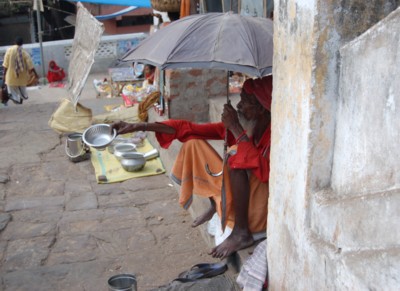
When I’m being flooded by calls for help or donations, I sometimes ask myself, where does compassion lead me – or others – to action? With certain themes I have a clear decision, but there remains a blurring area, where to help – and do it. Beyond the individual decision there remains a general impulse of good will, even though physical action is only possible in certain situations.

swamibegging.JPG

A swami begging in front of a temple in Simhachalam, India.

Practical Peace Education for Palestinian and Israeli Children

Tuesday, March 27th, 2007

A friend from California sent me the following text:

“Here is a good example of people using their spiritual heart and will and taking positive action where it is needed. The Salaam Shalom Educational Foundation has key programs underway with amazing leaders and participants dedicated to making a difference for Palestinian and Israeli children and their families. Indeed, their work touches all of our lives. Any work focusing on right human relations reverberates throughout the network.

I have met and gotten to know some of the founding and supportive members of this foundation. I have great respect and admiration for what they have accomplished in a short period of time, and the long range goals they are systematically working towards. They are truly inspired, and inspiring.”

In their newsletter they report about conflict resolution camps or programs for cultivating and selling Palestinian olive oil to help farmers.

On their website it says: “Peace isn’t something just to believe in, it is something to work for, and we are teaching children in the Middle East how to do it.”

salaamshalom1.jpg