
erk admin

spacerCircle of Good Will - Blog

Work and Living a Meaningful Life

August 19th, 2007

Last week I read an interesting interview in the NZZ with Theo Wehner, professor for work psychology at the Center for Organization and Work Sciences of the ETH Zurich, about the identity crisis of the work society:

Often in our modern society people don’t succeed in blending work, meaning and fun. In surveys about one third of the persons employed said they would like to stop working if they could. However, two thirds would like to continue, though under changed conditions.

In the 1980ies people said they would like to change their working conditions, in the 1990ies they wanted to have less pressure of time, and now they want more “authority over time” or leisure time.

People however, who lose involuntarily their work are often so much blocked that they can no longer even fulfil their personal duties nor their hobbies. Working is a measure for disciplining and socialising.

It is more and more difficult to find meaning in modern industry and service jobs. Work is being experience as being chopped up into little pieces, and one’s own contribution cannot be experienced within the whole.

Many people commit themselves to voluntary work without payment in charitable or non-commercial activities. They want to do an activity which they like and which is meaningful to them. This is more important than making new acquaintances or giving money for some charitable activity. They found out from their researches over the last years that the main purpose is to do something meaningful, and this is difficult to find in many jobs.

Most volunteers are middle-aged people, where they feel that they want to give something back to society. If they cannot do this, there is the danger of burnout or “mentally giving notice”. Jobless people first want to find a job before going into volunteer work. They found people who after having lost their jobs weren’t anymore able to do their previous activities in an association.

People who had a meaninful life normally can also cope well with the situation of retirement and find something new. The dream of “never working again” seems to be the result of a failed work relation and not a way into freedom.

See also the blogpost on “How to live happy” or the post on The Future of Volunteer Work.
neuorientierung.JPG
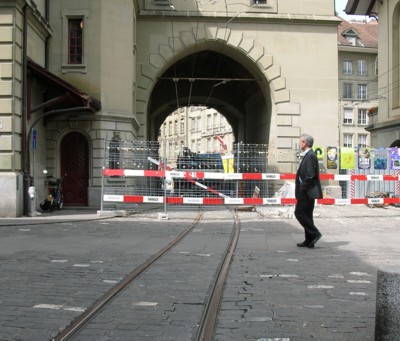
When the old tracks are blocked: Finding a new orientation in work life.
Understanding Relations

August 19th, 2007

My wife is accompanying several young people in different situations in their lives. It is done very informally, but from her side with intention and not just undesigned. She said to me this morning: “I had been missing such orientation very much in my youth, perhaps that’s the reason why I’m trying to help this way.”

She told me of a talk she had with the daughter of a friend who is about to start her university studies. Since over a year the girl has a committed relationship. The affair seems to be symbiotic, i.e. both feel a passion for each other and want to live together. However, there are differences in attitudes. My wife asked, what the common ground was, and it was not so clear. The girl said, doing projects together, but didn’t exactly know what kind of projects. From the beginning he wanted from her an “eternal commitment”, she felt constricted by this. She was unsure what in these incertitudes was her part and what was from her partner.

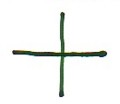
My wife loves illustrating inner processes and relations with little diagrams (see here, here and here): A person who is centred within himself is living in a right angle:

recht2.jpgand integrated kreiskreuz.jpg. You might encounter situations or emotions without losing your right angle. wolke1.jpg

In a relation, you can turn to the other without losing your inner centre. It is like turning your right angle cross towards the other, and the angles meet. The meeting point can be on different levels – on the physical, emotional or mental or even higher levels (represented by the sun). meeting.jpg And you can meet on different planes at the same time. When you have a congruence in something higher – common ideals, attitudes, values – it is more easy to find congruence also in other points, like doing a project together. And also to overcome problems and conflicts in matters of day-to-day life and not to get stuck-up. In a relation harmony isn’t always necessary, but if the fundamentals are sound, it is likely to continue as a good relation, where the partners aren’t bound to each other by conflicts.
My wife mentioned: “Some couples just seem to have as a common project raising the children, and when the children are grown up, they separate again.” She asked the student about her higher meeting points with her partner, and the young woman wasn’t sure about them. She wasn’t even sure about her own purpose in life, nor about her partner’s. She felt, she had to ponder on what really is the common denominator in her relation. She surely will find out.

relation1.jpg

This blog-post has been translated into Spanish, together with some other posts of this series.

Silver – Stabilising Emotional Ups and Downs

August 17th, 2007

A friend wrote me some days ago that she sometimes feels depressed and disappointed and that she has troubles in getting the equilibrium. She had read that this is related with the solar plexus centre: “Although I know it represents the balance between the soul and the body, I don’t know yet how to manage my emotions.”

A short time ago when she was feeling quite bad, she went to a doctor. The lab analysis said that she is physically healthy, and the doctor told her that she has a depression. She should see a psychiatrist or a psychologist. She didn’t want to go to any of them, but decided to go through the process alone with meditation and studying. She also was planning to do some work for needy people to overcome loneliness.

I encouraged her plan to do some volunteer activity, for helping others is a good antidote against solitude and feeling depressed. I have observed that these feelings come when you are not in the flow of life. Life wants to flow like a river, being active for others is like flowing water, being blocked within your own circle like stagnated waters. Meditation and studying alone don’t help in getting into a flow, but activity for others does. For a good flow in life the wisdom teachings recommend the triangle of meditation-study-service, and in this a meaningful activity is very important and must not be neglected.

A rhythmic routine does wonder in stabilising. Having ups and downs is very normal, like high tide and low tide. Especially on the spiritual path these fluctuations can be quite intense for some time. It isn’t a disease, but an integration process. During these processes an academic psychologist might not be the best help.

I told my friend that for stabilising emotional ups and downs the wisdom teachings recommend the use of silver. It is related to the Moon, to psyche, and to the zodiacal sign of Cancer governing the circulatory processes in the body. Silver affects sensitivity, psychic susceptibility and behaviour. It is related to the solar plexus centre and the reactive faculty of the mind. Silver in homoeopathic form (Argentum nitricum) is a remedy suited for calming the solar plexus. You also can fill water into a silver cup in the morning, keep it in a room with a current of air and drink it in the evening. Then you refill the cup, put it to the air and drink the water on an empty stomach in the morning. The water gets impregnated by the quality of the silver.

My friend answered: “l tell you that just today I’ve begun drinking the water which was during the night in a silver jug, and I feel happy, really believe me, I’m feeling well, it’s true. And besides now, nice days are coming and that makes me feel well, too. The sun is so important to me that I can’t explain you the good it makes me.”

silver.jpg

Construction, Conflicts and Learning

August 15th, 2007

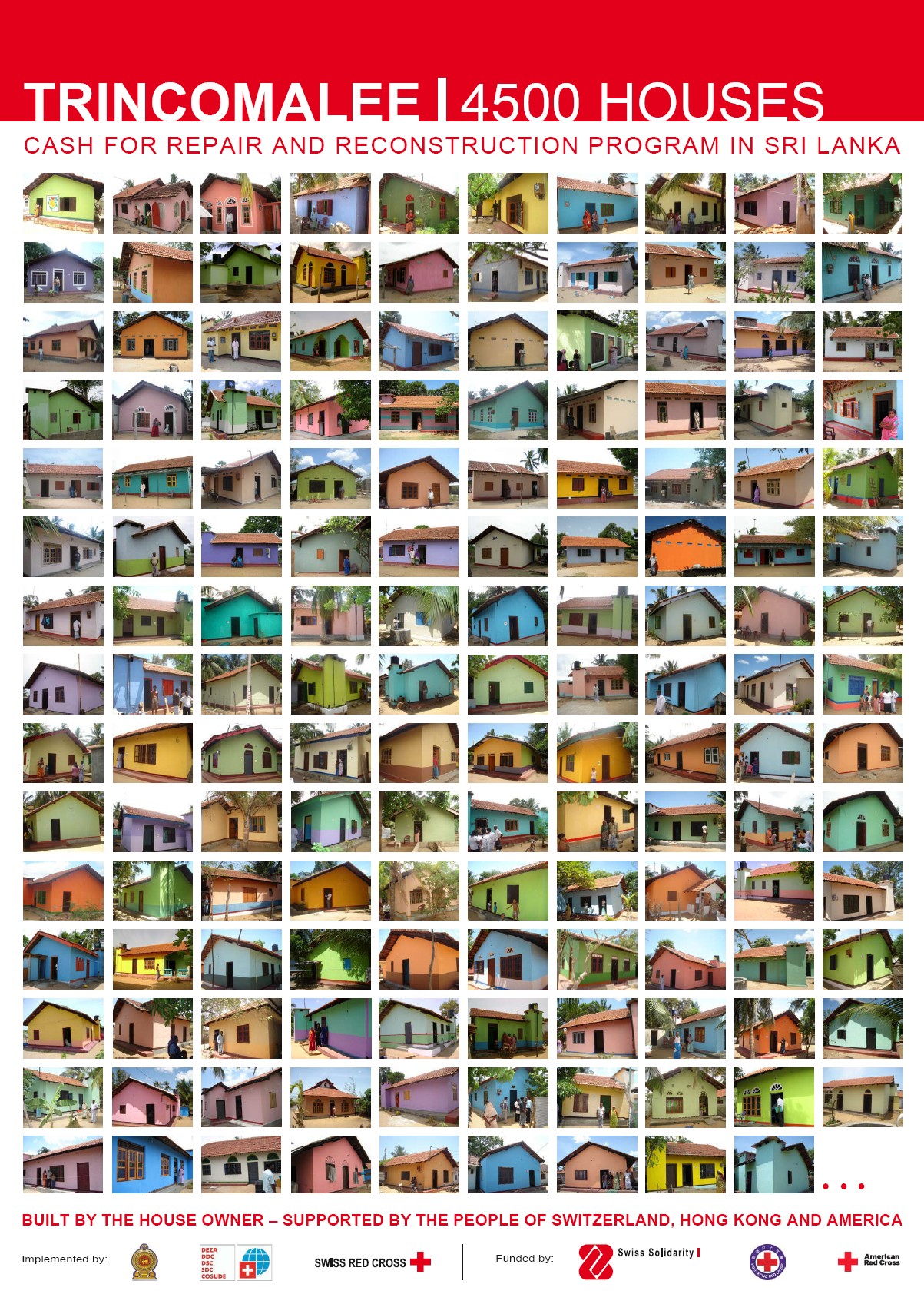
At my office at Swiss Red Cross I saw last week the pdf of a poster “Trinconmalee – 4500 Houses”, to be printed soon in Sri Lanka. It showed a picture of many colourful houses, which had been constructed in an area destroyed by the Tsunami of 2004. With the financial help of a “cash for repair and reconstruction“-program people had rebuilt houses themselves – an interesting approach to support them in the rehabilitation of their fully or partly damaged dwellings.

houses.jpg
Click on the picture to see the whole poster.

Today I read a news in the Neue Zürcher Zeitung (NZZ) about Tamil refugees exactly in this area, who had to flee, hardly their houses destroyed by the Tsunami had been reconstructed. The article described the violence between the government troups and the Tamil rebels, and the refugees being caught between the front-lines and depending from the help of international NGOs, who are slowly withdrawing from post-Tsunami reconstruction.

It is a tense situation, and it seems that the long list of ongoing atrocities of the civil war, ongoing since 1983, won’t end soon. How much suffering will be needed until people find a way out of ideological obstructions and mutual suppression of opponents until a common ground is found for realising peace?

From a spiritual point of view these conflicts, however bitter they might be, are learning processes, which don’t end just with the present life. Suppressing opponents doesn’t solve the tensions. Unless you learn to settle your conflicts in a peaceful way and to integrate opposing viewpoints, the lesson to see the greater whole is still to be learned. It might take a long time, but Nature is patient.

In Search of Pythagoras

August 14th, 2007

Some days ago I got an e-mail from an Indian friend searching books of Pythagoras for an acquaintance. I didn’t know much about any books of this great initiate in English, I just have read the excellent book of Master EK (Ekkirala Krishnamacharya), “The Wisdom of Pythagoras“, which for the time being is out of print in English and only available in German and Spanish.

Wikipedia said that no texts by Pythagoras survived, but some relevant source texts from Antiquity deal with his life and teachings and that of his followers. There is even an on-line book, The Complete Pythagoras, containing all survived biographies and Pythagorean fragments. Since my Indian friend has built up a beautiful little Spiritual Book Centre in Hyderabad, which I had visited last January, I tried to find out a bit more about books on the esoteric teachings of Pythagoras and asked an American friend with a profound spiritual background, but he referred me also to Wikipedia and the Encyclopædia Britannica, with paid content.

May last year we had been for a seminar on Pythagoras with our spiritual teacher, Sri K. Parvathi Kumar, in Samos, where the great spiritual master was born. He later had to leave his native island to escape the tyrannical government of Polycrates. We had seen the caves where he had lived and I remember a beautiful evening meditation in the harbour of Pythagoreion at the feet of the Pythagoras statue.

samos06_-042.jpg
Statue of Pythagoras at Pythagoreion, with cosmological and mathematical symbols related to his teachings

samos06_-028.jpg
View from the cave, where Pythagoras meditated

samos06_-039.jpg
The cave is situated in a rock face at the north coast of the island.

samos06_-017.jpg
View from out of the cave

samos1.JPG
Pythagoras – meeting of cosmic and human wisdom

Harry Potter and Visual Journeys

August 12th, 2007

Yesterday afternoon we went with our eldest son to the cinema seeing “Harry Potter and the Order of the Phoenix” (see also the previous post). Though I found the film was better than the last one, my son said when leaving the cinema: “I had imagined it very differently”.

A book might give you strong inner images. A film is an externalisation of the imagination of the director, the producers and the public expectations. The Harry Potter-film contained quite an intense visual imagination work, elaborated in the high-tech studios.

Outer pictures superimpose themselves on your own imagining. This is what my son felt, and me too. If you get an overload of outer images, they can drown you and block your own process. But they might also be a stimulant, because they are a concretised visualisation. Visualisation is an important tool for the journey inside.

orderphenix.JPG

Kindling the Fire

August 12th, 2007

The last days there had been several encounters and exchanges – at the office, via e-mail, at home – where the topic was something about the spiritual path and spirituality in life. Reflecting on them gave an image how varied the individuals shape their paths.

Some gave the feeling of groping their way through a foggy cloud of aspirations, being attracted by various themes and teachings, but only hazily committing themselves to a routine and a task. There is something like a diffuse light, which has not yet taken shape.

Others seemed to be focused on a path – it was practising and teaching yoga exercises – but somehow with a mental conception learnt from a teacher and a tradition. There seemed to be a rigidity – trying to maintain a purity, which at the same time seemed to lack suppleness and inner connectedness. Their light was like being crystallized.

Again others were taking to commitment and an active search to shape their path. Though still not all-round chiselled, contours could be seen and an inner fire felt. Their path seemed to be in a process of clearing and the inner light to be ready to shine forth with the development ahead.

My wife said that the last days she often had the image of a circle with a point before her inner eye, when she was dealing with people. The point – the inner core, the I Am, or the soul – is like the focus of a lens. It has to become centred in order to gain strength. The fire has to be kindled. This can be done with the help of different means like dedication to a task, the support from a spiritual teacher, a meditational discipline … – or a combination of these.

The purpose remains the same – strengthening the fire, the radiance, the magnetism. In the image of the circle with the point, you go from the circumference to the centre, and then again from centre to circumference.

sidespot_hinode.jpg
Photo of a sunspot seen from the side, from the Japanese satellite Hinode, by Nasa Astronomy Picture of the Day, April 2nd, 2007

The Maitreya Project

August 12th, 2007

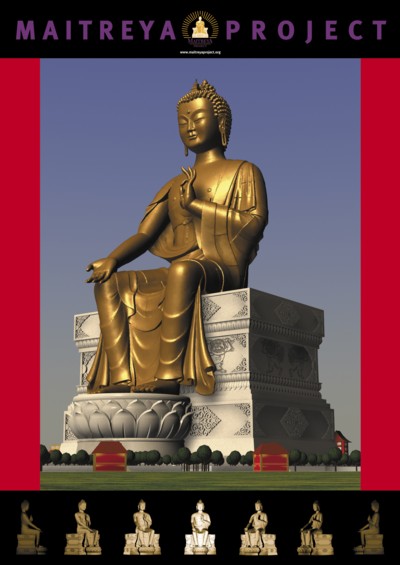
A friend yesterday sent me a link to the Maitreya Project. I had heard before about the initiative to build a 500 ft / 152m bronze statue at Kushinagar, Uttar Pradesh in northern India. Kushinagar is the place, where Lord Buddha passed away, and it is one of the most sacred Buddhist pilgrimage sites in India.

The idea of a huge Maitreya statue for the project is from Lama Thubten Yeshe (1935-84) and its realisation is under the guidance of Lama Thubten Zopa Rinpoche.

According to Buddhist scriptures, Maitreya is considered to be the next Buddha who will teach the path of loving-kindness to the world. “The very name ‘Maitreya’ means loving-kindness – in today’s world, we really need loving-kindness,” says the Dalai Lama.

About the purpose and vision behind the project they say:

“For thousands of years the world’s enduring monuments have provided powerful symbols, reminders of society’s most treasured values. During the 20th century most of the world’s great buildings and public development projects have been ‘monuments’ to commercial interests: high-rise business buildings, airports, shopping malls, theatres and theme parks. The Maitreya Buddha statue will provide the world with a much-needed and enduring monument to spiritual values, a reminder of the benefits of creating peace at every level through practicing loving-kindness.”

The Maitreya Buddha statue and its throne-building will provide the public with temples, exhibition halls, a museum, library, audio-visual theatre and hospitality services. All will be set in beautifully landscaped parks with meditation pavilions, beautiful water fountains and tranquil pools. The buildings and grounds of the Project will contain a remarkable and inspiring collection of sacred art.
Thus the vision of the Maitreya Project combines charitable, educational and medical facilities along with the enduring spiritual focus of the Maitreya Buddha statue, to directly and indirectly foster whole-community economic and civic development,
both now and for generations to come.

The statue is designed to stand for at least 1,000 years, supporting the Project’s spiritual and social work for at least a millennium. So may the people be guided from seeing a huge beautiful outer statue to experience inner beauty, beyond decaying forms.

maitreyaproject.jpg
(c) Maitreya Project

You might like to read about Lord Maitreya as seen from the wisdom teachings coming from the Puranic tradition, in a booklet from Sri K. Parvathi Kumar. See also the beautiful Maitreya-statue at the Planetary Healing Centre near Visakhapatnam, India

Climatic Extremes

August 9th, 2007

Yesterday at my office I was at a presentation of impressions from a journey to the north of Mali a colleague and a photographer had made last week. They had been accompanying a health care team of the Mali Red Cross – distributing mosquito nets to pregnant women – to shoot photos for a donation campaign. The journey – via Timbuktu and Goundam to small villages over bumpy roads – through the desert had been quite an adventure for the Europeans, and the report of my colleague gave a lively, colourful impression.

It was very impressive to see how the people there live in great poverty in a desert-like area, which had been full of lakes until beginning of the 70ies of last century. The Niger River dry, 40 degrees centigrade, burning sun, a sandstorm, nothing of the infrastructures which are so normal to us here, like electricity, water, telecommunication… not even vegetables, and for food just a bit of rice and millet. And the wells are running more and more dry.

In the group of listeners the head of a PR-agency who has designed the donation campaign asked: Why do you support people in an area where there is no future for them? Why not evacuate them to other areas? – The photographer explained that he also had reflected on it during the journey, but that you cannot give just simple answers. The people have arranged their lives in a way to cope the extreme difficulties, though many children die and the health of the adults is also often poor.

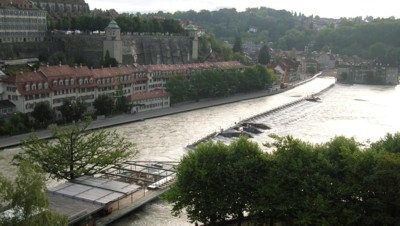
I was deeply moved by the impressions of the journey. Looking out of the window, it was raining, and it continued to do so the whole day and night and also today. The rivers in Switzerland are overflowing their banks, there are help appeals in the media, and this morning I shot some pictures of the flood water in the old town of Berne for a news article on relief efforts. It was cold, the sky heavily covered with grey clouds.

A friend from Minnesota wrote today that the farmers over there are praying for rain, and this for the third year. The climate is getting warmer, but the people don’t believe in global warming.

It’s such a range of simultaneous extremes.

flood1.jpg
The old town of Berne with high water of the river Aare

Rebirth Control

August 8th, 2007

Some days ago I read in the Neue Zürcher Zeitung about new directives the Chinese government just has released to “administer the reincarnations of living Buddhas in Tibetan Buddhism”: The Buddhist monks have no longer the right to search for reincarnations by themselves. The Party decides who is a living Buddha. Ignoring the rules leads to punishments, and the reincarnation is illegal. So after their birth control politics the communist� rulers also have rebirth control mechanisms in their empire.

It’s such a silly thing, and wouldn’t it be another political power play to subordinate people and infringe free will, I would have laughed. The decision is a means to break the age-old reincarnation lines of insubordinate monasteries. Now 4 authorities have to agree, if a Buddha is a genuine incarnation, the monastery, the local government, the administration for religious affairs and the Chinese State Council. It is unclear if living Buddhas also have to register retrospectively. However, the newspaper reported, that not all living Buddhas are devout people. So-called reincarnations are working as businessmen and executive consultants in Chinese cities…

Maybe the whole rebirth control politics serves a good purpose in the end: The purely materialistic government might control social and religious structures, but not the reincarnation process of souls. Spirit will turn out to be stronger in the long run, even in our dark age, and the real reincarnations of highly-developed souls will find their ways to fulfil their purpose.

Our spiritual teacher, Sri K. Parvathi Kumar, once remarked, that in the Americas many native Americans who had been killed by the European colonists have come back in the bodies of white Americans and are now much involved in activities furthering a respect of nature and environment. Maybe a similar destiny happens to the souls of the suppressed Tibetan Buddhist exponents. Though old traditional forms will necessarily break this way, the essence will keep on living and enlivening the search of man along the eternal path.

buddha.jpg
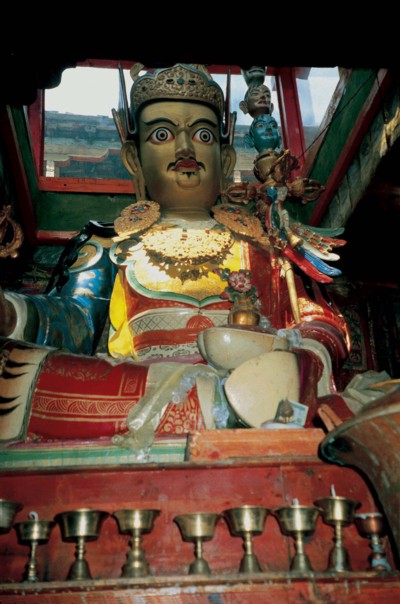
Buddha-statue in Lhasa, photo of a friend