Apple Tree Beauty in the Evening Sun
May 3rd, 2008On the way back from the BEA fair I saw a field with three old apple trees in full bloom radiating their beauty in the glow of the evening sun. I stopped my moped to take some shots:



There are currently 1,917 posts.
There are currently 1,917 posts.

On the way back from the BEA fair I saw a field with three old apple trees in full bloom radiating their beauty in the glow of the evening sun. I stopped my moped to take some shots:
Two days ago I participated in the team attending to the stand of the Swiss Red Cross at the BEA-Expo, a big public fair in Berne, Switzerland. 9 hours standing in the midst of the passing crowds. For me it was the first experience of this kind, and I had volunteered to do so.
My job was to hand out leaflets and pencils for a competition with 5 questions about the Red Cross – the answers of which could be found on different posters of the stand. At the end they could get an instant price and qualify to participate in a drawing to win some prices. It was a means to get people into contact with different Red Cross activities and starting an interaction – and for the marketing a means of collecting addresses.
There were also other activities going on: At one part of the stand you could get your blood pressure measured for free, at another corner children faces were painted and they could also get a balloon. Films, puzzles, info leaflets …
Thousands of people passed by, and in the evening there were over 1000 leaflets of the competition handed in.
For me it was fascinating to observe the crowd – families with small children in buggies, teenager groups, lovers, old couples, handicapped, people from different national backgrounds and colours. The hope for a chance to win a price attracted most and kept them busy for about 5 minutes searching the answers for the questions. It mostly went on in a sequence of 4 stages:
Discovering the competition – some showed curious faces, rushing on in search of the answers, others rejected and passed on. Some felt irritated for a moment and then decided to give it a try. With a number of couples the woman started with the competition, while the man stayed behind, observing.
Then running around, searching, filling out the questions, followed by depositing the leaflets and getting one of the instant prices. Finally leaving again and passing on into the crowd, the short kick of curiosity attraction fulfilled. Only a few showed a further interest and asked questions. Some of them wanted to go deeper or asked for a way to give donations.
At so many occasions our commitment follows the same pattern. The point of attraction works as a funnel focusing the attention into a certain direction, but it is quickly spinning of to another goal, and then another, and another – an endless search for points of attraction to give a short satisfaction. In this craze you cannot find any longer lasting satisfaction, you only find it looking within.

At the stand. In the background the logo of the World Red Cross Day of 8th May, this year the 180th birthday of Henry Dunant, the founding father of the Red Cross. It is also the 140th anniversary of Swiss Red Cross.
Some days ago I got a beautiful powerpoint presentation called “Power of 10 – From Micro to Macrocosmos” (you can also download it here as a PDF, of course without music and animation). It is a trip at high speed, jumping distances by factor of 10, until the limit of our imagination in direction to the macrocosmos are reached. Later the journey returns to the point where it started and continues in the opposite direction reducing distances of travel by factors of 10 into the microcosmos. An impressive visualisation which gives you a feeling of the infinity of the One Life.

Flower arrangement at a fair in Berne, last Sunday
Another project focusing on promoting the awareness of unity is “run4unity“, an initiative of the catholic Focolare youth movement present in 182 countries. The initiative calls itself “youth for unity”. “Run4unity” is a worldwide relay race as a sports event to promote and build peace together: On 10th of May 2008 they make the run at places all around the globe from 4pm to 5pm in the respective time zones.
They start at the time zone of the Pacific island of Fiji. At 5pm, by means of an internet link, they will pass the “baton” on to the next time zone. Over the course of the next 24 hours, the baton will pass through locations of every latitude and in each location personalities from the world of sport, culture, as well as civic and religious leaders will participate.
The sports activities will take place in locations symbolic of peace, or near areas of conflict and war, or in places of strong tension. The activities are linked together through the website “teens4unity“. May the awareness of unity find deeper roots than just an emotional feeling of a joint action for a short time.
They write: “We are Christians but also belong to other religions and cultures that do not profess a religious creed. We are united by one goal: to make universal brotherhood a reality by involving many other teenagers in the world in this project.”
They had done a peace race in 2005 with the participation of over 100.000 teenagers in 340 cities of 89 nations.

A flower arrangement at a fair in Berne, last Sunday
There are quite a number of initiatives all around the globe, which stand up to foster the awareness of unity. Yesterday I came to know about two interesting activities. I’ll present them in three blogposts
The “ONE WORLD AWARD – the Prize for ‘One World’ ” was launched recently by a German health food company Rapunzel. Its founders Jennifer Vermeulen and Joseph Wilhelm have sponsored the 25.000 Euro cash prize to honour the visions and achievements of individual persons. Their contributions and projects that have the goal to make the world a better place. People who give examples of positive globalization using innovative ideas and dedication, people who make the future worth living. The prize is awarded every two years. The jury is formed by Tewolde B. G. Eghziaber, Director General of the Ethiopian Environmental Protection authority, Vandana Shiva from India and member of the Club of Rome, and Alberto Lernoud, a journalist, poet, activist, trader and true pioneer of the organic movement in Argentina.
A very encouraging prize initiative

A flower globe at a fair in Berne, last Sunday
Yesterday evening we had another of our public evening themes meeting on Basics of Spiritual Life. Already beforehand some friends told us that this evening they won’t have time. So just a few stalwarts came. There was an elderly, distinguished Dutchman, whose curiosity had been attracted by the announcement in the newspaper. He asked some questions and followed with attention.
The topic of my talk was “Routine, Rhythm, Ritual” – you can find the English powerpoint presentation here, or if you prefer a PDF without animation, it’s here.
Rhythm is a red rag for some. A friend first said to my wife, she wouldn’t come, for she didn’t want to get a headache hearing about rhythm and feeling that she doesn’t get into it. She nevertheless came. Afterwards she said she was happy that she changed her mind, for the topic was quite different from what she expected, and she felt inspired.
Indeed, sticking to a self-chosen rhythm isn’t easy for many. Most people don’t organize well their day-to-day lives, they let themselves guide by the outside. The outer life generates so many programs for engagements which drive us away from the inner life.
However, rhythmical living gives you energy, and rhythm in spiritual exercises causes inner transformation.
When we try to take up a new rhythm, we much more often fail than succeed, because the power of the old rhythm opposes us. The ability to follow our own decisions is frequently tested. That’s very normal, and there is no reason to be worried about it. The impulse for change comes from the inner, without an outer compulsion. Nobody can do the rhythm for you.

A violet flower expressing the 7th ray of order, rhythm and ritual. Photo taken in the botanical garden of the Elfenau, 2008.
Yesterday 59 new images of colliding galaxies taken by the NASA/ESA Hubble Space Telescope have been published to mark the 18th anniversary of the telescope’s launch. They have also published a special site with the pictures and other information.
“This is the largest collection of Hubble images ever released to the public simultaneously” it says on the European homepage of the Hubble Information Centre.
“Interacting galaxies are found throughout the Universe, sometimes as dramatic collisions that trigger bursts of star formation, on other occasions as stealthy mergers that result in new galaxies…. Our own Milky Way contains the debris of the many smaller galaxies it has encountered and devoured in the past, and it is currently absorbing the Sagittarius dwarf elliptical galaxy.”
You can download the images of the cosmic collisions, and also see them in a beautiful video.
So the next time you are flying through the galaxies, pay attention not to get involved in a galaxy crash!

Credit: NASA, ESA, the Hubble Heritage Team (Click on picture to enlarge)
This week I read in the Swiss magazine “MK – Marketing und Kommunikation” an article about “LOHAS continue to be on the rise”. I never heard about LOHAS, a marketing target group, before. Wikipedia describes it as “an acronym for Lifestyles of Health and Sustainability that refers to a demographic defining a particular market segment related to sustainable living, “green” ecological initiatives, and generally composed of a relatively upscale and well-educated population segment.” Another variety is LOVOS, “an acronym for Lifestyles of Voluntary Simplicity which are oriented to health and sustainability, and are critical of consumption and consumerism.”
Oh, I thought, now they have a scheme into which they can put me in their profiling. For I discover elements of LOHAS lifestyle as well as LOVOS. The MK article describes the LOHAS that they are very web-affine, have priorities in environmental questions, social responsibility and awareness. Trustworthiness is very important to them and they don’t easily believe what marketeers say, but orient more with the opinion of family and friends. When they are convinced, they stay with a product, and with an enterprise that sells it. If the enterprise, however, behaves irresponsible, they won’t buy it. And the percentage of LOHAS is increasing.
The article started with the lines: “Change of values. The central task of marketing lies in defining, creating, conveying and transmitting values. What happens, however, when the values in the society change and new lifestyles are forming?” Poor marketeers, hurry up to orient towards deeper values. It seems their claiming of “defining, creating, conveying and transmitting values” is an empty effort, when the society doesn’t behave the way they would like it to have, and the marketeers are running behind.
Hopefully people will come to the point of orienting more towards the real needs and not get caught by the desires foamed by marketing strategies, like it is still often the case. May they get more and more waterproof towards the temptations of the guild of market criers.
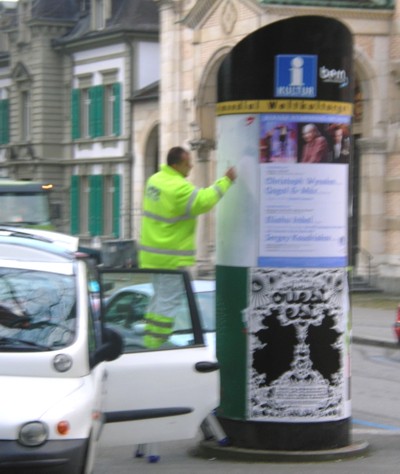
Putting posters on an advertising pillar
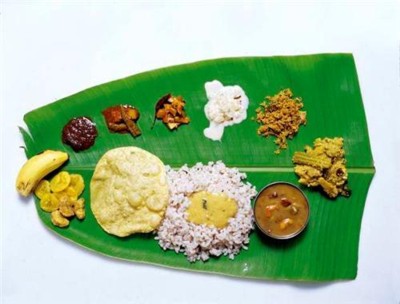
Today I got an e-mail from a Canadian friends with pictures about what people eat during a week’s time in different countries of the world and how much money they spend.
I googled it and found that the pictures are from a photo gallery from time.com: “What the World Eats – What’s on family dinner tables in 15 different homes around the Globe?” The photos are from the book “Hungry Planet” by Peter Menzel. It’s worthwhile having a look at it! They show us a mirror image of our lifestyle and the global imbalances.
Though the photos can be found on many blogs, the author writes they are copyright protected, and so I don’t produce them here. The photo below is from an Indian friend.
Last week I saw an article in the latest number of a German web-marketing journal about measuring user engagement on websites. The question which occupies the marketeers is: How to get people into an engagement, for example on a website, and start to do something.
The marketing specialist agree that it is most important to incite engagement, but it seems to be quite difficult to measure it: If you can quantify engagement, then you can put a price tag on it and benchmark the reactions you get, invest in raising the level of engagement and the like.
A comment in a blogpost by “Scobleizer” (Robert Scoble, the ex-Microsoft “evangelist”) from 2006 entitled: New audience metrics needed: Engagement, lists, what engagement is about and what might be measured:
1. Reactions (they heard you)
2. Learning (they understood and retained)
3. Transfer (they took in the information and can apply)
4. Results (they use the learning to achieve a goal)
There is a lot of discussion about this topic on the web, but these simple lines very well hit the point of engagement, also in the context of wisdom teachings – though measuring is more than strange in this context: Many people hear something about the inner path (point 1), some get interested and start reading about it (point 2), and this for a longer time.
A few of these transfer it into a practice (point 3) and start training themselves. Of these few again a small group really commits itself to continuous engagement, taking up a regular schedule, combined with some kind of service activities and diving into a deeper understanding of the teachings with studies.
Many quit their initial engagement half way through or get lost in some side-track or the other. In the Eastern scriptures it says, out of 1000 one person changes from one level to the other – from hearing to getting interested, to starting practice, to getting into engagement. So it is 1000 x 1000 x 1000.
The percentage of those who set upon a focused spiritual journey along the guiding lines seems to be very low (marketeers would be very much frustrated…), and hopefully it scores a bit higher. But it also says that the goal of a spiritual teacher is reached, when he finds a fistful who really apply and reach the goal and take up the torch of teaching themselves.
Have a look at “Basics of Spiritual Life” on “The Teacher-Student Principle“.
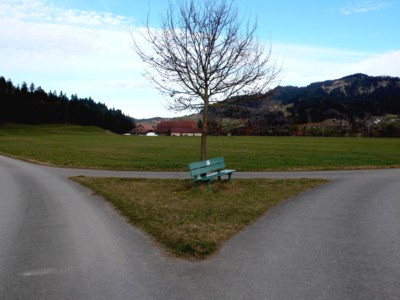
Which way to take with engagement – turn to commitment, or pass on, or stay undetermined?