
erk admin

spacerCircle of Good Will - Blog

Archive for the ‘Stories’ Category

Rishi Agastya: A Little Miracle and Some Stories

Saturday, October 23rd, 2010

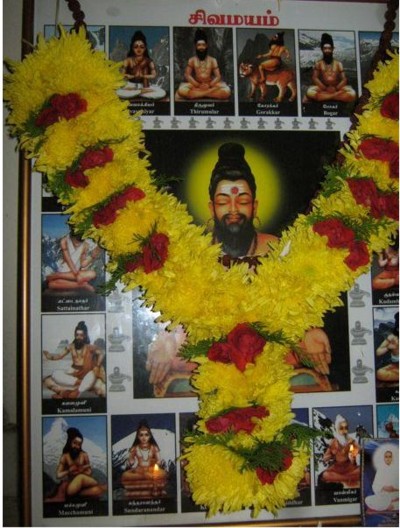
A friend sent me the following photos of a little miracle Rishi Agastya made some days ago (1st september 10). Rishi Agastya is a sage being with the earth since times immemorial. The first photo shows a poster of Rishi Agastya in the home of seven young devotees:
In the second picture taken during prayers Agastya is then captured opening his right eye:
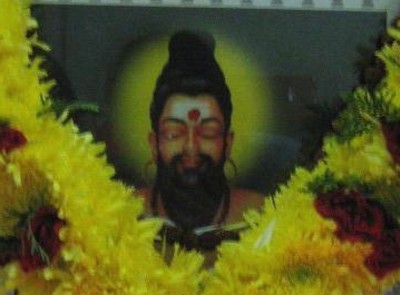
My friend wrote: “He keeps an eye upon his devotees…” A rishi, being a “seer” looks inside, and from the inside out …

You might read a bit about Agastya in the book by Sri K. Parvathi Kumar: “The Aquarian Master“, which is about Master CVV, being from the ashram of Agastya. Agastya is also called Master Jupiter, the eldest member of Hierarchy, and there is some thing about him also in the book about “Jupiter“, where it says:

“The Master Jupiter is the Avatar of Synthesis who presides over the Aquarian Age. He conducts himself with the triangular force of Neptune, Mercury and Jupiter. He is called the Master of the Nilagiri Hills (Blue Mountains) in the Theosophical Society. He is called the great Sage Agastya in the Vedic tradition. He is the Master whose abode is in Sirius, whose functioning place for our earth is the Blue Mountains of South India. Agastya is the great sage and is the counterpart of the 7 seers of the Great Bear.”

Last week I came across a transcription of a seminar given by Sri Kumar in the Nilagiri Hills in 1996 about Agastya, Master Jupiter. He said that Agastya is very different in profile and in appearance from the other Masters of Wisdom: Whereas Lord Maitreya or Master Morya and Master Kuthumi are described as being of a tall stature, having long hair and a beard, Agastya is small and a bit round, radiating smile, of a golden-yellow complexion, bald-headed without any hair (unlike the presentation on the poster…), being dressed scarcely with a lungi, never wearing anything else. He has great, round eyes, is often traveling with his disciples and loves to cook and to serve. Through serving food he likes to spread himself into the people and thus to adjust any imbalances in the mental, emotional, and physical bodies. In his spiritual activities he never treads any trodden paths, but gives new trends and directions, being full of freshness. His live is always accompanied by will, spreading be-ness and presence. He is very humorous and his teachings are very powerful, but nevertheless humorous, thus uplifting the people.

In the scriptures there is the story that once a group of disciples in the Himalaya had the questions who is the one fasting most, and Maitreya told them, “It is Agastya, he never eats.” They wanted to see Agastya and went to him. Agastya said: „Observe me for three days.”
They were very surprised to see him cooking, eating and serving. He was not missing any meal, and every meal was from our standpoint very excessive in its quantity. After three days the group asked: „We have not understood your way of fasting.” He answered: „Insofar as you don’t feel that you are eating, it is fasting.” He does not think he is eating. He lives in tune with the universal consciousness and in such a tune-up the food is given to all the elementals around him with himself as the channel.

Here and Now

Saturday, October 16th, 2010

A friend sent tonight a nice text in Spanish. I translated it with the help of a translation software and some “polishing”:

There was once a student who asked his teacher: “Where should I look for enlightenment?”
Teacher: “Here”.
Student: “And when will it take place?”
Teacher: “It is taking place right now.”
Student: “Then, why don’t I get it?”
Teacher: “Because you don’t look.”
Student: “And in what should I look for it?”
Teacher: “In anything. You simply look.”
Student: “To look what?”
Teacher: “Anything where you settle your eyes.”
Student: “And should I look somehow special?”
Teacher: “No. It will be enough the way you usually look.”
Student: “But don’t I always look usually?”
Teacher: “No.”
Student: “Why?”
Teacher: “Because to look you have to be here and now, and there you ‘are’ hardly ever.”

To meditate is to be aware of what is happening at each instant, without judging it, with a total acceptance of each present moment. It is to learn how to see that that “it is” as it is, simply. We don’t realize, but when we look to the world, we don’t see it such and as it is really, what we see is what “we think” of it.


Reflection of the sun in water. Our mind is reflecting the reality and so we don’t see it as it is, but as we perceive it with the mind.

A Mouse Trap – A Lesson about Solidarity

Thursday, August 19th, 2010

An Indian friend sent me this nice story about the importance of helping others in need:

“A mouse looked through the crack in the wall to see the farmer and his wife open a package. “What food might this contain?” The mouse wondered – he was devastated to discover it was a mousetrap.

Retreating to the farmyard, the mouse proclaimed the warning “There is a mousetrap in the house! There is a mousetrap in the house!”
The chicken clucked and scratched, raised her head and said, “Mr. Mouse, I can tell this is a grave concern to you, but it is of no consequence to me. I cannot be bothered by it.”

The mouse turned to the pig and told him, “There is a mousetrap in the house! There is a mousetrap in the house!”
The pig sympathized, but said, “I am so very sorry, Mr. Mouse, but  there is nothing I can do about it but pray. Be assured you are in my prayers.”

The mouse turned to the cow and said “There is a mousetrap in the house! There is a mousetrap in the house!”
The cow said, “Wow, Mr. Mouse. I’m sorry for you, but it’s no skin off my nose.”

So, the mouse returned to the house, head down and dejected, to face the farmer’s mousetrap alone.

That very night a sound was heard throughout the house — like the  sound of a mousetrap catching its prey.

The farmer’s wife rushed to see what was caught. In the darkness she did not see it was a venomous snake whose tail the trap had caught.
The snake bit the farmer’s wife. The farmer rushed her to the hospital, and she returned home with a fever.

Everyone knows you treat a fever with fresh chicken soup, so the farmer took his hatchet to the farmyard for the soup’s main ingredient.

But his wife’s sickness continued, so friends and neighbors came to sit with her around the clock. To feed them, the farmer butchered the pig.

The farmer’s wife did not get well; she died. So many people came for her funeral, the farmer had the cow slaughtered to provide enough meat for all of them.

The mouse looked upon it all from his crack in the wall with great sadness.

So, the next time you hear someone is facing a problem and think it doesn’t concern you, remember — when one of us is threatened, we are all at risk.

We are all involved in this journey called life. We must keep an eye out for one another and make an extra effort to encourage one  another.

One of the best things to hold onto in this world is a friend.”


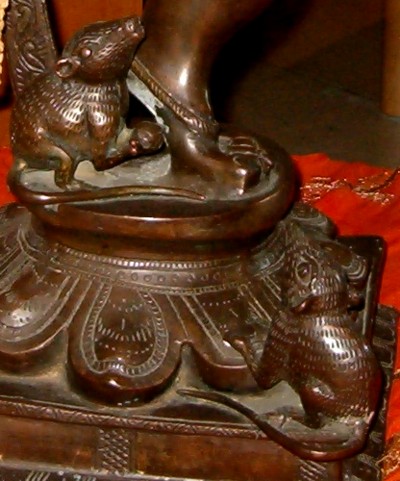
Rats at at feet of a Ganesha statue. The Rat, symbol of the clever mind, is the vehicle for Ganesha, symbol of wisdom, using the mind for its expression.

Seminar Anecdotes

Tuesday, June 29th, 2010

A little anecdote from the seminar with Sri Kumar in Einsiedeln two weeks ago:

The Master had given a talk for over 4 hours the story of Parikshit from the scripture Bhagavatam and the beginning of Kali Yuga, the dark age (on request I can send you my notes). We were all thrilled and totally out of time, the story was so captivating.

Afterwards Ramana, who was doing the video recording and transmission, told me he was astonished that the battery of the audio recorder hold out the whole time, it normally only keeps up for 2.5 hours.

Next day at breakfast Ramana and I were sitting next to the master. Ramana mentioned to him the point with the batteries. Sri Kumar smilingly remarked: “In other spiritual groups they would have made a miracle out of it, like with all the stories in Yogananda’s Autobiography of a Yogi. I could tell 10 times more stories like these.”

In the evening the master proposed to us to see the DVD of the movie Angels and Demons, with Tom Hanks and playing in the Vatican. He said that in the film you find a lot of symbolism which H. P. Blavatsky also speaks about, and you can see parts of the Vatican where normally ordinary people don’t have access.

We sat in a leisurely round and from time to time Sri Kumar stopped the film to give some comments. He knows quite a lot of movies, and also at seminars in India we enjoyed seeing movies with him.


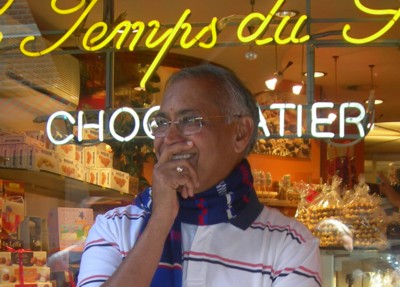
Sri Kumar, cheerful in front of a sweets shot in Brussels, last weekend, photo of a friend

Facing the Dark Sides of Life

Monday, June 28th, 2010

During the journey to the seminar in Germany last week we were hearing the whole time an audio book a friend gave us for the trip: The Kite Runner, by Khaled Hosseini. I hadn’t heard of the book before, but when listening to it we all were thrilled. At first I felt skeptical because the topic promised to be heavy stuff, and thus it was, but very fascinating.

Since we couldn’t finish the last of the 9 CDs during the journey, yesterday afternoon my wife and I went with our car to a beautiful place in a nearby forest. And while the sun was dancing on the foliage and the cobwebs, we dived into the novel. The story is playing in the Afghanistan of the 70 until 2001. It is about causing and bearing one’s guilt.

I don’t want to re-tell here the captivating story, but it stirred a number of situations in my own life related with it: In 1994, while I was teaching German in a refugee integration center I met a young man, an Iraqi  Jew who was “killed” and buried alive in the 80ies by soldiers of Saddam Hussein, who wiped out the whole village. It was just incredibly good luck that he escaped, flew via Iran and Pakistan until he was admitted as refugee to Switzerland. He was eager to learn violin. I organised for him an instrument which years later he brought back, when he had bought a very good one of his own. Then there was the Syrian  collaborator in my team, from the Iraqi border, while I was head of an inter-cultural counseling centre in the 90ies. He was a refugee himself and a great story teller, and together with him I wrote some of his stories in German. And then there was the Iranian colleague in the same team who had been an archaeologist and had done field work in Afghanistan in the 60ies and early 70ies. Together with him I published a series of writings about the cultural backgrounds of Muslim refugees from the Middle East. He also could tell stories of the great past of this part of the world for hours. And there are our neighbours from Afghanistan with whom we have good relations. The husband was a minister in the Afghan government supported by the Russians in the 80ies – and living since many years in Switzerland as a refugee without finding any employment. The past is quite lively with them…

But most of all the story stirred events from my own life, especially the final part of the novel, where Amir, the first person narrator, was struggling hard to re-gain the confidence of the young Sohrab, his seriously traumatized nephew. His struggle seems to be in vain, and even in the end it remains open whether he could build it up again or not. It reminded me of an encounter I had in the last months where I also tried to re-gain the confidence of a person, not successful up to now, and the final outcome remains open. My wife told me that the situation reminds her of The Horse Whisperer and of a frightened horse. So when I’m thinking of the person I’m calling her the timid foal.

The Kite Runner story contains very deep lessons on karma and it reminds me of the story of Angulimala which I told my children with a comic strip when they were small. Many don’t want to face the dark sides of their lives and try to bury them inside, avoiding any contact. It might take a long time before your are ready for entering into it. And the roots might even go back before the limits of the present incarnation. But when you go through the fire of rectification and have learned your lesson, you feel deeply relieved. This I experienced the last weeks, and also Amir felt greatly relieved in the end.


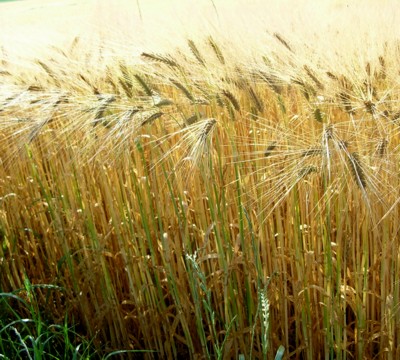
The cornfields are ready for harvest.

“Swami Urukrama”

Saturday, April 17th, 2010

An Argentinian friend did a series of comics dedicated to illustrate spiritual principles from the wisdom teachings. The hero of the comics is Swami Urukrama, and his adventures lead him through various strange situations. He is teaching “by way of negative examples”, how it should not be… I had the good luck of proof-reading the adventures of the Swami.  They will be published on the website of WTT-Americana, you find here the first of the series. Or directly to the slideshow.

By the way, they also publish the Lunar Messenger on the website of WTT Americana.


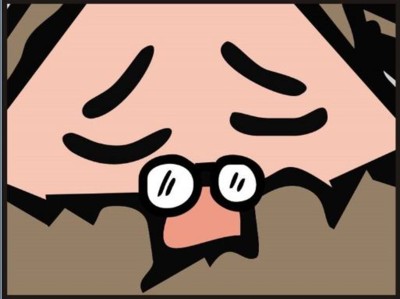
Swami Urukrama

Growing Older is Mandatory. Growing Up is Optional

Sunday, April 11th, 2010

I yesterday got an e-mail with the nice story below about growing old and an old lady full of zest for life. It reminded me of four octogenarians I met in the course of the years and who impressed me a lot. One was a German theosophist from whom I inherited two big boxes of valuable books in the 80ies, shortly before he passed over. Another was an Argentinian marine officer and theosophist who started doing the Spanish translation of the Lunar Messenger, a third one a German lady from the WTT, a deeply spiritual person whom we visited last summer shortly before her passing, and the fourth a Canadian lady with a long spiritual background in the high 80ies with whom I have regular e-mail exchange (she just sent a note…). Here it goes:

“The first day of school our professor introduced himself and challenged us to get to know someone we didn’t already know. I stood up to look around when a gentle hand touched my shoulder. I turned around to find a wrinkled, little old lady beaming up at me with a smile that lit up her entire being.

She said, ‘Hi handsome. My name is Rose.. I’m eighty-seven years old. Can I give you a hug?’

I laughed and enthusiastically responded, ‘Of course you may!’ and she gave me a giant squeeze.

‘Why are you in college at such a young, innocent age?’ I asked.

She jokingly replied, ‘I’m here to meet a rich husband, get married, and have a couple of kids…’

‘No seriously,’ I asked. I was curious what may have motivated her to be taking on this challenge at her age.

‘I always dreamed of having a college education and now I’m getting one!’ she told me.

After class we walked to the student union building and shared a chocolate milkshake.

We became instant friends. Every day for the next three months we would leave class together and talk nonstop. I was always mesmerized listening to this ‘time machine’ as she shared her wisdom and experience with me..

Over the course of the year, Rose became a campus icon and she easily made friends wherever she went. She loved to dress up and she revelled in the attention bestowed upon her from the other students. She was living it up.

At the end of the semester we invited Rose to speak at our football banquet. I’ll never forget what she taught us. She was introduced and stepped up to the podium. As she began to deliver her prepared speech, she dropped her three by five cards on the floor.

Frustrated and a little embarrassed she leaned into the microphone and simply said, ‘I’m sorry I’m so jittery. I gave up beer for Lent and this whiskey is killing me! I’ll never get my speech back in order so let me just tell you what I know.’

As we laughed she cleared her throat and began, ‘ We do not stop playing because we are old; we grow old because we stop playing.

There are only four secrets to staying young, being happy, and achieving success. You have to laugh and find humour every day. You’ve got to have a dream. When you lose your dreams, you die.

We have so many people walking around who are dead and don’t even know it!

There is a huge difference between growing older and growing up.

If you are nineteen years old and lie in bed for one full year and don’t do one productive thing, you will turn twenty years old. If I am eighty-seven years old and stay in bed for a year and never do anything I will turn eighty-eight.

Anybody can grow older. That doesn’t take any talent or ability. The idea is to grow up by always finding opportunity in change. Have no regrets.

The elderly usually don’t have regrets for what we did, but rather for things we did not do. The only people who fear death are those with regrets..’

She concluded her speech by courageously singing ‘The Rose.’

She challenged each of us to study the lyrics and live them out in our daily lives. At the year’s end Rose finished the college degree she had begun all those months ago.

One week after graduation Rose died peacefully in her sleep. Over two thousand college students attended her funeral in tribute to the wonderful woman who taught by example that it’s never too late to be all you can possibly be.

REMEMBER, GROWING OLDER IS MANDATORY. GROWING UP IS OPTIONAL. We make a Living by what we get. We make a Life by what we give.

God promises a safe landing, not a calm passage. If God brings you to it, He will bring you through it.


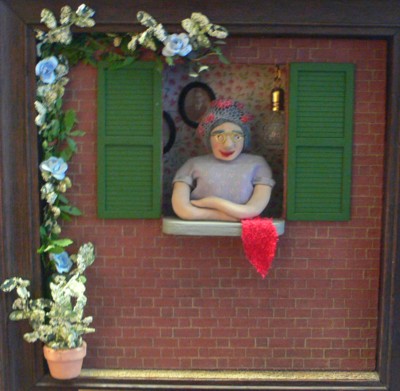
An old lady in a doll-house

Who Packs Your Parachutes ? A Story about Gratitude

Thursday, April 1st, 2010

A friend sent me a powerpoint with the following story I extracted from it:

Charles Plumb was a US Navy jet pilot in Vietnam. After 75 combat missions, his plane was destroyed by a surface-to-air missile. Plumb ejected and parachuted into enemy hands. He was captured and spent 6 years in a communist Vietnamese prison.

He survived the ordeal and now lectures on lessons learned from that experience. One day, when Plumb and his wife were sitting in a restaurant, a man at another table came up and said, “You’re Plumb! You flew jet fighters in Vietnam from the aircraft carrier Kitty Hawk. You were shot down!” “How in the world did you know that?” asked Plumb. “I packed your parachute,” the man replied. Plumb gasped in surprise and gratitude.

The man pumped his hand and said, “I guess it worked!” Plumb assured him, “It surely did. If your chute hadn’t worked, I wouldn’t be here today.”

Plumb couldn’t sleep that night, thinking about that man. Plumb says, “I kept wondering what he had looked like in a Navy uniform: a white hat; a bib in the back; and bell-bottom trousers. I wonder how many times I might have seen him and not even said ‘Good morning, how are you?’ or anything because, you see, I was a fighter pilot and he was just a sailor.”

Plumb thought of the many hours the sailor had spent at a long wooden table in the bowels of the ship, carefully weaving the shrouds and folding the silks of each chute, holding in his hands each time the fate of someone he didn’t know.

Now, Plumb asks his audience, “Who’s packing your parachute?” Everyone has someone who provides what they need to make it through the day. He also points out that he needed many kinds of parachutes when his plane was shot down over enemy territory-he needed his physical parachute, his mental parachute, his emotional parachute, and his spiritual parachute. He called on all these supports before reaching safety.

Sometimes in the daily challenges that life gives us, we miss what is really important. We may fail to say hello, please, or thank you, congratulate someone on something wonderful that has happened to them, give a compliment, or just do something nice for no reason. As you go through this week, this month, this year, recognize people who pack your parachutes.


Flying over the Alps

Perfection – the Fruit of Intense Work

Friday, February 19th, 2010

I today got the following story in Spanish, which I translated with the help automatic translation and “polishing”:

There was once in ancient China an extraordinary painter whose fame crossed all borders. On the eve of the Year of the Rooster, a rich merchant thought that he would like to have in his rooms a painting that represents a rooster, painted by this famous artist.

So he moved to the village where the painter lived and offered him a very generous sum for the task. The old painter consented immediately, but put as the only condition that the man should return one year later to look for his painting. The merchant became a little disappointed. He had dreamt to have the picture as soon as possible and to enjoy it during the year governed by this animal. But as the painter’s fame was so big, he decided to accept and he returned to his house without complaining.

The months passed by slowly and the merchant awaited the coming of the desired moment to look for his painting. When finally the day arrived, he got up early in the morning and immediately went to the painter’s village. He knocked at the door and the artist received him. At first he didn’t remember who the visitor was.

“I came to look for the painting of the rooster” the merchant told him.

“Ah, of course!” the old painter answered.

And then he spread a canvas on the table, and before the merchant’s eyes with a fine paintbrush he drew a rooster with a single line. It was the simple image of a rooster and, somehow magic, it also contained the essence of all the roosters that exist or that ever existed. The merchant was open-mouthed about the result, but he could not avoid to ask him:

“Master, please, answer me a single question. Your talent is unquestionable, but was it necessary to make me wait for a whole year?”

Then the artist invited him to come to the back-room, where there was his shop. And there the anxious merchant could see the walls and the floor covered, there were enormous piles up to the roof with hundreds and hundreds of sketches, drawings and paintings of roosters – the intense work of an entire year of search.


Perfection is only seemingly light like a feather.

Following One’s Inner Call

Thursday, December 24th, 2009

A touching video-story of a deaf and mute girl who learns to play the violin against all difficulties. Though it is an advertisement film, it is subtle and inspiring.