erk admin

spacerCircle of Good Will - Blog

Archive for the ‘Art, Culture and Beauty’ Category

On the Way to Shambhala

Thursday, August 2nd, 2007

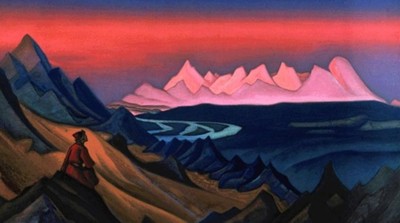
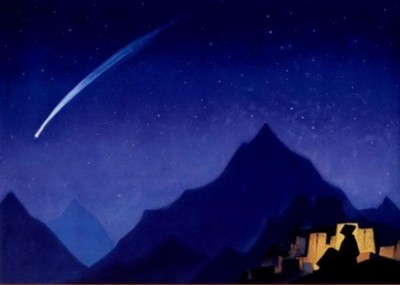
Friends of mine from Spain had been in Mongolia, for the second time, in search of places of power. Some days ago they sent me a powerpoint-presentation with pictures showing scenes with motives of the paintings of the famous Russian painter Nicholas Roerich (1874-1947), whom I admire since long. He had been on an expedition to the Himalayas, Tibet and Mongolia in the 20ies of last century and brought back a rich treasure of most beautiful paintings. They can be found in several famous museums, such as the Roerich Museum in New York.

Here are some of the photos of my friends (thank you, Rosa and Miquel!) alternating with pictures from Nicholas Roerich (Courtesy Roerich Museum), showing similar motives.
holymountain.jpg
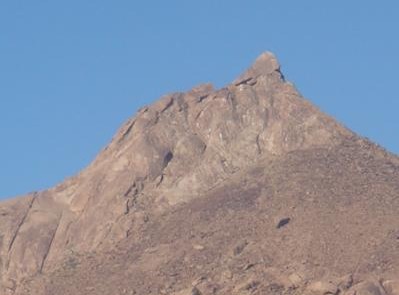
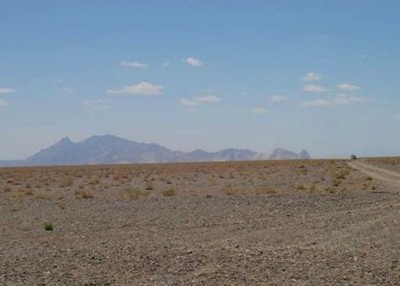
Arriving at Eeijkairkhan (the Goddess Mother), silhouette of the Sacred Mountain
holymountain2_roe.jpg
The Song of Shambhala

holymountain1.jpg
Eeijkairkhan (the Goddess Mother), silhouette of the Sacred Mountain
holymountain1_roe.jpg
Star of the Hero, Cave-Temple

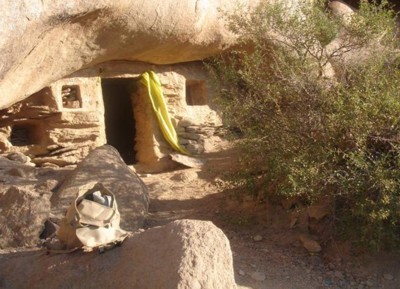
cavetemple.jpg
Cave-temple

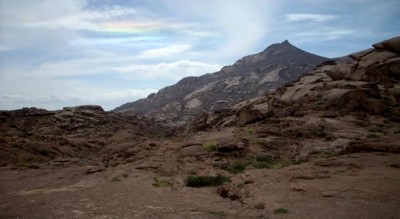
holymountain2a.jpg
Ascension to the rainbow

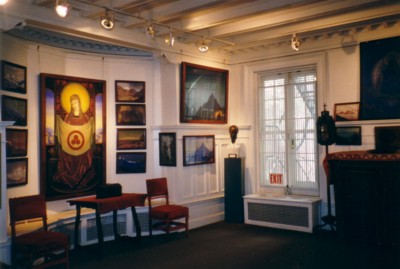
roerichmuseum.jpg
Inside the Roerich-Museum, New York, April 2000
books.jpg
The “Song of Shambhala” at home in the bookshelf

Shambhala, the mystic place now on the etheric planes, is also called the “White Island”. You can read more about it in the extract of book presentation of “Wisdom Buds” by K. Parvathi Kumar. And you find some of Roerich’s photos as e-cards on the Good-Will website.
Stop Voldemort or the Sense of Mystery and Wonder

Monday, July 23rd, 2007

On driving through the City of Münster, Germany, we saw a red stop sign at a crossroad, and on the bottom of the road sign somebody had written in white letters: Voldemort – “Stop Voldemort”. We had to laugh: The world of Harry Potter was invading the outer Muggle world.

potter.JPG
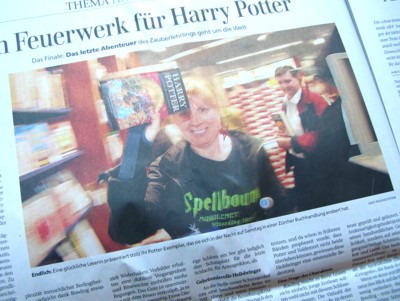
News about the publication in “Der Bund”.

The morning of the publication of the 7th and last volume “Harry Potter and the Deathly Hallows”, I had bought two copies, in order to avoid family conflicts. It was a great dive through the book, I was fascinated not only by the dense, brilliant story, but also by the deep occult knowledge interwoven and hidden: The voluntary “death” of Harry and the description of the out-of-body experiences, the offering of his life to save his friends and the community, his dealing with enemies and friends will impregnate the minds of the readers with deep spiritual truths of a preparation for the inward path. Whether the author, Joanne K. Rowling, did it consciously or whether the series of 7 volumes was received by unconscious impression permeating her imaginative creativity doesn’t matter in this. There is a huge impact on the minds world-wide.

In his “Book of Rituals” – written 1967, published 1990 – Master EK (E. Krishnamacharya) wrote: “For this purpose (: a slow and proper understanding of the nature of the mysteries by greater masses of people) some novels will be written by certain induced minds of a Master or a disciple himself directly. Readers of the most materialistic levels will be allured and attracted by the sense of mystery and wonder that surround such plots. They read these books only as imaginary stories, positively disbelieving the truth of the existence of such a line. The impressions that are made upon their mind will work through their subconscious nature and bring the recollection of the past associations of these souls (many of them are necessarily Atlanteans) and prepare the path either in this life or the next. Thus there is a conscious well planned scheme on the line of literature and fine arts.”

White Waters and Wisdom Aphorisms

Sunday, July 1st, 2007

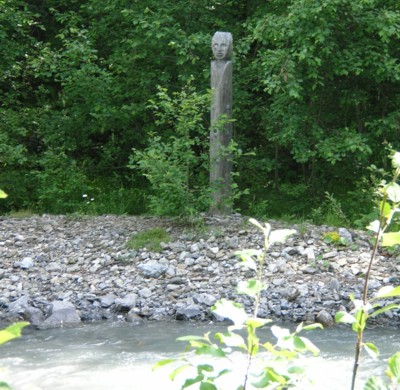
We yesterday had a walking-tour with our little local meditation group to the Kien valley, a beautiful alpine valley about 30 miles from here. Following the river there were some art sculptures dispersed between the rocks and bushes, forming a beautiful accentuation of the natural ambiance. Like nature spirits they were hiding along the river.

forestspirit.JPG

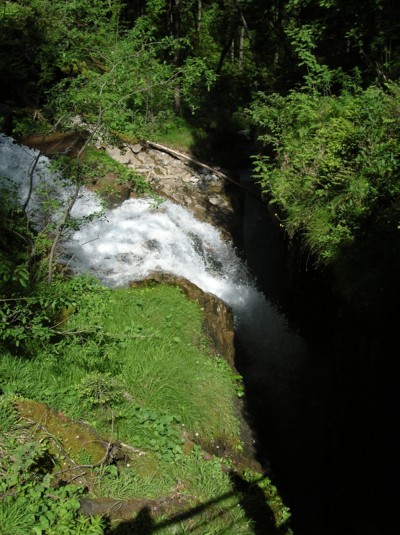
After a lake we arrived at the valley basin where waterfalls were coming down from different sides. We went up the “white water way” along some roaring rivers and cascades. At times the water went through very deep gorges where you could bridge the gap from one side to the other, but didn’t see the river below, because it was lost in the depth.

schlucht.JPG

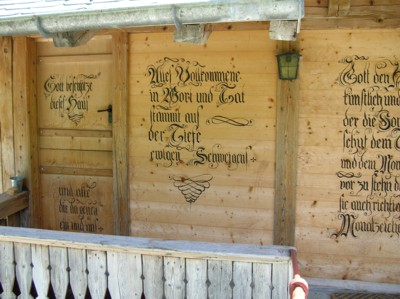
Above the cliffs we arrived at the Griesalp, where a few houses at the foot of still higher mountains. One of the houses built in the traditional chalet style was decorated with calligraphic decorations of wisdom aphorisms, which reminded me of Paracelsus or of Eastern teachings like those of the Bhagavad Gita:

” The purpose of action is not the result, but to become the eternal bliss of God.”

“Everything perfect in word and deed comes from the depths of eternal silence.”

“Everyone of us has still a million lives on earth ahead – so why this haste, this noise and this impatience.”

“In God’s providence there is no evil, only good and its preparation.”

griesalp.JPG

Beauty of Floral Art

Tuesday, June 12th, 2007

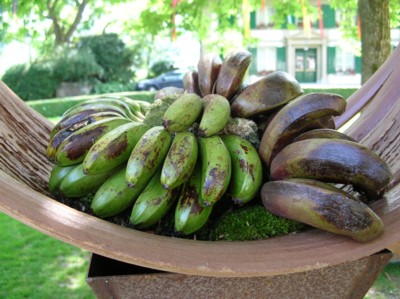
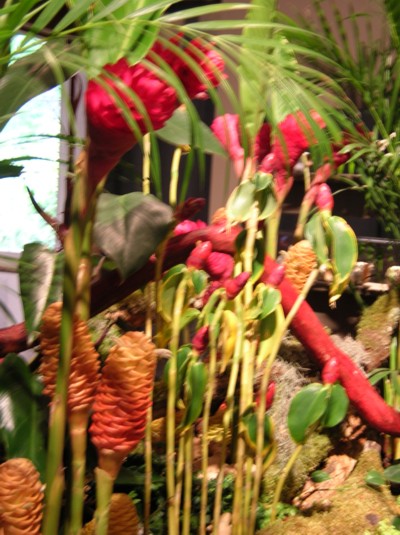
Sunday we had been at a floral art exposition in a nearby park, the Elfenau (elves meadow). Colourful tropical flowers, fruits and spices were arranged by floral artists to delicate charming displays:

elfenau1.JPG

There was a lightness in the installations, which resulted from very diligent work. Nature’s richness combined with the skill of an artist’s hand.

elfenau3.JPG

Women in Art

Wednesday, June 6th, 2007

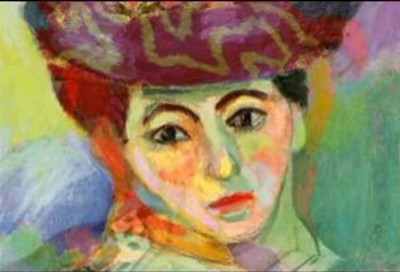
Today a friend sent me a link to a video with a unique morphing and blending of expressions of women portrayed in paintings and drawings over 500 years, condensed in a three minute video. You can regard the morphing images as the multiple faces of the female principle, the expression of the veiling nature of the Mother of the World.

wiart.jpg

Vatnasafn – A Library of Water

Friday, May 25th, 2007

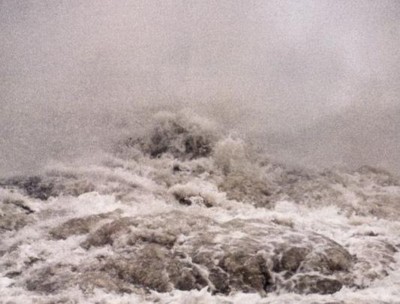
While it is getting warmer here in these latitudes, you might like to see some pictures of an icy environment: The New York artist Roni Horn (born 1955), partly living since years in Reykjavik, Iceland, has installed in Stykkishólmur, a little fisher’s village on the Snæfellsnes peninsula, an exposition called Vatnasafn / Library of Water. There she has set up 24 big glass pillars representing the melted water from 24 glaciers. In these pillars filled with water the landscape – houses, ocean, islands, sky – gets reflected, and created an enchanted atmosphere with the continuously changing weather. The website (flash!!)
You can also download a PDF about the exposition. The Poem on the cover says:

Big enough to get lost on.
Small enough to find myself.
That’s how to use this island.
I come here to place myself in the world.
Iceland is a verb and its action is to center.

At the moment (untill August) there is also an expositionof her works in the Hafnarhús Reykjavik Art Museum entitled «My Oz». It is the first large-scale exhibition of Roni Horn’s work in Scandinavia. The landscape and isolation of Iceland have strongly influenced her art, and she has often traveled there since 1975.

water.jpg
(c) Vatnasafn – Library of Water

The Earth as a Work of Art

Tuesday, May 22nd, 2007

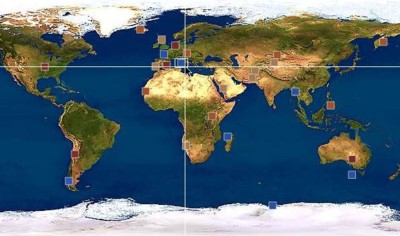
The Helmholtz Association of German Research Centres has done an exhibition of satellite pictures of the earth with the title: KUNSTWERK ERDE (The Earth as a Work of Art). The original exposition in Brussels is over, but you find a series of beautiful photographs combining art and science in an interactive world map. And there are PDFs with more information in several languages.

About the exposition: “Countless observation satellites circle the blue planet, supplying floods of data, which are processed into satellite pictures. These images of deserts, glaciers, volcanoes and big conurbations show one thing above all else: the stunning beauty of our earth.
The pictures chosen for the exhibition combine scientific import with the extraordinary aesthetic thrill afforded by long-distance views of our familiar planet, a dual approach that also appeals to less scientifically-minded members of the public, providing them with an insight into highly complex subjects.”

“helmholtz.jpg

A Film About Oneness: ONE – The Movie

Thursday, May 17th, 2007

A friend yesterday sent a link to a movie which just started in German. A little search on the web showed that the film was out in English already since beginning of 2006: ONE – The Movie. A Contemporary Journey Towards A Timeless Destiny. It seems to be a fascinating movie. Here you can see some trailers.

one1.jpg

And here is an extract from an article by Sita Stuhlmiller about the production of the film:

“What happens when a middle-aged trial attorney and father of three wakes in the night with an idea to make an independent film about the meaning of life? Ward M. Powers, with no experience at all in filmmaking, mail-ordered a video camera and set off with his best friend and a cousin on a two-year life-changing experience. Inspired by Joseph Campbell’s maxim: “Follow your bliss,” and with no budget or training, they took to the streets to film ordinary people responding to life’s ultimate questions.

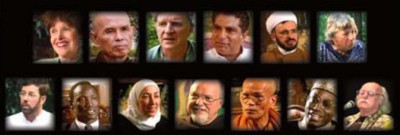
They started with twenty questions, among them: Why is there poverty and suffering in the world? What is the relationship between science and religion? What are we all so afraid of? How does one obtain true peace? Describe God. What is the meaning of life? What is your one wish for the world? Eventually the filmmakers got up the nerve to ask their questions of spiritual teachers, philosophers, authors, artists, priests, rabbis, yogis, imams, monks, nuns, medicine men, social architects and scholars, including Robert Thurman, Ram Dass, Thich Nhat Hanh, Llewellyn Vaughan-Lee, Barbara Marx Hubbard, Sadguru Jaggi Vasudev, Father Thomas Keating, Hasan Qazwini, Deepak Chopra, Riane Eisler and many others.

“And so, about three years ago, we set out on this odyssey with nothing but a DV camera, twenty questions and mantra—We Are All One. But what began as kind of a lark amongst friends to try to make an independent film, somewhere along the way turned into a life’s journey. And what started out back then as a kind of Kumbaya notion of Oneness also grew into something much greater. Somewhere along the way, Oneness became more colorful . . . more intense . . . more inclusive . . . more internal . . . richer and more beautiful than we could have ever imagined.” -Ward M. Powers, Director

“On the last day, in the final minute of the last interview, Father Thomas Keating summarized the journey: ‘The spiritual journey is the realization—not just the information but the real interior conviction—that there is a higher power or God. Or, to make it as easy as possible for everybody: there is an Other; second step: to try to become the Other; and finally the realization that there is no Other. You and the Other are One, always have been, always will be’.”

one2.jpg

Beltane – Midpoint of Spring

Saturday, May 5th, 2007

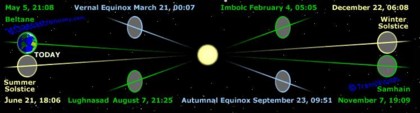
Today is Beltane day, the astronomical midpoint between the vernal equinox and the summer solstice.

beltane.jpg

The astronomical date for this point can vary from year to year. Beltane was celebrated by the Celts around the 1st of May or the nearest full moon. It is the time of fertility, when nature displays its full beauty of spring to bring about new life.

You find more information about the annual rhythms on the website of Archaeoastronomy, where they have a countdown of the annual equinoxes, solstices and cross-quarters.

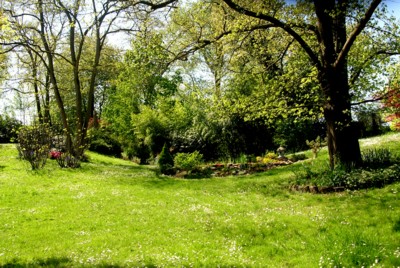
You might read in the Letters on Spiritual Astrology on Taurus about the Radiance of Beauty: “The beauty of the flower lies in the totality, not in a part of it. Beauty is caught nowhere in the form, but reflects through it.”

spring.JPG

Chris Jordan: A Slow-Motion Apycalypse in Progress

Saturday, April 28th, 2007

Chris Jordan was a successful lawyer in Seattle, USA. Then he decided to resign and work as a photographer. Today, he is a thriving artist with a great number of expositions. He and his wife made a deep transformation of their basis of life – the outcome is documented in most impressive photo series about the accumulated detritus of our consumption. Here are some excerpts from an interview, and also from his website:

“My spirit was dying inside, and I knew it, but I was afraid to make the leap into photography full-time because of the possibility of failing. The thing that finally got me going was a new kind of fear that crept up behind me over a period of several years: it was the fear of not living my life. This fear was motivating – it kind of pushed me forward.”

Today he is portraying American mass consumption: “The pervasiveness of our consumerism holds a seductive kind of mob mentality. Collectively we are committing a vast and unsustainable act of taking, but we each are anonymous and no one is in charge or accountable for the consequences. I fear that in this process we are doing irreparable harm to our planet and to our individual spirits.

As an American consumer myself, I am in no position to finger wag; but I do know that when we reflect on a difficult question in the absence of an answer, our attention can turn inward, and in that space may exist the possibility of some evolution of thought or action. So my hope is that these photographs can serve as portals to a kind of cultural self-inquiry. It may not be the most comfortable terrain, but I have heard it said that in risking self-awareness, at least we know that we are awake.”

“This new series looks at contemporary American culture through the austere lens of statistics. Each image portrays a specific quantity of something: fifteen million sheets of office paper (five minutes of paper use); 106,000 aluminum cans (thirty seconds of can consumption) and so on. My hope is that images representing these quantities might have a different effect than the raw numbers alone, such as we find daily in articles and books.”

“As with any large artwork, their scale carries a vital part of their substance which is lost in these little web images. Hopefully the JPEGs displayed here might be enough to arouse your curiosity to attend an exhibition, or to arrange one if you are in a position to do so.”

His photo series carry titles like: “Intolerable Beauty: Portraits of American Mass Consumption” – “In Katrina’s Wake: Portraits of Loss from an Unnatural Disaster” – “Running the Numbers – An American Self-Portrait”. The pictures are showing “a slow-motion apocalypse in progress”. Have a look at the website of Chris Jordan. His pictures are now also exhibited at the Q2 Gallery in Second Life.

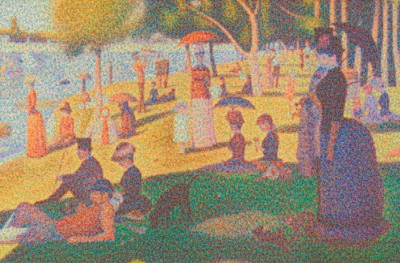
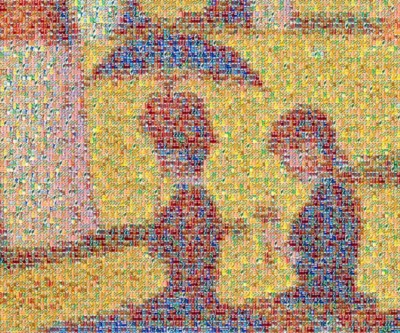
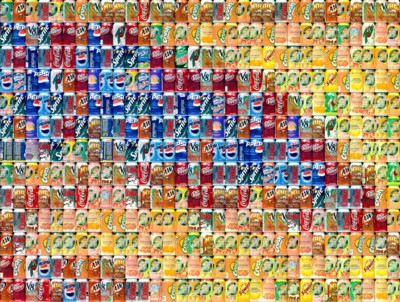
Cans Seurat, 2007
Depicts 106,000 aluminum cans, the number used in the US every thirty seconds: cansseurat1.jpg

Partial zoom:
cansseurat2.jpg

Detail at actual size:
cansseurat3.jpg

Thanks, Chris, for the permission of reproduction.