
erk admin

spacerCircle of Good Will - Blog

Archive for the ‘Art, Culture and Beauty’ Category

Natural Architecture – Reconnection to the Earth

Thursday, November 8th, 2007

I today came across an article dedicated to “natural architecture“. They were showing pictures of the book “Natural Architecture” by Alessandro Rocca, an architect and a professor at the Milan Polytechnic.

On the site they wrote: “The natural environment still manages to fill us with a sense of awe and amazement. despite the amount of scientific knowledge mankind has gathered, nature still holds great mysteries that we may never be able to unravel…
There is an emerging art movement that is exploring mankind’s desire to reconnect to the earth, through the built environment, referred to as ‘natural architecture’, it aims to create a new, more harmonious, relationship between man and nature by exploring what it means to design with nature in mind….
The movement is characterized by the work of a number of artists, designers and architects that express these principles in their work. the pieces are simple, humble and built using the most basic materials and skills. because of this, the results often resemble indigenous architecture, reflecting the desire to return to a less technological world.”

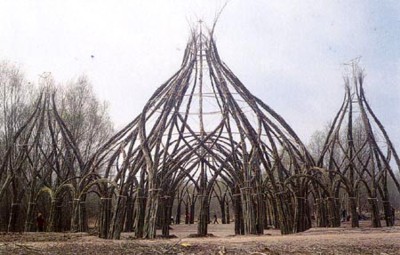
On the German website “Sanfte Strukturen” (Soft Structures) you find more pictures of an art group, which is constructing living architecture with willow sticks, such as churches, halls, palaces. They adapted their techniques from the Sumerian reed-constructions in Mesopotamia and use it for beautiful constructions.

See also our blogpost on “Transforming Nature“.
sanftestrukturen1.jpg
‘Weidendom’, by Sanfte Strukturen, 2001, from the book “Natural Architecture” (c)
Ocean of My Dreams

Wednesday, November 7th, 2007

 An American friend sent me today a link to a beautiful video by Amira Zahra called “Ocean of My Dreams”, with verses of the Persian Sufi poet Rumi, the Arab Muslim mystic Ibn Arabi and Amjid Yaseen. The video is a synthesis of 3 of their poems, the text of them is in a free e-book of a Muslim writer.

My friend wrote: “If one has known true love, this video of the incomparable Rumi and others, will make a deep impression. Its deeper message is that if we love life itself, every moment is an occasion for joy, irrespective of the contents of that moment.”

rumi.jpg
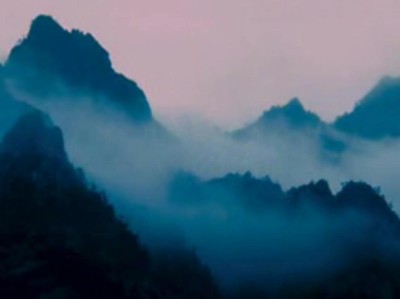
Picture from the video

Imagine Peace – A Tower of Light on Iceland

Thursday, October 11th, 2007

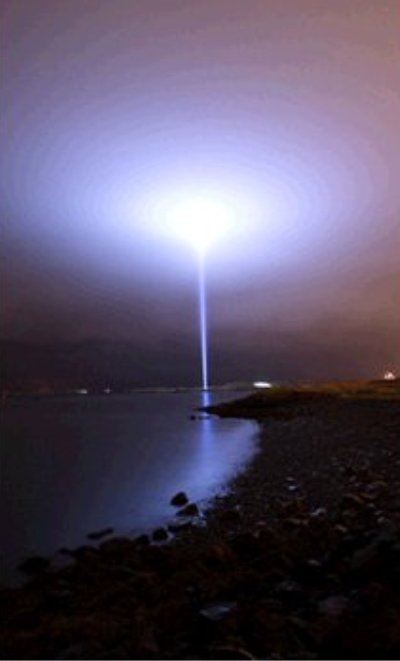
On October 9th, Yoko Ono, the wife of late John Lennon has unveiled the IMAGINE PEACE TOWER on Videy Island, Reykjavik, Iceland. It is dedicated to the memory of John Lennon, and the day would have been his 67th birthday. The IMAGINE PEACE TOWER will shine as a beacon for World Peace.

The IMAGINE PEACE TOWER is a work of art conceived by Yoko Ono. It is dedicated to peace and bears the inscription ‘IMAGINE PEACE’ in 24 languages. The work is in the form of a wishing well from which a very strong and tall tower of light emerges. The strength, intensity and brilliance of the light tower continually changes as the particles in the air fluctuate with the prevailing weather and atmospheric conditions unique to Iceland. The electricity for the light comes entirely from the Hellisheidi Geothermal Power Plant. Every year it will light up between October 9th (Lennon’s birthday) and December 8th (the day of his death). In addition the IMAGINE PEACE TOWER will be lit on New Year’s Eve, during the first week of spring and on some rare special occasions agreed between the City and Ono.

At that occasion of the inauguration Yoko Ono said:
“Our work to shift the axis of the world has now begun. From here on, let’s not waste even for a moment on depressing thoughts about our future. Negative thoughts are luxury we can’t afford. The future of the world is in our hands. It’s time for action. Action is love. I love you!”

There were greetings from many around the world. Michael Moore wrote:
“I believe in the basic goodness of all people. I know that inside each one of my fellow human beings there exists an enormous capacity to love and do good for each other. I also know that that goodness can be snuffed out, and that the world can start to look like a dark place. It is up to each of us to create the world we were meant to live in, a decent and just place where all have the oppurtunity to live in peace. This peace can be obtained once every soul has been given a seat at the table, and fruits of this life are shared so that all are nourished and can thrive. Thank you, John Lennon, for living this every day of your life. Happy birthday to you and to all of mankind.”

Imagination is a very powerful instrument to foster good will, so may this initiative of Yoko Ono bring inspiration to action for the well-being of all.

peace_tower.jpg
The Peace Tower (c) imaginepeace.com

Giant Crystal Cave

Tuesday, October 9th, 2007

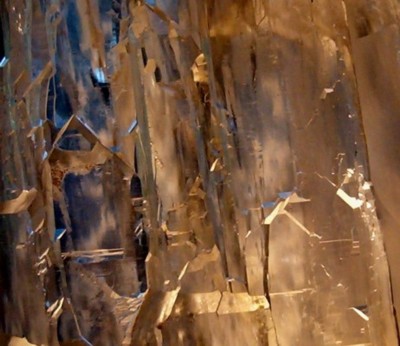
Today a friend sent me a beautiful powerpoint presentation (not the sound…) about the Giant Crystal Cave in the Naica Mine of Chihuahua, Mexico. It is said that these are the largest natural crystals on Earth. The pictures are awe-inspiring, very impressive. You can read more about the crystal cave here or find more information and links at Wikipedia.

An addition: A friend sent me a comment on the giant crystals from an intellectual colleague:
“You do know this is bullshit. Yes they are ‘actual’, but they are not verídicas (please excuse the bit of show-off pedantry). A clever but still fairly obvious cut-and-paste hoax. Pay careful attention to light angles and shadows, also different levels of focus. And, like all other similar fakes, if they are real why haven’t we already seen them in National Geographic? Still, interesting bullshit.”

It seems that this colleague didn’t read his “National Geographic” bible well enough, for they posted an article on the caves on April 6th, 2006, also with a photo.

crystal1.jpg
This crystal isn’t from the mine, it is in the house of a friend.

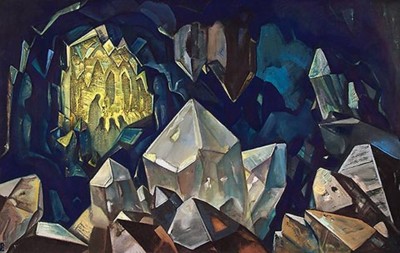
The pictures of the Crystal Cave remind me of the famous painting of Nicholas Roerich “Most Sacred – Treasure of the Mountain” of 1933. He is combining in his pictures sublime spirituality with extraordinary beauty.

most_sacred.jpg

Courtesy Roerich-Museum, New York

Bygone Splendour

Friday, October 5th, 2007

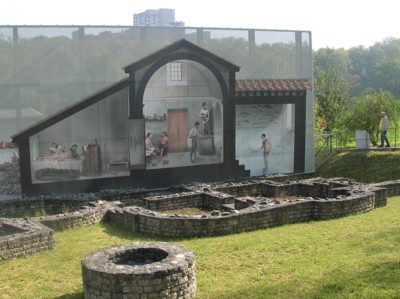
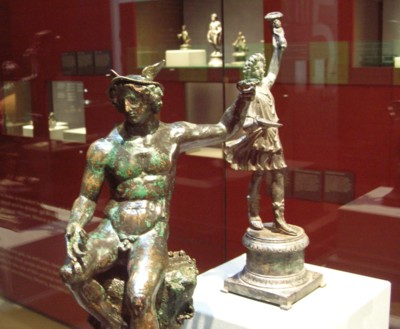
Last Wednesday the team of our division at my office made a works outing to Augusta Raurica, an ancient Roman city located about 20 km east of Basel near the village of Kaiseraugst. It is the oldest known Roman colony on the Rhine. Today there is a large archaeological site with a museum.

It somehow touched me to see how, over a period of about 300 years, from about 40 BCE to 260 CE the city developed to a prosperous place, with a big amphitheatre, numerous temples and commercial centres. Then, after battles with invading German tribes, the upper village was destroyed and a small fort and settlement remained over the centuries. It was the biggest Swiss city until the 19th century. In the last decennies archeology has restored parts of the ruins and tried to reconstruct how people lived at the flourishing times. Many layers of mud had covered the ancient sites, often several meters of debris.

raurica2.JPG
Reconstructing bygone splendour: How did people live in the past? A lot remains speculation. And what about our way of life? How will people think about it in some thousand years?

We often have the impression that the society where we are living in is a stable situation, with all the infrastructures. But things can quickly change, and there have been so many empires coming and going. Also in our lives the qualities of time cycles keep on changing, often without our noticing it.

In Kaiseraugst people had found precious silver plates on fields, without knowing their value, and had even thrown some away into the garbage. It’s not so easy to discover a rare value, when you don’t have the eye to see. Some had taken silver treasures to their homes, but had to give them back, because these are common good. Also a very “normal” human trend of “appropriating” things…

raurica.JPG
Mercury, the messenger of God – for long periods he was waiting hidden in the earth. Likewise for long centuries the ancient wisdom, symbolised by the statues of Gods, was in the West lying deeply buried under orthodoy and materialism.

Life Through Time

Saturday, September 15th, 2007

Today I came across the site “Life through Time” (go to: start the journey) by the famous wildlife photographer Frans Lanting. The show Life through Time contains most sublime photos and is “a lyrical interpretation of life on Earth from its earliest beginnings to its present diversity.”

You can read more about him on his website, where it says:

“As a child he identified closely with the hero of two children’s books by the Swedish writer Selma Lagerlof, a boy named Nils Holgersson, who, after being shrunk by a magician to less than half his original size, joins a flock of wild geese and becomes an accepted member of the animal world. At one point the leader of the geese tells him, “If you have learned anything from this journey, Nils, you might no longer be of the opinion that man alone should rule the world. See, you people have so much land just for yourselves, so perhaps you could leave some marshy lakes and swamps and sea cliffs and distant forests to us. That way, we animals can live in peace. All my life I have been persecuted and hunted. It would be a good thing if creatures like us could find a refuge somewhere.” …

“He believes that, like Nils Holgersson, he plays the role of a “mediator” between humans and other species. “I stay with wild animals, and then I come back to my own people to tell them about life in nature,” he has said.

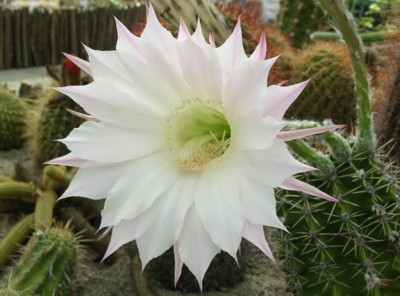
Since his pictures are copyright-protected, here is one of a cactus flower from a nearby botanical garden.

Cactus Flower

Ashes and Snow – An Art Project on Animals and Man

Friday, September 14th, 2007

Today I came across the very beautiful website of the ongoing art project Ashes and Snow (English, Spanish and Japanese) by Gregory Colbert. Over the course of fifteen years, he has made more than forty expeditions to India, Egypt, Myanmar, Tonga, Sri Lanka, Namibia, Kenya, Antarctica, the Azores, Borneo, Belize, and many other locations to photograph interactions between man and animals, which he calls “nature’s living masterpieces”.

The Ashes and Snow Project weaves together film, photographic works, art installations, and a novel in letters on the relationship between animals and man. The site is of a mystical, dream-like beauty, where people and animals seem to move in a cosmic dance.

Ashes and Snow was first revealed to the public at the Arsenale in Venice, Italy, in 2002. To date, more than a million people have visited the exposition. It will open next in Mexico City in early 2008, and it will travel indefinitely to ports of call around the world.

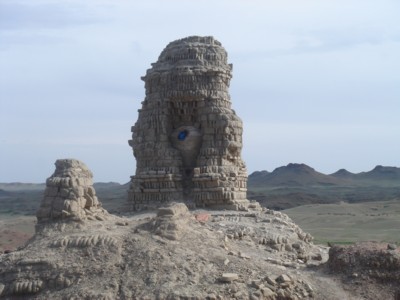
Since the artist didn’t allow the use of a photo for the blog, here is a beautiful photo of a ruin in Mongolia (thank you Miquel).

Mongolia

Picidae – Woodpeckers Hacking Through the Chinese Firewall

Friday, August 31st, 2007

The Neue Zürcher Zeitung (New Zurich Newspaper, NZZ) reported today about a fascinating project of two Swiss artist who developed a method of overcoming the Chinese censorship in the internet. The site “picidae.net” was officially launched last Tuesday and is in English, German, Chinese and Arab. The name “picidae” comes from Latin and means “woodpecker”. The first holes in the Berlin wall were hit by so called “Mauerspechte” (woodpeckers) and gave the project its name: picidae (woodpecker).

picidae.jpg

They call picidae “an art project, that deals with one’s own horizons of imagination, the image of the world, communication and its hurdles and barriers.” picidae negotiates the firewall (Internet censorship) eg. in China or in the Arabian states. picidae delivers a complete, readable and even clickable image of the censored web sites.

The picidae site is not made up of text and HTML elements (tables, images etc.). picidae delivers a screenshot. The page is visible but not machine-readable. This means the text cannot be searched, marked or saved as a text file. That’s why internet censorship, which reacts on keywords (similar to search engines and correction programs), is not able to detect or suppress picidae pages. picidae is not a centrally organised system and is not be reachable via a centralised database. Every access point and every server runs independently and without description and naming – to prevent censorship and deactivation.

Their definition of picidae as an art project is very close to spiritual concepts of visualisation and going beyond the form, realising oneself as the observer, the I AM, which is not defined by the object he sees: “Art searches for new ways (repetition is in terms of Fine Arts just copying). The new images picidae provides are images of ones own horizon of imagination: images of a global communication and images concerning limitation and overcoming of ones own view. The images are generated in the head of the observer, exactly like in an image gallery. The point is not exactly what is displayed in an artwork but what is inspiring in the sense of Art history and reflection.”

I tested the picidae-server with our good-will website, and it is astonishing how the site is perfectly rendered, as an image. (I tried to put a link to the site, but the url changes, so you cannot link to the picidae-transformed view.)

Hopefully this approach is being used for expanding the freedom of expression and information, to further human relations and not to spread perverse and destructive ideas beyond any sense of discrimination.

By the way, the two artists have earlier launched a site called Zone*Interdite, “a test arrangement that serves as a starting point for individual exploratory tours” into the world of military restricted areas, which they are showing on an interactive map. “Individual imagination and the joy of discovering occurs, i.e. spotting, replacing the patriotic and pacifistic duty of a knee-jerk avowal, and undermining censorship, as well as the restriction of perception.”

picidae_red.png
Pecking through the great firewall of China and other totalitarian systems

Harry Potter and Visual Journeys

Sunday, August 12th, 2007

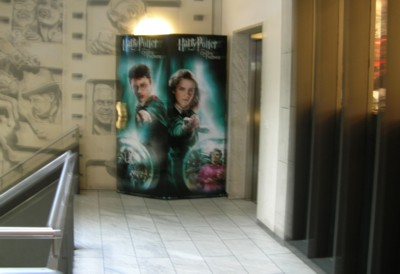
Yesterday afternoon we went with our eldest son to the cinema seeing “Harry Potter and the Order of the Phoenix” (see also the previous post). Though I found the film was better than the last one, my son said when leaving the cinema: “I had imagined it very differently”.

A book might give you strong inner images. A film is an externalisation of the imagination of the director, the producers and the public expectations. The Harry Potter-film contained quite an intense visual imagination work, elaborated in the high-tech studios.

Outer pictures superimpose themselves on your own imagining. This is what my son felt, and me too. If you get an overload of outer images, they can drown you and block your own process. But they might also be a stimulant, because they are a concretised visualisation. Visualisation is an important tool for the journey inside.

orderphenix.JPG

The Maitreya Project

Sunday, August 12th, 2007

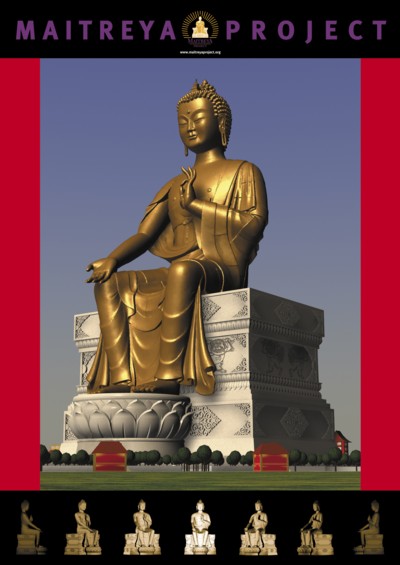
A friend yesterday sent me a link to the Maitreya Project. I had heard before about the initiative to build a 500 ft / 152m bronze statue at Kushinagar, Uttar Pradesh in northern India. Kushinagar is the place, where Lord Buddha passed away, and it is one of the most sacred Buddhist pilgrimage sites in India.

The idea of a huge Maitreya statue for the project is from Lama Thubten Yeshe (1935-84) and its realisation is under the guidance of Lama Thubten Zopa Rinpoche.

According to Buddhist scriptures, Maitreya is considered to be the next Buddha who will teach the path of loving-kindness to the world. “The very name ‘Maitreya’ means loving-kindness – in today’s world, we really need loving-kindness,” says the Dalai Lama.

About the purpose and vision behind the project they say:

“For thousands of years the world’s enduring monuments have provided powerful symbols, reminders of society’s most treasured values. During the 20th century most of the world’s great buildings and public development projects have been ‘monuments’ to commercial interests: high-rise business buildings, airports, shopping malls, theatres and theme parks. The Maitreya Buddha statue will provide the world with a much-needed and enduring monument to spiritual values, a reminder of the benefits of creating peace at every level through practicing loving-kindness.”

The Maitreya Buddha statue and its throne-building will provide the public with temples, exhibition halls, a museum, library, audio-visual theatre and hospitality services. All will be set in beautifully landscaped parks with meditation pavilions, beautiful water fountains and tranquil pools. The buildings and grounds of the Project will contain a remarkable and inspiring collection of sacred art.
Thus the vision of the Maitreya Project combines charitable, educational and medical facilities along with the enduring spiritual focus of the Maitreya Buddha statue, to directly and indirectly foster whole-community economic and civic development,
both now and for generations to come.

The statue is designed to stand for at least 1,000 years, supporting the Project’s spiritual and social work for at least a millennium. So may the people be guided from seeing a huge beautiful outer statue to experience inner beauty, beyond decaying forms.

maitreyaproject.jpg
(c) Maitreya Project

You might like to read about Lord Maitreya as seen from the wisdom teachings coming from the Puranic tradition, in a booklet from Sri K. Parvathi Kumar. See also the beautiful Maitreya-statue at the Planetary Healing Centre near Visakhapatnam, India