After subscribing to the blog, you receive an e-mail with a link, please confirm it to be subscribed. In case your provider blocks the mailings, your address will be removed from the list.
You can unsubscribe by just entering your e-mail into the subscribe/unsubscribe field.
An German version cam in December 2016, an English version in summer 2019. When I first informed the groups of WTT on 22 January 2015, after returning from India, about the “Biography of Sripada Srivallabha, Avatar of Lord Dattatreya”, I wrote:
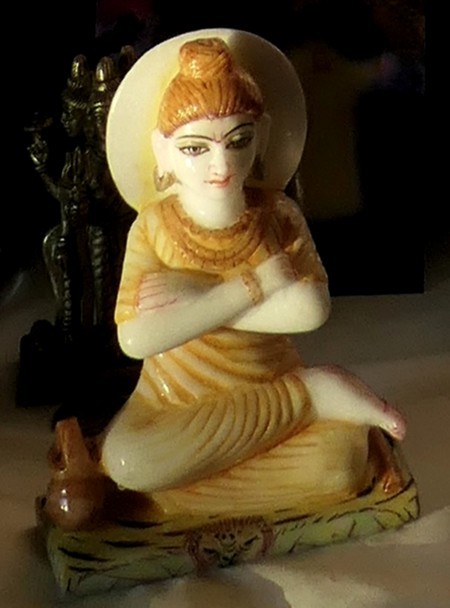
“According to Master DK, the motto of India is “I hide the Light”. One of the most brilliant lights still very much hidden in India is the knowledge of the Avatars of Lord Dattatreya, the Cosmic Teacher Principle. Sripada Srivallabha (1320-1350) is the first incarnation (avatara) of Lord Dattatreya in this cycle. Only a few years ago appeared the biography of Sripada (“Sreepada Sreevallabha Charitaamrutam”) in English…. 6 January 2015, the group of the WTT-seminar visited Pithapuram, the place where Sripada incarnated about 700 years ago. Master KPK gave an introduction to this visit and after the visit a further explanation…”
And: “A German and Spanish translation are on the way. If you are interested to translate the book to another language, you might contact me….“
The next day, my French friend from New Caledonia contacted me: “Well, so this translation is definitely my plan just after I finish what I translate right now … So let’s say, that I’ll start in ARIES !!!” So he started.
He only told me today, when I sent him the old e-mail, over 7 years later: “Actually, it started way back then, in Dattatreya ashram in Mysore in 2006 I think, where I made first a promise to translate something of Datta in French given to me there, but for some reason, it was always postponed and abandoned. But I finally fulfilled this promise with the KPK booklet about Sri Datta. It was but the first step toward more translation with the biography, preparing myself to meet again Sri Datta. So I stepped into a more daily practise with Him…”
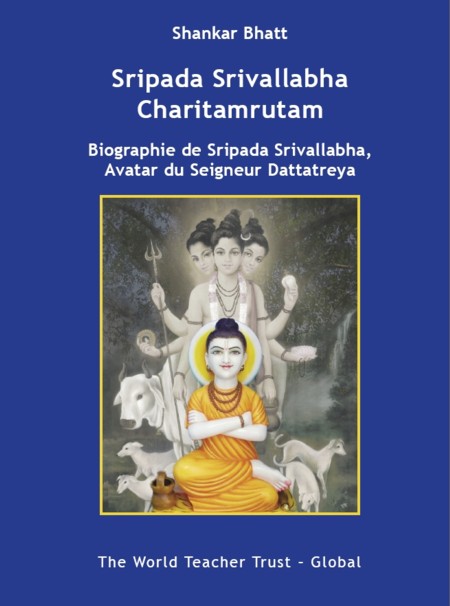
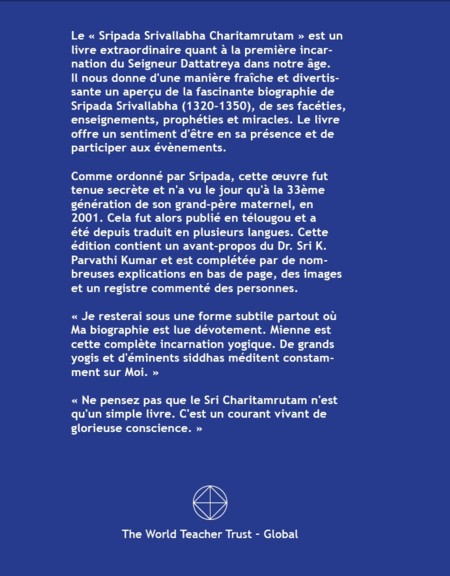
But this is nothing, compared to the fact that the biography was written during Sripada’s life time in the 14th century AD, but, as decreed by him, the work was kept secret for thirty three generations. It came to light in 2001, first published in Telugu and then translated into several other languages. It is an extraordinary book about Sripada Srivallabha, the first incarnation of Lord Dattatreya. In an exciting and entertaining way, it gives an insight into the fascinating life of Sripada, his sportive plays, teachings, prophecies and miracles. However, it also demands a will to go into it.
When I asked Sri Kumar, why he did not mention the avatars of Lord Dattatreya in his small book about Sri Dattatreya, he replied: “The West cannot understand”. For years, he waited until Westerners started showing interest. He did not want to push anything which was not requested. But more and more started to request this book and the interest grew.
My friend Sébastien, the translator, will get a few copies printed in New Caledonia in a simple print version, without images – you might contact him. If you are interested in organizing a print on demand version in Europe or America or further diffusion of the book, please contact me.
In the book Sripada says about the book: “I will remain in a subtle form in every place where My biography is devotedly read.” “Don’t think that Sri Charitamrutam book is a mere book. It is a live stream of a glorious consciousness.”
The idea for this article started sprouting 2.5 years ago, and we often discussed about it, especially in the last stages of composing the article. Although she is working with trance therapy since years and participated in a lot of trainings in the earlier years, she developed her own approach and thus, also had to develop and formulate the understanding in a new form.
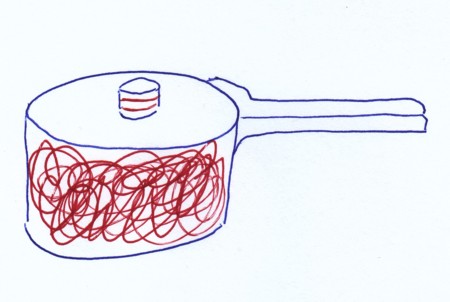
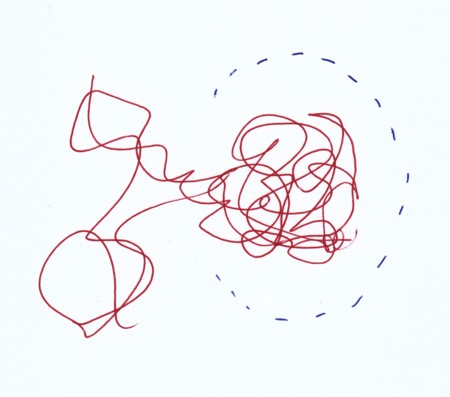
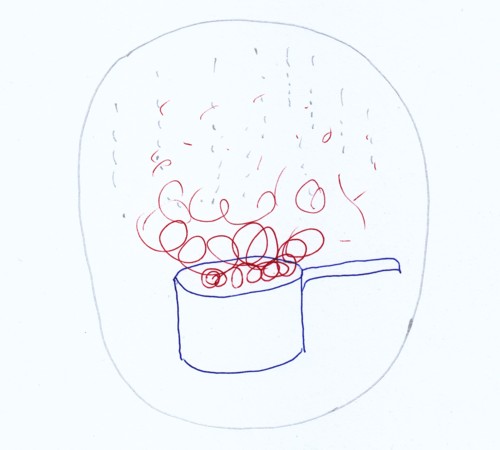
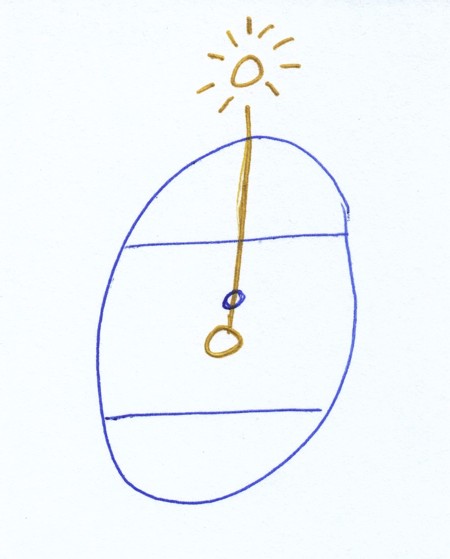
It is very much based on experience. I like her way of illustrating. The pictures in the article are reworked by a friend and collaborator of the magazine. I give here 4 “originals” of her drawings I had scanned.
Suppressed emotions in the pressure cooker
Strong emotions tear open the protective layer of the aura
Opening of the pot under protective aura
Simple first version of the visualisation of higher self, mind, soul body and subconsiousness (inspired by ‘Assagioli’s egg’)
So have a look at the article, where she also described how she supports as a coach and how she also helps neutralising the “Six Meddling Manikins” of the helpers – we know them only too well: giving one’s (negative) comments, advice-giving, telling about oneself and others’ experiences, sharing insights about the other, reproaches, and giving all this to the other person without being asked … to the poor person we feel we should help with all this.
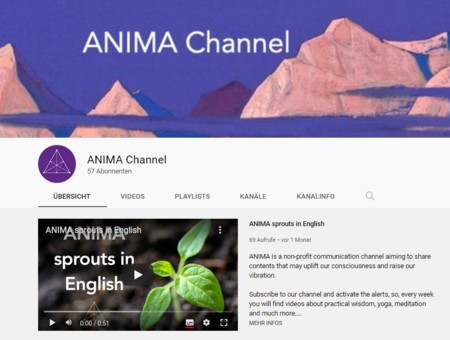
Since 1.5 years, I am collaborating with the ANIMA project. ANIMA is a non-profit communication channel aiming to share contents that may uplift our consciousness and raise our vibration. You find here a blogpost about the Spanish launch in August 2020. And this blogpost is now about the launch of the new English branch of activities.
Once a month, I meet with the core team of Anima for discussing strategic questions and the development of the project. It is a small but extremely dedicated team doing all activities as volunteer activities in a highly professional way, and with a tremendous output of communication activities, mainly via YouTube videos. And they are doing a great networking including many different helpers (in case, you would like to help them, you can contact them via the link). I like very much the lively exchanges bringing in plenty of good ideas allowing also me to reflect on the work I am doing in the context of WTT and Circle of Good Will.
Some months ago, the team decided to step up their activities and produce also material in English. So, they adapted their website and created the ANIMA Channel. Recently, they opened an English-Only channel on YouTube.
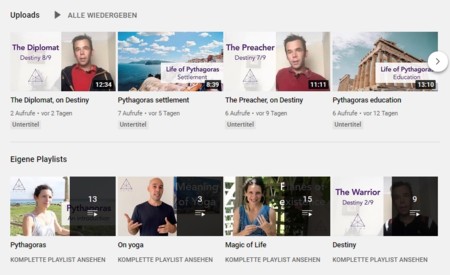
They have already produced quite a number of English short videos about different topics related to living spirituality in daily life and right living. Have a look and subscribe to their channel or one of their playlists.
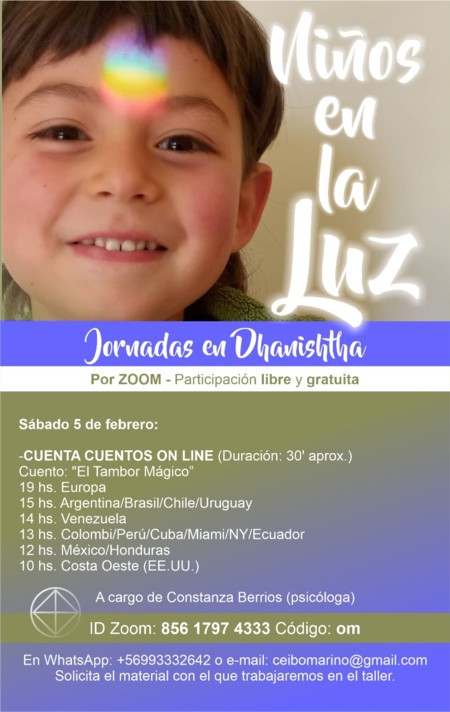
Not directly related to ANIMA, but going into the same direction of uplifting consciousness: This morning, I received a mailing about the launch of “Children in the light”, a new activity organised by Latin American sisters and brothers, through Zoom, in Spanish, starting today, Saturday 5 February, at 19:00 (Europe) via Zoom. Join : https://us02web.zoom.us/j/85617974333. Zoom ID: 856 1797 4333, Code: om.
Group energy is of great help for our spiritual progress. In a group meditation there develops a flow of energy. We are recharged and we can more easily experience a higher consciousness and a greater presence of spirit.
The energies always flow from the higher to the lower. The sun rays are streaming from the Sun to the Earth. The higher energies work through us when we feel the needs of others and respond to them. These energies strengthen the group consciousness, and they help manifest acts of goodwill in the world. Group work brings the inner light to the outside and intensifies the connection to the higher circles.
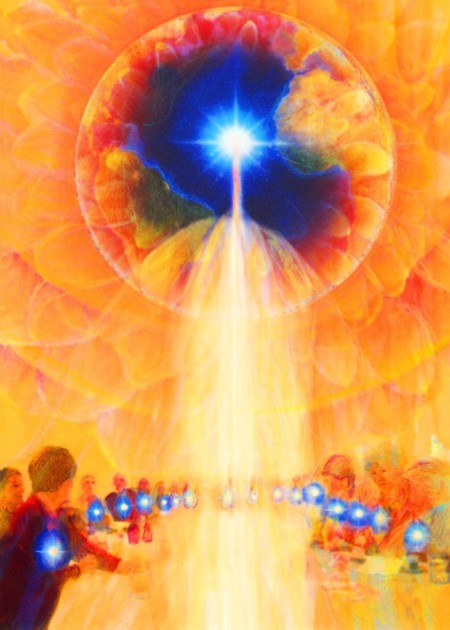
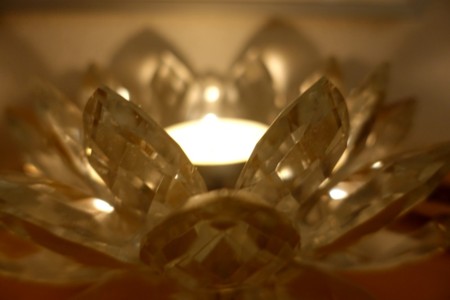
To illustrate this cooperation, I arranged in the lower part of the picture a group gathered around a table by joining pictures of two different groups. For visualising the influx of higher energies, I used a photo of a dahlia, elements of a picture of the earth, created with the software WorldWind.earth, as well as a picture of a star in the upper part of the picture. I designed the downpour of light with photos of a glass crystal held in front of a lamp. The light of the star shines through the earth globe and is reflected in the hearts of the group members.
The symbolism of Aquarius is visualised in the twelve Aquarius paintings done between 2010 and 2021. For detailed detailed descriptions please see the ludgerphilips.org website.
We met in the time-space of the Libra equinox 2021 in the spirit of the ONE Master-Energy. 19 members from Denmark, Germany and Switzerland could overcome all obstacles and came to Hamburg for this 12th “CVV Sharing” group life from 24 – 26 September 2021.
A stormy evening at the Elbe river in Hamburg the night before the meeting
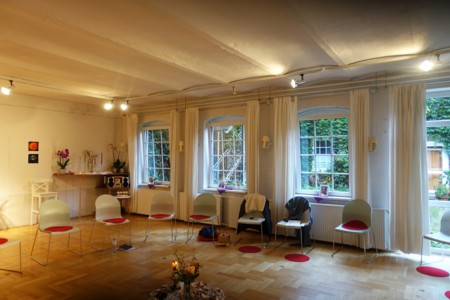
The energy of synthesis brought us together once again. We met in the San Bao centre, a school for Tai Chi and Qigong in a quiet backyard. Through the windows we could see from time to time some other people of a silence retreat practicing conscious walking. Also inside, it was a simple but beautiful place.
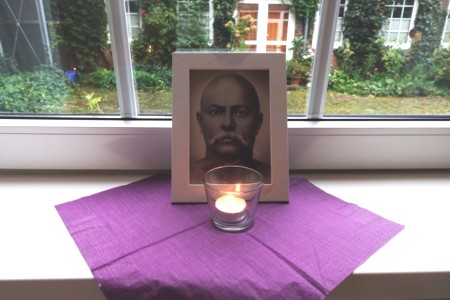
Picture of Master CVV on the windowsill
The motto of the meeting was “CVV activates change. Be the change by tuning into the energy of synthesis.” The keynote from Master KPK given for this year’s CVV Sharing was: “Just relate to Me in and around in all that surrounds you, animate or inanimate. Thereby you reach Me. Abandon all other religious rules and regulations. They are a burden.”
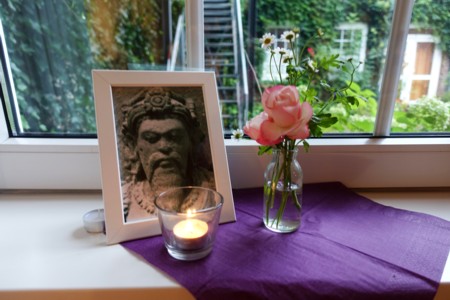
Rishi Agastya – Master Jupiter. The window sills were decorated with pictures of some great Masters
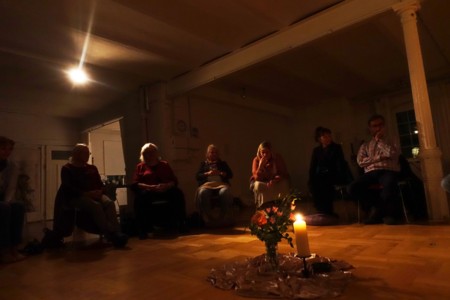
The meeting started with the Friday evening meditation. In the afternoon we met with the organising team in a nearby AirBnB-flat and later prepared the assembly hall. Corona times demanded certain registrations, also in the restaurants. There were new stricter rules in Hamburg but they did not touch us. It was heart-warming to meet again. In the evening, Benjamin shared some reflections on the energy of equinox. Ute introduced some thoughts of how the group might relate in the night and during morning prayer, which we had in our respective accommodations. During the days, we had meditations/prayers every three hours. The evenings concluded with the Mystic Mantrams of Master CVV.
The group members were proposed to bring symbols or things as their expression of the energy of synthesis. Saturday morning, each member presented his or her item with some words, and decorated with them a shelf as a small altar during the group life – symbols, candles ….
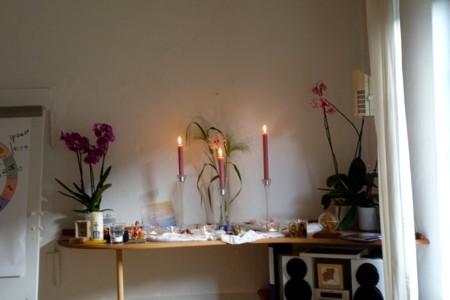
The small altar
Throughout the day we experienced different aspects of the MASTER energy through meditations, rituals, little inputs, group works, sharing in the forum. There were also breaks for personal contacts and exchange.
Saturday morning we did an experiment with a meditative ritual – first linking to the energies of the directions, then a guided visualisation, “Buddhi Sharing”, a group meeting on the inner platform, and afterwards an exchange in the group.
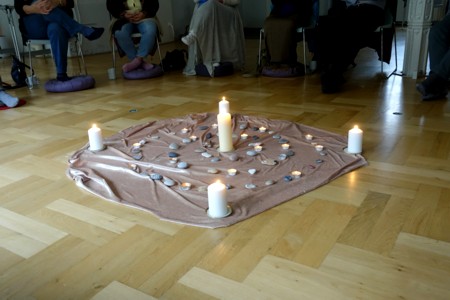
A spiral with stones from the Baltic Sea and candles indicating the four directions and the centre
In the afternoon there was an input and an exchange about the qualities of the present time followed by a triangle group exchange in small varying sub-groups about our relation to groups.
Sunday morning, members presented inspirational thoughts / quotes / poems they wanted to share with the group. Afterwards there was an “open space” and an exchange about the future development of the CVV Sharing meetings. A next meeting is already planned for spring equinox at a seminar centre in North Germany.
At noon we joined as a group the World Health and Healing prayer. And after lunch, there was already the closing round, clean-up and departure. A magic time-space closed again only to open up again in future at some other moment.
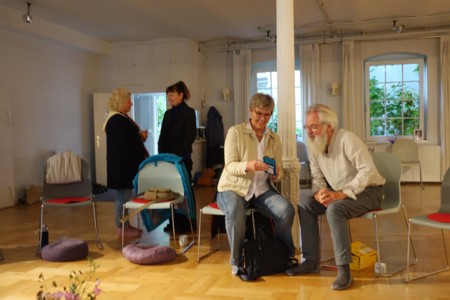
For me, 1.5 days of travelling back followed, with a friend from South Germany and an overnight-stay at the home of other group members. It was a very intense and rich time, after a longer period of mainly virtual group meetings.
Very often I get questions from spiritual seekers wanting to know something. I like the interactions, especially when I can help people this way. However, there is a danger. Some people tend to behave like little children wanting to be spoon-fed instead of learning how to find answers. There is a proverb saying, “Give a man a fish, and you feed him for a day. Teach a man to fish, and you feed him for a lifetime.”
Sometimes, the questions relate to details of the wisdom teachings, sometimes to doubts, sometimes it is curiosity resulting out of a very active mind (for these, there is no end of asking until the interest goes somewhere else). Often, the questioners are group members who do not find the e-mails they have received from the internal mailing list of WTT which I am operating.
This morning, I received the question from a friend: “How long is the Aquarian age to last? Where is the info about this and Master CVV goals for Aquarian age? 240 years ? 100 is already done ? Starting count from 1912.”
Quite a lot of questions in a short WhatsApp post (and good answering takes much more time than quickly asking). So instead of searching the answer on my PC, which I normally do, I better show here how to find.
Some people think that I know everything they ask for, and some started calling me “Ludgerpedia”. That is a wrong impression. I just have learnt how to search and I do this myself on many occasions. I have started this blog also to find things myself which I have written about. It has a very good search engine which you find at the top left, and I often use it myself. There are currently 1,582 posts.
For my own research I have collected over decades big quantities of book PDFs (mostly converted for better search into Word files; I bought for this the “Abbyy Finereader”.), seminar transcriptions (many of them I did myself because otherwise I quickly forget what has been taught there – and why should I always only forget after taking much effort to go to the seminars?) and other material. With these I have composed newsletters, esp. “Lunar Messengers” since 22 years – you find all topics on the good-will website or on the WTT website. There, easily searchable in full text. The search engine on that site is also powerful, you find it at the top left of nearly all pages. Together with friends, I have worked on this website for many years, to allow seekers to find a great treasure of wisdom teachings, especially with the books of Master EK and Master KPK, most of them available for free download in the download areas.
Coming to the questions of my friend: When you search on the WTT website “Aquarian Age“, you find many results. But at the very top of the page, you find “The Aquarian Age” (in various languages). If you click on this, you come to a page “The Aquarian Age“. You find the same text as PDF on the Good-Will website, download section.
In the beginning of this text, you find the explanation for all the questions my friend has asked for. For some details of the questions you need to read the text until the end.
Three weeks ago, we had the annual General Assembly of the World Teacher Trust-Global for the year 2019. Normally, a general assembly is a matter of duty for associations. But this is not a “normal” association and the general assemblies neither are. And this year, it was very special, and I’ll tell a bit about it from my perspective.
Just some words about the background for those who are not familiar with the WTT: The Spiritual Hierarchy is an expression of the one teaching principle in many forms. It includes every Master of Wisdom that guided the humanity on the planet. They are models and we try to live their teachings. There was an impulse received by Master EK (Dr E. Krishnamacharya) 50 years ago. It led to the foundation of the World Teacher Trust (WTT) in November 1971. This organisation is meant to help organising the activities of people who are inspired by the lives and teachings of the great Teachers of Eternal Wisdom. Master EK was the founder, assisted by Master KPK (Dr K. Parvathi Kumar), who is today’s president.
The impulse led to an “offspring” with a focus in the Western hemisphere, the WTT-Global. Its formation took place in Geneva in August 1983. Its seat continued to be in Switzerland. The executive members were always mainly Swiss, especially for practical organisational reasons. I was called into the Executive Board in May 2002. Thus, since 18 years, I am involved in organising and conducting the annual general assemblies.
Since it is a global association, the assemblies also were global – we met at special places in different European countries, in Argentina, Brazil and last year at Mount Shasta in California. It was always in connection with tours and seminars of Master KPK. (When writing “Master”, I must say that I was hesitating for many years to use this term, especially not when speaking to a general public. However, through long observations and experiences, I find it appropriate to use it here.)
In California, it was decided to do the next general assembly for 2019 in Visakhapatnam, India on 31 December 2020, since there would be no more global travels of the Master. And then the pandemia came. But at the same time the virtual collaboration dashed forth, especially with Zoom meetings. An incredible speed-up of global networking took place. In the global crisis, the global distances in a way disappeared.
A year ago it became clear that WTT-Global needed a new organisational set-up. First thoughts were discussed during the seminar January 2020 in India. In the coming months, big challenges came up with the disease of the Master and the passing of Kumari-garu, his wife who was an outstanding being though she kept very much in the background (I didn’t blog about it up to now).
After the return of the Master end of May / June, he quickly took up again the work. We had some Zoom meetings where he explained that the pandemic has caused a lift-up, and we connect now much more effectively through electronic communication. We find group consciousness and connect in our work for goodwill, even for the next incarnations. He proposed that we enlarge the Executive Board and the Advisory Board of WTT-Global by including representatives from every major group and thus form a synthesis of the WTT group.
He outlined the Next Generation project. It was envisioned by Master EK in 1976: This group should be called the “Youth of the Universe” (YOU) in the WTT all over the world. They belong to a generation which has a different way of expression. We should identify these young people, find out what they are doing and what are their ideas – not only about the teachings but their ideas about family, the economics, social and spiritual dimensions. We try to assist them if they are willing to fulfil some ideas coming from the teachings which they have heard, and which they are living.
Another project launched is Digital Archives. Its purpose is to collect all the teachings, writings and related videos, audios, pictures that have been gathered in various groups all over the globe. A team is now working to see how the vast material can be stored and accessed via electronic media. I was proposed to coordinate. Another team was formed which is responsible for organizing the Zoom meetings.
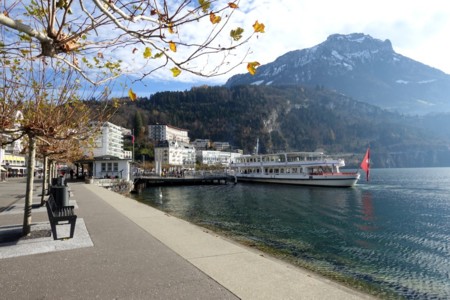
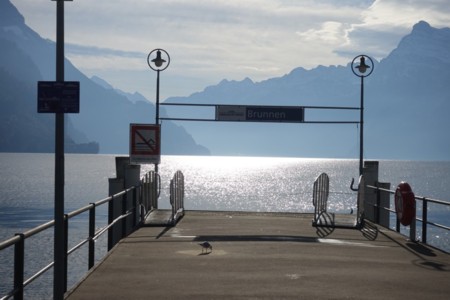
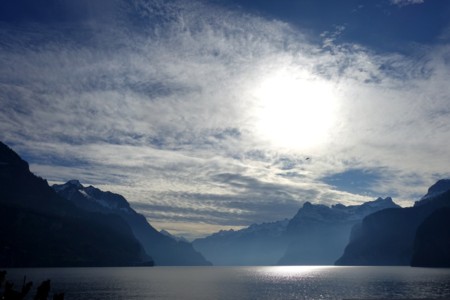
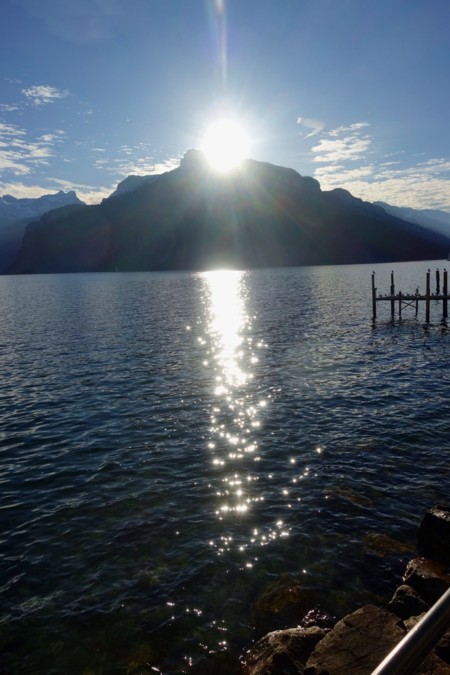
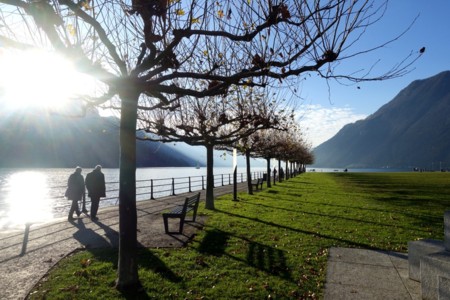
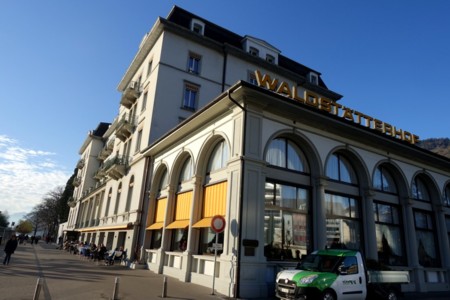
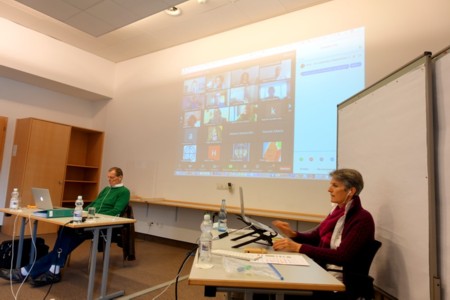
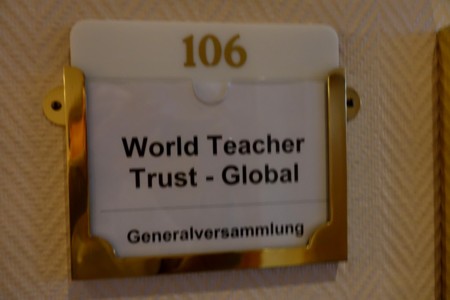
It quickly became clear that the general assembly cannot be held in India, and so we decided to do it in Brunnen, Switzerland, the seat of WTT-Global, with a global virtual participation. We had to deal with some organisational and technical challenges but finally we physically met with a small group at a hotel on the borders of Lake Lucerne on 23 November and a much bigger number attending via Zoom. It was a very beautiful day.
As an association, the WTT-Global is a legal person. It is like a personality for expressing the spiritual impulse in the physical. There were legal matters to be discussed for anchoring the activities through decisions by the assembly. This is not a dry matter but in all these matters you feel the living spiritual presence. And this will form the basis for tangible activity in the years to come.
A highlight were again the closing words of the Master, rounding up and giving an outlook: “We’ll continue the work and we tend to be silent relating to this work and enable its permeation as planned in the Higher Circles. Don’t think of our propagating it. … We don’t propagate but we make them available. That’s the way by which truth-seekers will any way find the teachings of the Hierarchy right from ancient most times. And that will continue and we should not do this work with overenthusiasm, which is common with new entrants. It should be done with considerate thoughts, and make sure that it is available to those who are looking for it…. You find so many things happening. This is only highly encouraging for all of us because it is happening. Up to a point we do, later it has to happen. Up to a point we do, later it takes hold of us and leads us into higher realms….”
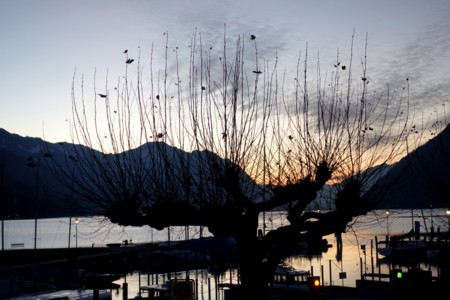
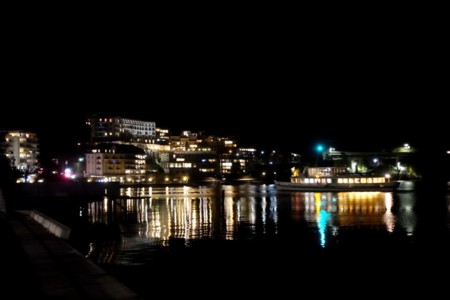
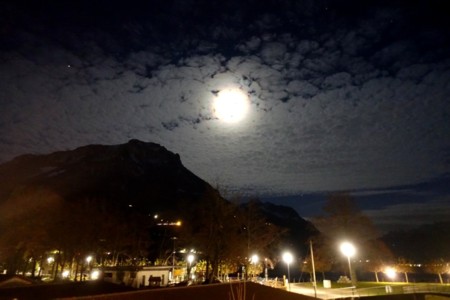
After the meeting the group gathered for some time in the home at the seat of WTT-Global. There was a magic ambiance – some cheerful exchanges, a short meditation. When we started the journey back, the moon in its 10th ascending phase was radiating from over the mountains and reflecting in the waters of the lake.
Photos from the General Assembly meeting in Brunnen, Switzerland
It’s a complex matter – best told in story-form. It is not so easy to understand, and when you read it on the web, it is very probable that you quickly scan the text but not read, and when you read, you might just take it in with your cognitive brain, maybe quickly putting a “like” on “social” media but not letting it in. No time! the mind runs like crazy… Recent brain research showed that digital reading is good for cognitive reception but reading on paper is better for transformative knowledge, transforming one’s life. Enough foreword…
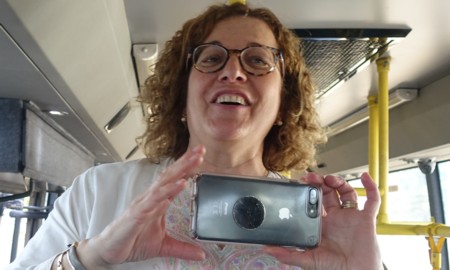
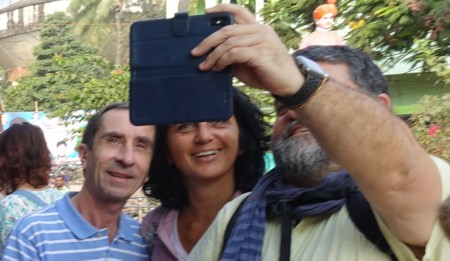
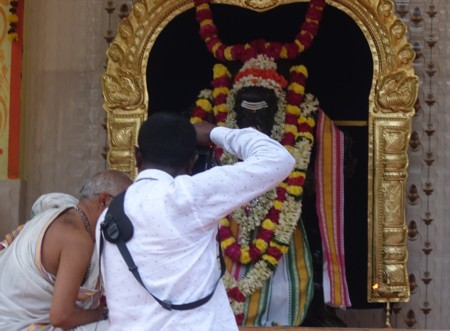
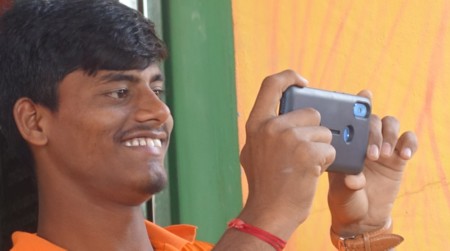
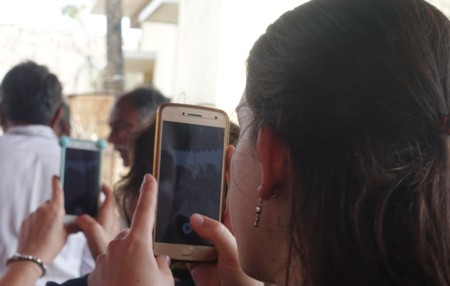
The pictures of mobiles in this article are no criticism but done with a smiling eye. I’m also photographing a lot – with a camera. In case of personality complaints, please let me know and I will exchange the photo….
The group travelling to Bangalore airport
An introduction
This is not a private story about an aspect aof my life, but I use this perspective as an intro for the main story, which comes later:
I stopped seeing TV around 9/11, in 2001, sometimes seeing a movie in a plane, very little YouTube. I prefer reading newspaper articles, going into what I read. I intensely follow what is going on in the world. Already as a child, I had very strong inner images which later led me to painting; when reading a book, I quickly “fell into it”. And when looking a crime story, the suspense frequently made me run out of the room.
Selfies in Pithapuram
In my former profession as head of web office of Swiss Red Cross, I was responsible for all digital communication instruments as per their content side – internet, intranet, central photo archives – until I was “set free” seven years ago, free for my way. There already, people used to run around with mobile. I felt, it would be too overwhelming for my perception, blurring my discrimination. As an excuse, I used to tell that my hearing was not good – it was only half true. I didn’t want to get into “digital morphine”, putting people’s inner side with hyperaction to sleep. Now they talk in the media about the need for digital detox, offering courses for managers about digital fasting.
During the last decade, mobiles made a triumphal march over the globe, entering into remotest corners. I could not escape, didn’t want to be a dinosaur refusing it. I’m extremely active with PC and, when travelling, with laptop. No quick photo publication – selected views, images cut-out and processed. Since some years, we have a family mobile, we just use it “immobile” at home, as a “modem” to enter into WhatsApp. My wife using it as a means for her trance therapy work, working remotely with people who don’t have a computer or don’t physically come. And me for interacting with family members and WTT. Since years, however, I’m studying the digital marketing tricks of big data business and follow the latest developments via a daily newsletter. So I came to see the big players as monsters, some of them massively manipulating, with a mask of innocence, elections and political decision. Making big money with little to no ethics. “Do no harm” of early Google is no longer at use.
No need for fear when reading the following passages, it will come to a good end of the story!
Fire ritual
In Europe, governments and data privacy protection offices are trying to fight the supranational Hydras, often without success. The big players are very powerful. Especially the Mark Zuckerberg Empire stands foremost in the manipulation game, from the very beginning, – denying it in public, putting on a smiling face. And everybody uses WhatsApp – in WTT it is used especially in India for bringing plenty of pictures and information “for free” to the members, who need to join to “follow”. You cannot escape when you want to follow.
Nobody thinks of what is being done with the data – things which are directly opposite to the principles the WTT stands for: Big scale image recognition, profiling people, targeting ads, delivering content individually tailored for the personality profile of the receiver to most effectively manipulate on a mass scale. Yesterday, the media reported: “Facebook policy chief Nick Clegg reaffirms the social network’s decision to continue allowing advertising with political content. Twitter and Google, however, have banned politically motivated ads on their platforms.” Not to speak of what China, the biggest player, does. Incredible “total immersion”, keeping over a billion people under central control – for the “well-being of the state”.
One of the latest developments is voice recognition based marketing, analysing all what is communicated via speech – for better targeting ads etc., combining mobile data with the behaviour portraits of the surfers.
Distribution of sewing machinges to unemployed women
About two years ago, while uploading photos to Google Photo, I saw a function for identifying friends. I wrote the name of a friend – and I got hundreds of photos with her in most intimous situations, at group lives, while travelling – often, I did not recognise her face at first sight, but Google did. And these were not pictures she had uploaded. Data protection, privacy? A joke. Digital profiling in a mass scale. Yesterday, the media reported that 3 billion photos were sucked off the web by a private Silicon Valley company with a big investor. We try to comply on WTT related websites with European data protection standards but these trends go directly against.
Ritual at a Ganesha statue at Tekkali Village
At the recent seminars in India – like at the last international group lives – the entire ongoing group communication was done via mobile and WhatsApp – when, where, what is happening – it is so practical, and all have a mobile. Except me, I think. I didn’t want to be washed away by an overkill of information, not only via this channel but by other people trying to contact me this way. They can do it via e-mail. The triage of relevant and irrelevant information needs time and energy and deviates the focus I’m trying to uphold. At the seminar, I told two friends to keep me updated. It worked fine. I even once spoke with my wife via mobile WhatsApp of a friend – my laptop didn’t get connection or only a very low one, for a week. (Later, I got a mobile internet connection from the group of WTT India for the communication activities, a great help.)
Already at December Call celebration in Bangalore, Master Kumar said:
“The teachings of every hierarchy member shall have to be related to. You have no more time for mobile, for silly messages. They are all silly messages from people with experience. There are very silly messages through WhatsApp. You are wasting your time and wasting others time. It is meant to send a simple communication, not to use it because it is free. If they charged 100 rupees for every message, everything would stop. Calls also have become free with WhatsApp. So you call to America and speak for 30-40-50 minutes. Sheer waste of time and energy. Instead why can you not relate to this which is the higher dimension relating to Hierarchy. Hierarchy is the highest dimension relating to humanity and we think we are following some kind of discipleship.”
Recently, a scientist wrote in a Swiss magazine: “When you want to do something effective against global warming, stop taking selfies” – all the infrastructure behind consumes tremendous amounts of energy. Especially the endless Netflix etc. stream entertainment – an easy way to anesthetize your brain.
An Indian group member at Tekkali photographing the group of Westerners
At the January WTT seminar in Visakhapatnam, things got more intense for me, utmost intensity. Most sublime teachings, multi-directional inputs from people, intense talks with key persons, developing ideas for future developments, for projects. At a question-answer session, I gave a strong word of warning to the group as per the use of WhatsApp etc. There was a good reply by Sri Kumar, here are my notes:
“In humanity there is always an abuse; abuse is common because there is ignorance. Men of knowledge are few, people are stuck by one side or the other. A roller-coaster situation, abuse is about to happen… Humanity is the only species which has discrimination. See what is relevant to us; whatever is relevant to us is not relevant to others. We might be in a huge jungle, we can’t change the whole jungle except by prayer. Immediately it will have an impact on us. It will take time from humanity.
There is some negative coming out of humanity, very few use discrimination. We see what is relevant and what is irrelevant. It is very well possible. That is why we need to grow with discriminative will. We get more guided by conscience, discriminative will.
At Tekkali Village
Whatever Ludger said is in every dimension of humanity, not only in internet – gold invented, misused, slowly balanced. In the 2nd half of last century, the use of fertilizers, they did great harm to the agriculture. Sometimes we learn through ignorance, through foolishness, we make experiments, experiments settle as wisdom. We keep learning by this example, … health is gone from humans and animals, we realise, slowly there is a direction in the production into another direction. Now they have realised that smoking has a very negative impact on health, still some are smoking, smoking; non-smokers were more affected by smoking. We need to change the planet to an understanding what is a right understanding. “I don’t use it” – not using is not a solution, right use is important.
The world offers many things, be discriminate, develop the conscience, don’t send messages of WhatsApp, when there is no relevance for you, don’t look at it. That is how we use discrimination, use meditation as means to calm down, to develop inner consciousness, the antaratma (inner self), that will help to eliminate certain activities in relation to us and to the group.
We don’t have to criticise, that is Aquarian. We get into the subtler side, it is Aquarian. Make an appropriate use of the right side and don’t get into the (wrong one). The more and more you are negative, judgemental about others – we don’t touch what is black – the more and more we discuss about it, we strengthen it. Don’t get into the path of ignorance, look for light everywhere and don’t get into darkness.
The black ones try to use the others to propagate them. The negativity in us is a deception. … We as students of goodwill see the light side of it, don’t criticise the dark side of it. … You slowly disassociate from people but do not entertain the negative side, if you entertain it it is in you. Be neutral to the negative and be attractive to the positive side. That is how we need to take to the positive side. Make a good use of the good side of the developments coming to us, it is contributing to human progress. In science there is open thinking, but the sciences are under the thumb of the barbarians on the planet who control the whole of humanity. We don’t have to deny the sciences; take the positive side of all the science. Let it be so with all of us.”
At Tekkali Village
A member from Spain introduced me to Microsoft Teams, explaining to me how he uses it for his course organisation and interaction, the structure set up by a friend. Chat and collaboration instruments, file sharing, and video calling. And it runs on PC/laptop/mobile without being bound to mobile. I found it thrilling, thought, “what’s the catch for Microsoft to give the basic version for free?” I know that Microsoft is a much more integer player when it comes to dealing with data. I had several discussions with IT specialists of WTT. It seems to be a way out of the challenge of using digital instruments for group work, interchange and collaboration. Of course, there are also other tools. Plenty of ideas rushed in. It will take time to evaluate and test. I started testing the app but: “Take to turtle speed, not the speed of a rabbit.”
Last year, I had a strong warning as per my health with a brain bleeding. I realised, I have to slow down, take away pressure. This is most needed, especially in the present time and with the present challenges. I’m daily walking for a while in nature, ponder and observe. Keeping longer times of silence to centre inside. The inner guidance will lead through the times of rough weather.
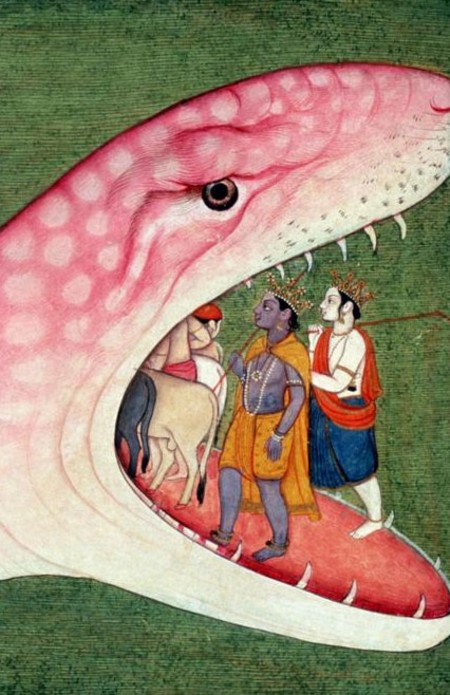
In all of this, I had to think of the story from Puranas of Aghasura, the enormous serpent-demon which wanted to devour Krishna and his friends. The cowherd boys innocently entered its mouth, mistaking it for a mountain cavern. After seeing this, Krishna then came to their rescue, killing Aghasura. In a way, the mobiles look like the many heads of a serpent devouring the attention. But help comes, when you turn inward and stay strongly aligned to the soul.
At irregular intervals, I share via a “Friends List” some “digital gifts” – things I have come across on the web over the last months. In time for Christmas – here are some digital gifts found in the last 5 months:
Best Christmas Campaigns 2019 – some commercials are really well done (only if you want to spend time…..)
Yesterday, a friend from Germany rang me up and enthusiastically told me about Ecosia, a free search engine that uses its profits to plant trees. Their business model: “You search the web with Ecosia. Search ads generate income for Ecosia. Ecosia uses this income to plant trees.”
I first was a bit sceptical – it sounded interesting but what is behind and how does it perform?
I looked up in Wikipedia: “Ecosia is an Internet search engine based in Berlin, Germany, that plants trees by donating 80% or more of its surplus income to non-profit organizations that focus on reforestation and conservationism. Ecosia considers itself a social business, is CO2-negative, claims to support full financial transparency, protects the privacy of its users, and is certified by B-Lab as a benefit corporation.The website maintains a running total of the number of trees planted. According to their website, as of 14 August 2019, the search engine had been responsible for the planting of more than 64 million trees.”
Photo (c) Ecosia
I wondered how they can manage to present a search engine powerful enough in the competition with the big data octopus Google, which has gone far away from their earlier motto “do no harm”. But they have a strong partner- the search results for Ecosia are provided by Microsoft Bing, the second largest search engine in the US, after Google, enhanced by the company’s own algorithms. By the way, when you search on Ecosia “xxx #w”, it directly gives you the related Wikipedia article.
Other questions of mine were answered in their FAQ section: Ecosia’s servers run on 100% renewable energy, and every search request removes 1kg of CO2 from the atmosphere (also Bing is carbon neutral). They don’t sell the user data to advertisers, have no third party trackers and anonymize all searches within one week. They even publish their monthly financial reports, so you see exactly where the income from your searches goes.
Easy removing of traces, by water…
So, I have now changed to Ecosia in my browers and bookmarked it. If you are using Android devices, you might have difficulties of setting Ecosia from 2020 on, as Wikipedia informs:
“As of 21 August 2019, Search Engine Land reported that Ecosia will not participate in the “search-choice” auction to appear on Android devices led by Google. This means that in 2020 European Android phone users will not have the option to set Ecosia as a default search engine. Christian Kroll explained the boycott decision saying: “We’re deeply disappointed that Google has decided to exploit its dominant market position in this way. Instead of giving wide and fair access, Google have chosen to give discrimination a different form and make everyone else but themselves pay, which isn’t something we can accept.” Applications to participate in the “search-choice” auction are due in mind-September.” (2019)